

Maddy summaryHB 163 regulates Pharmacy Benefits Managers (PBMs) to ensure fair practices for pharmacies and insured individuals. The bill prohibits PBMs from charging insurers more for a prescription drug than they pay the pharmacy (spread pricing) and requires patient out-of-pocket costs to be based on the net price after any PBM concessions. It establishes minimum reimbursement standards for pharmacies, preventing PBMs from paying less than the national average drug acquisition cost plus a dispensing fee. Additionally, it clarifies that PBMs cannot restrict accredited pharmacies from dispensing specialty drugs and strengthens audit protections for pharmacies.
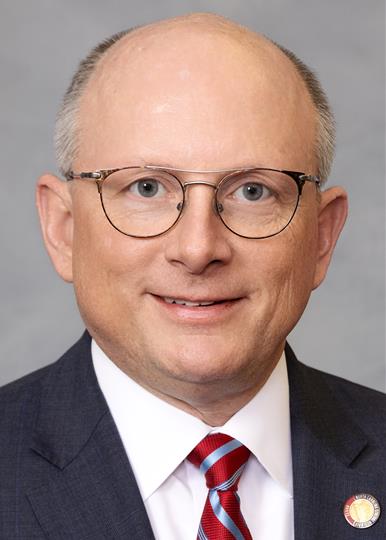
Rep. Tim Reeder
Sponsored bills
Maddy summaryHB 152 aims to regulate how health benefit plans in North Carolina cover Transcranial Magnetic Stimulation (TMS) services. If an insurer chooses to cover TMS, the bill requires them to cover all procedures performed by properly licensed healthcare providers, regardless of their medical specialty, as long as TMS is within their scope of practice. It prohibits insurers from penalizing providers solely based on their specialty when submitting TMS claims. However, the bill maintains that insurers retain discretion over whether to cover TMS, for which conditions, and at what reimbursement rates.
Maddy summaryHouse Bill 610 directs the Department of Public Instruction to conduct a study on the feasibility of requiring each local school district to maintain at least one school operating on a year-round calendar for grades kindergarten through 12. The study will examine administrative and operational costs, transportation challenges, and potential barriers to establishing these schools. It will also assess anticipated student enrollment if year-round options were more accessible. The Department can work with a third-party for this research and must report its findings and any recommendations to the Joint Legislative Education Oversight Committee by January 15, 2027.
Maddy summaryHouse Bill 592, known as the Toxic-Free Medical Devices Act of 2025, aims to prohibit the use of a chemical called DEHP in certain medical devices within North Carolina. Specifically, it bans the manufacturing, selling, and distributing of intravenous solution containers and intravenous tubing that are intentionally made with DEHP. The prohibition for IV solution containers takes effect on January 1, 2030, and for IV tubing on January 1, 2035. The bill also prevents replacing DEHP with other similar chemicals in these devices and sets limits for unintentionally present DEHP, while exempting certain blood-related products. Violations of these provisions could lead to administrative penalties.
Maddy summaryHB 555, "Medicaid Telehealth Services," aims to ensure that certain telehealth providers can enroll as Medicaid providers in North Carolina. The bill specifies that individual health care providers licensed by the state who offer services exclusively through telemedicine are not required to maintain a physical presence in the state to be eligible for Medicaid enrollment. Similarly, medical provider groups that exclusively offer telemedicine services will not need an in-state service address to be eligible for the state's Medicaid program. This bill directly affects telehealth providers and medical groups by removing location-based requirements for participating in Medicaid.
Maddy summaryHB 69, the Military and Veterans Educational Promise Act, provides two key benefits for military-affiliated individuals and veterans at North Carolina's University of North Carolina (UNC) schools. First, it requires UNC institutions to allow eligible military members (including reservists) and their spouses to defer admission for up to five years (for active duty) or two years (for reserve service) upon enrollment notice. Second, it establishes in-state tuition rates for honorably discharged veterans who served at least 90 days in the military, graduated from a North Carolina high school after 2004, had a North Carolina duty station, or received a Purple Heart. The bill applies to all UNC institutions beginning in the 2025-2026 academic year.
Maddy summaryHouse Bill 272, known as "The Sergeant Mickey Hutchens Act," allows certain law enforcement, probation/parole, and correctional officers in North Carolina to purchase additional retirement service credit. Officers who hold an advanced law enforcement or corrections certificate and have at least five years of membership service can buy up to four years of creditable service. This purchase applies to members of the Teachers' and State Employees' Retirement System or the Local Governmental Employees' Retirement System. To do so, they must pay a lump sum covering the full cost of the increased retirement system liability and an administrative fee, with the option for their employer to contribute to this cost.
Maddy summaryHouse Bill 820 requires health benefit plans in North Carolina to provide coverage for early refills of prescription eye drops. This means insurers cannot deny a refill for a 30-day supply if at least 21 days have passed since the last fill, or if the patient has used 70% of the medication according to their healthcare provider's instructions. The bill also specifies that the requested refill must not exceed the total number of refills indicated on the original prescription. These requirements apply to all health benefit plans, including the State Health Plan, with an effective date of October 1, 2025, or the subsequent plan year.
Maddy summaryHB 558 updates how North Carolina selects Medicaid health plans by limiting statewide contracts to four and allowing up to 12 regional contracts through local health providers. It requires the state to prioritize bids from local providers and those with high provider satisfaction scores from existing contracts. The bill also mandates staggered contract terms (3-5 years) to prevent coverage gaps during transitions. These changes directly affect Medicaid health plan contractors and the Division of Health Benefits, aiming to stabilize coverage and improve provider relationships.
Maddy summaryHB 893 limits how much North Carolina's Chiropractic Board can charge chiropractors for disciplinary actions, capping costs at $1,000 for settled cases and $3,000 for cases with a full hearing. It requires the Board to provide itemized cost breakdowns and refund any overcharges. The bill also mandates that the Board keep detailed, accurate meeting minutes, including summaries of public comments and vote records. These changes directly affect chiropractors facing disciplinary proceedings under the Board's jurisdiction.