

Maddy summaryHB 357 establishes licensing and regulatory requirements for continuing care retirement communities (CCRCs) in North Carolina. All providers (both for-profit and nonprofit) must obtain a license from the North Carolina Department of Insurance and undergo annual actuarial reviews to verify financial stability. The law directly affects CCRCs operating in the state and their residents, who often pay large upfront fees for long-term care. Key provisions include mandatory actuarial studies to ensure providers can sustain services, protecting residents from financial harm if a provider becomes insolvent.
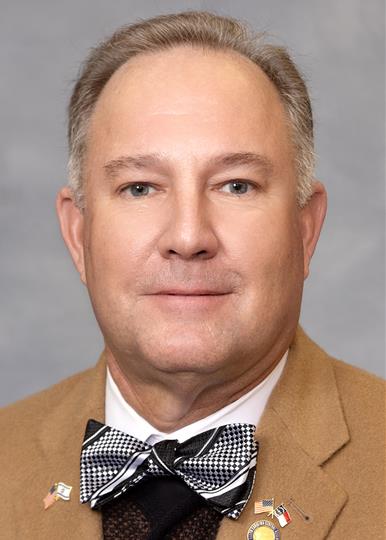
Rep. Jeff McNeely
Sponsored bills
Maddy summaryHB 837 is a study bill requiring North Carolina to examine alternative highway funding methods, primarily to address potential revenue gaps as electric/hybrid vehicle adoption grows. It directs the Legislative Services Officer and Transportation Oversight Committee to hire a consultant to study mileage-based fees (VMT) for electric/hybrid vehicles and a new "Access User Fee" for all non-diesel vehicles (replacing gas taxes). The study must be completed by May 2026, with findings reported to key legislative committees. This bill does not implement new fees but assesses options affecting all vehicle owners, particularly electric/hybrid drivers and non-diesel vehicle registrants. It allocates $125,000 from the Highway Fund for the study, effective July 1, 2025.
Maddy summaryHB 768 clarifies exemptions from in-building emergency responder communication system requirements in North Carolina's fire code. It exempts specific small buildings: R-2 apartment buildings of Type V construction meeting egress rules, and hotels/motels under two stories with direct exterior egress from each unit. The bill also provides rules for disconnecting existing communication systems in these exempt buildings and requires the Building Code Council to adopt formal rules incorporating these changes. These provisions directly affect property owners and developers of qualifying residential buildings by reducing compliance requirements.
Maddy summaryHB 412 aims to reform North Carolina's child care system by separating the quality rating system (QRIS) from state-subsidized child care program requirements, directly affecting licensed child care providers and families using subsidies. Key provisions require the state Division of Child Development to develop a plan by May 2026 to decouple QRIS from subsidy reimbursement rates, using a unified market rate study (not segmented by star ratings) to inform potential rate adjustments. The bill also updates facility regulations, allowing school buildings approved for school occupancy to meet child care licensing standards for after-school programs without separate outdoor play area requirements. These changes seek to increase child care supply and optimize state funding while maintaining federal compliance, though the current subsidy system remains in effect until legislative approval.
Maddy summaryThis bill establishes an Interstate Medical Licensure Compact in North Carolina, allowing physicians who meet specific qualifications to obtain medical licenses in multiple participating states through a streamlined process. The law creates an Interstate Commission to oversee the compact and sets clear standards for physician eligibility, including requirements for medical school graduation, passing licensing exams, specialty certification, and a clean disciplinary record. While the compact simplifies licensing for qualified doctors, it maintains that each state retains authority to regulate medical practice within its borders and can take disciplinary action against physicians licensed through the compact. The bill does not alter existing state medical practice laws but adds an additional pathway for physicians to practice across state lines.
Maddy summaryHB 537 creates a legal presumption of death for individuals missing for at least 90 days during a declared disaster (state or federal), simplifying legal processes for families. It requires the Office of Vital Records to process birth and death certificate amendment requests within 30 days of receiving complete applications. The bill also prohibits Office of Vital Records staff from teleworking unless during a declared emergency, to maintain processing timelines. These changes directly affect families of missing persons in disaster zones and individuals needing vital record corrections.
Maddy summaryHB 568 modifies North Carolina's labor laws primarily to streamline safety inspections and administrative processes. It restricts subpoenas against Department of Labor staff during safety investigations (except in enforcement cases or with written consent), limits public hearings for adopting federal safety standards identical to federal rules, and requires medical examiners to share workplace injury reports with the Labor Commissioner within 30 days. The bill also clarifies that safety inspection documents remain admissible in court without witness testimony unless reliability is in question. These changes affect the Department of Labor, employers, and workers' safety investigators by altering how evidence is handled and shared in workplace safety cases.
Maddy summaryHB 576 makes technical revisions to North Carolina's laws governing the Department of Health and Human Services (DHHS). It designates DHHS as the agency managing school nurse funds, requiring school nurses to focus solely on health services (like health education and emergency response) rather than instructional duties. The bill extends until June 2028 the temporary use of the federal health insurance marketplace for determining Medicaid eligibility, and clarifies that Medicaid coverage for people released from prison continues for up to 12 months post-release. It also updates Medicaid provider screening rules to align with federal standards, particularly for Indian Health Program providers.
Maddy summaryHB 819 creates North Carolina's Longitudinal Data System, which links student education data (like test scores, graduation records, and course enrollment) with workforce data (such as employment and wages) to track student outcomes. It directly affects public schools, universities, the Department of Public Instruction, and workforce agencies by requiring them to share de-identified student data through this centralized system. Key provisions include strict privacy safeguards (complying with FERPA and HIPAA), mandatory data security plans, a 5-year limit on linking education and workforce data, and annual reporting requirements for the system's oversight body. The bill aims to improve education policy decisions while ensuring data privacy and security for students.
Maddy summaryHB 590 establishes licensing requirements for medical imaging and radiation therapy professionals in North Carolina, directly affecting radiographers, radiation therapists, sonographers, and others performing these procedures. The bill creates a new "Medical Imaging and Radiation Therapy Board of Examiners" to set education standards, administer licensing exams, and ensure practitioners are "educationally prepared and clinically competent." It requires all non-licensed practitioners (e.g., radiographers, radiation therapists) to hold a state license before performing procedures involving ionizing radiation or medical imaging, with limited exemptions for licensed physicians. The law aims to protect patients by mandating standardized training and oversight for these technical roles.