

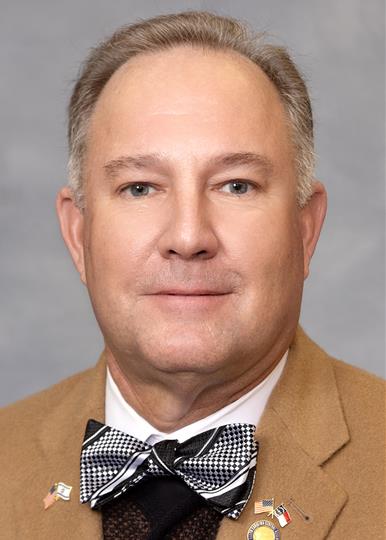
Photo of Jeff McNeely
R North Carolina House · District 84 On the 2026 ballot

Rep. Jeff McNeely

Compare
Total votes
1,350
all sessions
Attendance
79%
357 missed
Near the chamber average
With party
99%
of cast votes
Higher than 86% of chamber peers
Bipartisan score
0%
crosses aisle rarely
Lower than 89% of chamber peers
Sponsored
790
bills & resolutions
Higher than 83% of chamber peers
Committees
11
assignments
790 bills and resolutions

Sponsored bills

Total
790
Primary
57
Co-sponsor
733
This page
790
matching current filters
Co-sponsor HB 1203
In committee · North Carolina House · Co-sponsor
Family Support for Those Who Serve Act.

Maddy summaryThis bill expands tuition waivers at North Carolina community colleges to children of public safety workers who are injured or disabled in the line of duty. It allows children aged 17 to 24 of law enforcement officers, experienced correctional officers, and firefighters to attend classes for free if their parent is permanently and totally disabled due to a traumatic work-related injury. The waiver covers the cost of tuition for the time needed to complete the student's chosen educational program, provided they meet standard admission requirements. The law takes effect with the 2026-2027 academic year.

In committee Jun 10, 2026 1 co-sponsor
Co-sponsor HB 1214
died · North Carolina House · Co-sponsor
Make E-Verify Great Again.

Maddy summaryThis North Carolina bill requires all private employers with 25 or more employees to use the federal E-Verify system to check the work authorization of every new hire. It mandates that state and local government agencies also comply with these verification rules and allows employers to avoid penalties if they can prove they acted in good faith and did not knowingly accept fraudulent documents. The legislation establishes a 30-day grace period for employers to fix minor compliance errors and increases fines for repeat offenders while protecting workers who report suspected violations from retaliation. Additionally, it grants the state labor commissioner the authority to conduct random or risk-based audits of employers and provides funding to support enforcement efforts.

died Jun 10, 2026 1 co-sponsor
Co-sponsor HB 1058
In committee · North Carolina House · Co-sponsor
Deannexations/Limit Certain Powers.

Maddy summaryThis bill removes three specific parcels of land from the Village of Walnut Creek's jurisdiction, meaning these properties will no longer be subject to municipal taxes starting in 2026. It also limits the village's authority to exercise city-level powers only within its current, contiguous boundaries, though existing development rules in the excluded areas will remain in place temporarily. Additionally, the law validates any property transactions the village completed before this change takes effect, ensuring those past actions are considered legal.

In committee Jun 9, 2026 1 co-sponsor
Co-sponsor HB 1109
Passed · North Carolina House · Co-sponsor
NCDOT Strategic Transportation Investments Study Recommendation.

Maddy summaryThis bill directs the North Carolina Department of Transportation to conduct a study on how well the Strategic Prioritization Funding Plan for Transportation Investments is working. The department must examine why some projects under this plan are delayed and gather input from construction partners and planning groups. By November 1, 2026, the agency will submit a report with its findings and suggestions for improving project delivery to state legislative committees. The bill does not change any laws immediately but requires an evaluation to inform future decisions on transportation funding.

Passed Jun 8, 2026 1 co-sponsor
Co-sponsor HB 87
Signed into law · North Carolina House · Co-sponsor
Educational Choice for Children Act (ECCA).

Maddy summaryHB 87 (Educational Choice for Children Act) allows North Carolina to participate in a federal tax credit program that encourages donations to private scholarship organizations. The bill requires the State Education Assistance Authority to maintain and publish an annual list of qualifying scholarship groups operating in North Carolina, enabling donors to claim federal tax credits for contributions. These scholarships can cover elementary and secondary school costs, including homeschooling expenses, as permitted under federal law. The law becomes effective after 2026, with the Authority needing to establish necessary rules by July 2026 to comply with federal requirements.

Signed into law Jun 3, 2026 1 co-sponsor
Co-sponsor HB 1068
In committee · North Carolina House · Co-sponsor
King Satellite Annexation/Rural Hall Fire District.

Maddy summaryHB 1068 removes a specific restriction that currently limits the total size of satellite annexations for the City of King in North Carolina. Under the existing law, King could not expand its noncontiguous areas beyond 10% of its main city limits, but this bill explicitly exempts King from that cap. This change allows the city to annex additional noncontiguous land without being constrained by the previous percentage limit. The legislation directly affects the City of King and applies only to its future annexation plans.

In committee Jun 2, 2026 1 co-sponsor
Co-sponsor HB 1124
died · North Carolina House · Co-sponsor
Interstate Compact for School Psychologists.

Maddy summaryThis bill establishes an Interstate Compact for School Psychologists in North Carolina, allowing licensed professionals to practice in other participating states without facing repetitive licensing requirements. The legislation creates a commission to oversee the agreement and defines specific rules for mobility, including provisions for military families and standards for professional conduct. Additionally, the bill allocates funds to support a virtual training program for school psychologists. By streamlining the licensure process, the measure aims to increase the availability of qualified mental health services in schools across member states.

died Jun 2, 2026 1 co-sponsor
Co-sponsor HB 1174
died · North Carolina House · Co-sponsor
Homeowners' Associations Oversight Act.

Maddy summaryThis bill creates a new process for homeowners in North Carolina to file complaints about disputes with their homeowners associations, managed by the Department of Justice. Homeowners can submit complaints online, by phone, or mail, providing details about the dispute, the association, and any management companies involved. The Department will collect this information, notify the association to respond, and publish a searchable summary of complaints on its website while redacting personal data. The bill also requires the Department to submit annual reports to state committees detailing the number and nature of complaints, but explicitly prohibits the Department from creating new rules or acting as a judge in these disputes.

died May 28, 2026 1 co-sponsor
Co-sponsor HB 165
died · North Carolina House · Co-sponsor
Child and Family Welfare Ombudsman Office.

Maddy summaryHB 165 establishes the Child and Family Welfare Ombudsman Office within North Carolina's Department of Health and Human Services, directly serving foster parents, birth families, and resource parents navigating the state's child welfare system. The office will investigate complaints about foster care licensing, placement, and adoption processes; provide educational resources; mediate conflicts; and protect whistleblowers reporting violations. It requires confidentiality for all communications and mandates annual public reports on trends and complaints handled. Funded with $137,000 for 2025-2026 and $145,000 for 2026-2027, the office must begin operations by January 1, 2026.

died May 28, 2026 1 co-sponsor
Co-sponsor HB 1042
Passed · North Carolina House · Co-sponsor
Affordable Housing Exemption Modifications.

Maddy summaryHB 1042 updates North Carolina's property tax exemptions for nonprofit organizations that provide housing for low- or moderate-income individuals. The bill clarifies that land held by nonprofits for future affordable housing projects can remain tax-exempt for up to five years, with unpaid taxes deferred until the project is completed or the land is no longer used for this purpose. Additionally, the legislation establishes a new specific exemption for affordable rental housing, defining it as developments where more than half the units are rented to tenants earning at or below 80% of the area median income. These changes aim to provide clearer tax incentives for nonprofits developing and operating affordable rental properties.

Passed May 22, 2026 1 co-sponsor
Showing 31 to 40 of 790 bills
Previous 1 3 4 5 79 Next