

Maddy summaryHB 34 creates a new criminal offense for stealing or misusing someone else's mail, directly affecting individuals who unlawfully take, control, or transfer mail intended for others. The bill defines "mail" broadly to include letters, packages, or valuable items sent to another person and prohibits two specific actions: stealing mail to deprive the owner, or transferring mail to benefit someone not entitled to it. Punishments range from a Class A1 misdemeanor for first-time, low-value thefts (under $200) to a Class D felony for repeat offenses or high-value thefts (over $2,000). This law, effective December 1, 2025, applies to offenses committed after that date.
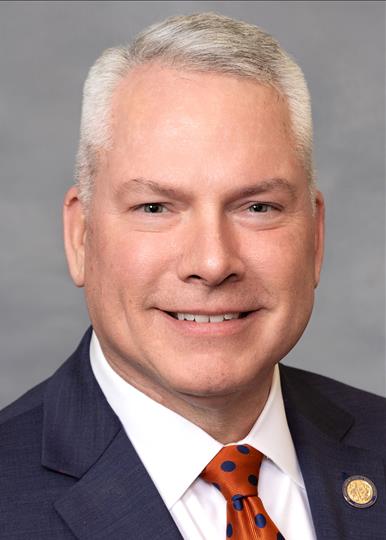
Rep. Grant Campbell
Sponsored bills
Maddy summaryHB 349 updates North Carolina's requirements for healthcare powers of attorney (POA) and advance health care directives (like living wills). It clarifies witness and notary rules to prevent conflicts of interest (e.g., prohibiting facility staff from witnessing), standardizes forms for easier use, and allows electronic filing of directives with the Secretary of State’s registry. The bill directly affects residents planning ahead for medical decisions, ensuring their chosen agents or instructions are legally recognized. Key changes include revised witness eligibility criteria, simplified form language, and a new online filing option to improve accessibility. The bill does not alter medical care standards but streamlines the legal process for end-of-life planning.
Maddy summaryThis House Resolution honors the life and memory of James Michael "Mike" Clampitt, a former member of the North Carolina House of Representatives from District 119. The bill formally recognizes his extensive background in public service, which included decades as a firefighter and deputy sheriff in North Carolina before his election to the state legislature. It expresses the House's appreciation for his legislative work and extends condolences to his family, with a copy of the resolution sent to them.
Maddy summaryHB 171 prohibits North Carolina state agencies from implementing diversity, equity, and inclusion (DEI) programs, including in hiring, employment practices, or training. It defines DEI broadly as any initiative influencing hiring or benefits based on protected characteristics (like race or gender) beyond merit-based processes. The bill mandates state auditor compliance audits, imposes civil penalties up to $5,000 per violation, and allows employees to file lawsuits after submitting a grievance to their agency. It explicitly excludes compliance with existing anti-discrimination laws (such as Title IX and the ADA) and protects First Amendment rights.
Maddy summaryHB 565 ("Check Yes, Save Lives") allows North Carolina taxpayers to register as organ donors by checking a box on their state income tax return, starting with tax returns for 2026 and later. This directly affects all North Carolina taxpayers who file income tax returns, providing a simple, automatic way to enroll in the organ donation program during annual tax filing. The bill amends tax and organ donation statutes to add income tax return enrollment as a valid method for making an anatomical gift (under Section 130A-412.7(1a)), while keeping existing options like driver's license or wills. It requires coordination between the Department of Revenue and Motor Vehicles to update the Organ Donor Registry, ensuring the tax-based enrollment is properly recorded. The policy change streamlines donor registration without altering the existing organ donation process or eligibility.
Maddy summaryHB 536 modifies North Carolina's Physical Therapy Practice Act by establishing a new Board of Examiners to regulate the profession. The Board will consist of eight members (including a medical doctor, four physical therapists, two physical therapist assistants, and a public member) appointed to oversee licensing, discipline, and continuing education requirements for physical therapists and assistants. The bill clarifies that physical therapy practice excludes surgery, chiropractic, or medical diagnosis, and specifies that the Board may investigate complaints confidentially while making disciplinary decisions public. This legislation directly affects licensed physical therapists, physical therapist assistants, and the public by setting standards for practice, licensure, and professional conduct in North Carolina.
Maddy summaryThis bill authorizes the University of North Carolina system to finance specific capital improvement projects, such as dormitory renovations and new construction, using non-state funds like gifts, grants, and hospital receipts. It allows the university to issue special obligation bonds to cover these costs and includes a mechanism for the Director of the Budget to adjust project funding if necessary. Additionally, the legislation standardizes the residency determination process for admission to the North Carolina School of Science and Mathematics and revises tuition grant rules for graduates of that school and the UNC School of the Arts. These changes aim to support university infrastructure development and ensure equitable access to specialized science and arts programs for North Carolina residents.
Maddy summaryThis bill expands tuition waivers at North Carolina community colleges to children of public safety workers who are injured or disabled in the line of duty. It allows children aged 17 to 24 of law enforcement officers, experienced correctional officers, and firefighters to attend classes for free if their parent is permanently and totally disabled due to a traumatic work-related injury. The waiver covers the cost of tuition for the time needed to complete the student's chosen educational program, provided they meet standard admission requirements. The law takes effect with the 2026-2027 academic year.
Maddy summaryThis bill, known as the SEATBELT Act, requires drivers in North Carolina who have had their licenses revoked or limited due to serious speeding offenses to install an approved Intelligent Speed Assistance system in their vehicles as a condition for regaining driving privileges. The system automatically regulates a vehicle's speed to match posted limits, and drivers must keep it installed and functioning for one year after their license is restored. To comply, individuals must designate specific vehicles for use and provide proof of the system's installation before their license can be issued again. The legislation also establishes strict rules preventing the sale or misuse of data collected by these systems and makes it a crime to tamper with the technology. Additionally, the bill mandates that the costs for installing and monitoring these systems be paid by the driver, though a waiver process is available for those who cannot afford them.
Maddy summaryHB 87 (Educational Choice for Children Act) allows North Carolina to participate in a federal tax credit program that encourages donations to private scholarship organizations. The bill requires the State Education Assistance Authority to maintain and publish an annual list of qualifying scholarship groups operating in North Carolina, enabling donors to claim federal tax credits for contributions. These scholarships can cover elementary and secondary school costs, including homeschooling expenses, as permitted under federal law. The law becomes effective after 2026, with the Authority needing to establish necessary rules by July 2026 to comply with federal requirements.