

Maddy summaryHB 128 appropriates $2 million annually for fiscal years 2025-2026 and 2026-2027 to create a statewide prostate cancer screening program administered by North Carolina's Department of Health and Human Services. The program provides free or low-cost screenings and follow-up care to uninsured or underinsured men aged 50-70 (40-70 with family history of prostate cancer) who meet income requirements (below 250% of federal poverty level). Eligibility requires no Medicare Part B or Medicaid coverage and specific age/family history criteria as defined in the bill. The program begins July 1, 2025.
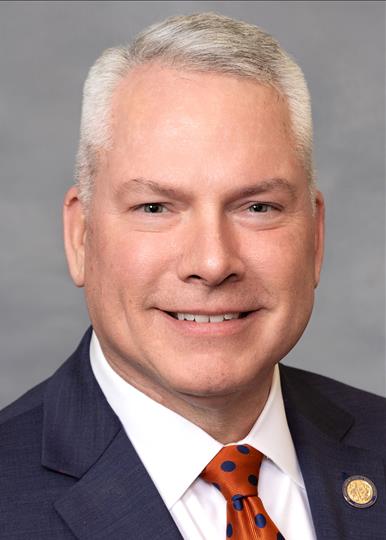
Rep. Grant Campbell
Sponsored bills
Maddy summaryThis bill proposes repealing a literacy test requirement from the North Carolina Constitution, which would affect all voters by removing a historical barrier to voting. The amendment must be approved by voters in the November 2026 election, with the ballot explicitly stating: "Constitutional amendment to remove the literacy test requirement... The federal Voting Rights Act of 1965 prohibits implementation of this requirement." If approved, the change takes effect upon certification by the State Board of Elections. The bill does not alter current voting procedures, as the literacy test has been prohibited by federal law since 1965.
Maddy summaryHB 75, the Pharmaceutical Full Disclosure Act, requires prescription drug manufacturers to clearly disclose specific information in advertisements targeting North Carolina consumers. It mandates that ads include the FDA approval date for the drug's use, the date the drug first became available to U.S. consumers, and detailed clinical trial data for required side effects (such as trial length, participant numbers, and side effect frequency). The law applies to all advertisements via TV, internet, print, or radio in North Carolina published on or after October 1, 2025, directly affecting drug manufacturers and their marketing materials. This policy change aims to provide clearer, evidence-based information about prescription drugs in promotional content.
Maddy summaryHB 76, titled "Protect Access to Assisted Reproductive Technology," establishes legal protections for patients and healthcare providers regarding fertility treatments. The bill prohibits North Carolina or its local governments from banning, unreasonably limiting, or interfering with patients' access to assisted reproductive technology (ART) - including in vitro fertilization (IVF) - or healthcare providers' ability to offer evidence-based information or perform ART services. Key provisions define "assisted reproductive technology" broadly and clarify that the law does not override existing health and safety regulations for medical facilities. This directly affects individuals seeking fertility care and healthcare providers offering such services within North Carolina. The bill does not create new funding or services but ensures state-level barriers cannot restrict access to these medical treatments.
Maddy summaryHB 61 increases penalties for assaulting certain emergency personnel with a firearm in North Carolina. It reclassifies assaults against law enforcement officers, probation/parole officers, National Guard members, detention facility staff, emergency medical technicians, medical responders, firefighters, and law enforcement telecommunicators as a Class B1 felony (instead of Class D) when committed during their duties. The bill specifically targets firearm assaults, making them punishable by more severe prison sentences. This law takes effect December 1, 2025, for offenses occurring on or after that date.
Maddy summaryHB 60 increases Medicaid dental reimbursement rates from 35% to 46% of average dentist charges (2023 rates) to align with neighboring states. The bill allocates $52 million annually from North Carolina's General Fund, matched by $95 million in federal funds, to cover this rate increase starting July 1, 2025. It directly affects dentists who accept Medicaid patients and Medicaid beneficiaries seeking dental care, aiming to boost provider participation and prevent costly emergency treatments. The change addresses years of stagnant rates that reduced dental provider enrollment in Medicaid.
Maddy summaryHB 39 excludes motor vehicles owned by veterans with a 100% disability rating certified by the U.S. Department of Veterans Affairs from North Carolina property tax. It amends state tax law to add these vehicles as a designated exempt class under G.S. 105-275. The exclusion applies to vehicles registered on or after January 1, 2026. This policy directly affects eligible disabled veterans who own motor vehicles, reducing their property tax burden. The bill does not change eligibility criteria or tax rates for other vehicle classes.
Maddy summaryHB 55 appropriates $250,000 annually from the General Fund to the Department of Health and Human Services for the Autism Society of North Carolina's IGNITE Program. The funds will support activities and education groups designed to help young adults with autism develop independence and social skills during their transition to adulthood. This recurring funding applies to the 2025-2027 fiscal biennium and becomes effective July 1, 2025. The bill directly affects the Autism Society of North Carolina and the young adults with autism it serves through the IGNITE Program.
Maddy summaryHB 36 requires North Carolina's Department of Veterans and Military Affairs to improve maintenance at all four state veterans cemeteries, directly affecting veterans' families and cemetery operations. The bill mandates addressing specific issues like headstone installation delays, equipment damage to graves, drainage problems, debris, and poor grounds appearance, while allowing military groups to volunteer for upkeep. It also directs the department to review and adjust funeral service policies, including chapel-only options, service duration, attendee limits, and grave visitation rules during services. The department must submit a report on these changes to legislative committees by October 1, 2025.
Maddy summaryHB 12 would require North Carolina and all its local governments to observe Eastern Standard Time year-round, eliminating the biannual clock changes for daylight saving time. This bill directly affects state agencies, local municipalities, and residents by keeping the state on standard time permanently, as permitted under federal law (the Uniform Time Act of 1966). The key provision amends state law to mandate year-round standard time, aligning with a federal provision that allows states to forgo daylight saving time. The bill would take effect on March 8, 2026, if enacted. This is a procedural change to time observance, not a new policy affecting services or regulations.