

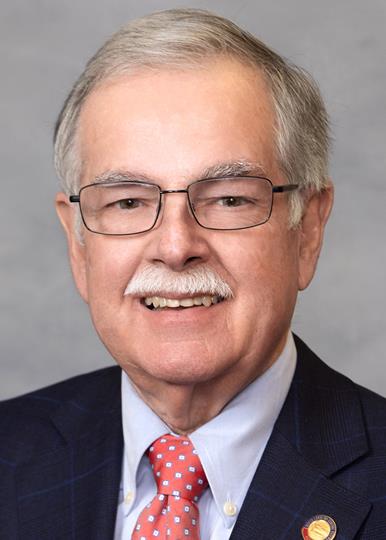
Photo of Donny Lambeth
R North Carolina House · District 75 On the 2026 ballot

Rep. Donny Lambeth

Compare
Total votes
4,015
all sessions
Attendance
93%
277 missed
Near the chamber average
With party
99%
of cast votes
Near the chamber average
Bipartisan score
1%
crosses aisle rarely
Near the chamber average
Sponsored
789
bills & resolutions
Near the chamber average
Committees
11
assignments
789 bills and resolutions

Sponsored bills

Total
789
Primary
307
Co-sponsor
482
This page
789
matching current filters
Primary HB 512
Passed · North Carolina House · Lead sponsor
Emergency Care/Animals/Veterinary Practice.

Maddy summaryHB 512 creates an exemption to the practice of veterinary medicine for emergency medical services (EMS) personnel. This allows EMS personnel, excluding dispatchers, to provide emergency medical transport and services to injured K-9 police animals or certified search and rescue dogs at an emergency scene. The bill also grants limited immunity from prosecution for EMS personnel who act in good faith when providing such care. However, this immunity does not extend to gross negligence, wanton conduct, or intentional wrongdoing.

Passed May 1, 2025 0 co-sponsors
Primary HB 152
Passed · North Carolina House · Lead sponsor
Access to Transcranial Magnetic Stimulation.

Maddy summaryHB 152 aims to regulate how health benefit plans in North Carolina cover Transcranial Magnetic Stimulation (TMS) services. If an insurer chooses to cover TMS, the bill requires them to cover all procedures performed by properly licensed healthcare providers, regardless of their medical specialty, as long as TMS is within their scope of practice. It prohibits insurers from penalizing providers solely based on their specialty when submitting TMS claims. However, the bill maintains that insurers retain discretion over whether to cover TMS, for which conditions, and at what reimbursement rates.

Passed Apr 30, 2025 0 co-sponsors
Co-sponsor HB 767
In committee · North Carolina House · Co-sponsor
Market Rate Teacher Pay Study.

Maddy summaryHB 767 establishes the Joint Legislative Study Commission on Market Rate Compensation for Teachers. This commission will study public school teacher pay and benefits in North Carolina, comparing them to other states and professions, and analyze teacher attrition rates. Composed of legislators, gubernatorial appointees, and the State Superintendent, the commission will hold public meetings across the state. Its purpose is to gather data and provide legislative recommendations on teacher compensation to the General Assembly by the end of 2026.

In committee Apr 29, 2025 1 co-sponsor
Primary HB 329
Passed · North Carolina House · Lead sponsor
Tobacco and Hemp on Nonpublic School Grounds.

Maddy summaryHB 329 encourages nonpublic schools in North Carolina, including private church schools and other qualified nonpublic schools, to adopt policies that prohibit the use of tobacco and hemp products on their school grounds. The bill amends existing state statutes to add this encouragement. It suggests that these schools use the current requirements for public schools as guidance when developing their own policies. This legislation aims to promote smoke-free and hemp-free environments within nonpublic educational settings.

Passed Apr 28, 2025 0 co-sponsors
Co-sponsor HB 555
In committee · North Carolina House · Co-sponsor
Medicaid Telehealth Services.

Maddy summaryHB 555, "Medicaid Telehealth Services," aims to ensure that certain telehealth providers can enroll as Medicaid providers in North Carolina. The bill specifies that individual health care providers licensed by the state who offer services exclusively through telemedicine are not required to maintain a physical presence in the state to be eligible for Medicaid enrollment. Similarly, medical provider groups that exclusively offer telemedicine services will not need an in-state service address to be eligible for the state's Medicaid program. This bill directly affects telehealth providers and medical groups by removing location-based requirements for participating in Medicaid.

In committee Apr 17, 2025 1 co-sponsor
Co-sponsor HB 272
Passed · North Carolina House · Co-sponsor
The Sergeant Mickey Hutchens Act.

Maddy summaryHouse Bill 272, known as "The Sergeant Mickey Hutchens Act," allows certain law enforcement, probation/parole, and correctional officers in North Carolina to purchase additional retirement service credit. Officers who hold an advanced law enforcement or corrections certificate and have at least five years of membership service can buy up to four years of creditable service. This purchase applies to members of the Teachers' and State Employees' Retirement System or the Local Governmental Employees' Retirement System. To do so, they must pay a lump sum covering the full cost of the increased retirement system liability and an administrative fee, with the option for their employer to contribute to this cost.

Passed Apr 16, 2025 1 co-sponsor
Primary HB 113
died · North Carolina House · Lead sponsor
Create Committee on Medicaid Sustainability.

Maddy summaryHB 113 creates a joint legislative committee to study potential changes to North Carolina's Medicaid program if federal funding decreases. The 12-member committee (six senators appointed by the Senate President Pro Tempore, six representatives appointed by the House Speaker) will examine cost-saving options like reducing optional services, adjusting provider payments, or improving managed care efficiency. It must submit a final report with recommendations to the General Assembly by April 30, 2026, but the bill itself does not make any direct policy changes to Medicaid. This is a procedural measure establishing a study body, not a policy enactment.

died Apr 15, 2025 0 co-sponsors
Co-sponsor HB 558
In committee · North Carolina House · Co-sponsor
Criteria for Prepaid Health Plan Contract Procurement.

Maddy summaryHB 558 updates how North Carolina selects Medicaid health plans by limiting statewide contracts to four and allowing up to 12 regional contracts through local health providers. It requires the state to prioritize bids from local providers and those with high provider satisfaction scores from existing contracts. The bill also mandates staggered contract terms (3-5 years) to prevent coverage gaps during transitions. These changes directly affect Medicaid health plan contractors and the Division of Health Benefits, aiming to stabilize coverage and improve provider relationships.

In committee Apr 15, 2025 1 co-sponsor
Primary HB 892
In committee · North Carolina House · Lead sponsor
Commercial Drivers License Training/Disaster Affected Areas.

Maddy summaryHB 892 establishes a North Carolina grant program to help residents in Western counties impacted by Hurricane Helene obtain Commercial Driver's License (CDL) training and secure related jobs. The program provides $4,000 per trainee to approved CDL training providers (offering four-week accelerated programs within 75 miles of Asheville) and $1,500 for temporary housing stipends for trainees needing financial assistance. Priority is given to Western NC residents affected by Hurricane Helene, with $2.5 million in state funds allocated for the 2025-2026 fiscal year. The initiative connects training directly to disaster recovery employment through partnerships with local employers and housing providers.

In committee Apr 14, 2025 0 co-sponsors
Primary HB 397
Passed · North Carolina House · Lead sponsor
Use of Epinephrine Nasal Spray.

Maddy summaryHB 397 allows schools in North Carolina to use epinephrine nasal spray as an emergency treatment option alongside traditional auto-injectors for students experiencing anaphylaxis. The bill amends school health policies to include nasal spray devices in the definition of "epinephrine auto-injector delivery systems," requiring all schools to maintain at least two emergency epinephrine supplies (now including nasal spray) in secure but accessible locations. Schools must train staff to recognize anaphylaxis symptoms, store devices properly, and follow emergency action plans developed with school nurses. This applies to public schools, charter schools, and regional schools starting in the 2025-2026 school year. The policy directly affects school staff, students with severe allergies, and school health protocols.

Passed Apr 10, 2025 0 co-sponsors
Showing 41 to 50 of 789 bills
Previous 1 4 5 6 79 Next