

Maddy summaryHB 1000 establishes legal restrictions on gender transition care for minors in North Carolina while creating pathways for detransition. It prohibits medical professionals from performing surgical gender transitions, prescribing puberty blockers or cross-sex hormones, or conducting detransition procedures on minors without parental consent (with detransition procedures specifically permitted under parental consent). The bill imposes penalties including license revocation for violations and mandates civil liability for medical providers who provide transition care to minors, requiring them to cover harms like physical, psychological, or emotional injuries. It also requires gender clinics to report detailed statistics on transition procedures to the state health department. This bill directly affects minors seeking gender-affirming care, their parents/guardians, and medical providers operating gender clinics in North Carolina.
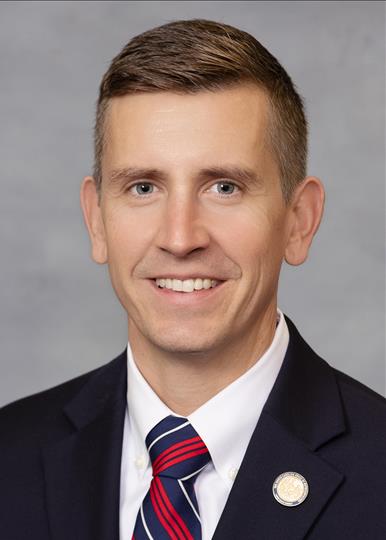
Rep. Jonathan Almond
Sponsored bills
Maddy summaryHB 123 makes it a crime for health care providers to willfully destroy, alter, or falsify medical records to conceal medical errors causing patient harm, illegally obtain money, or hide facts related to potential legal claims. It creates specific criminal penalties: a serious felony for hiding errors that caused injury or death, a lesser felony for financial gain, and a misdemeanor for other concealment. The law applies to all health care providers and becomes effective December 1, 2025. It explicitly states this does not affect existing civil remedies available to patients.
Maddy summaryHB 53 would increase property damage thresholds for classifying at-fault car accidents under North Carolina's Safe Driver Incentive Plan. It raises the "major" accident threshold from $3,850 to $5,975, the "intermediate" range from $2,300-$3,850 to $3,570-$5,975, and sets a new "minor" threshold at $3,570 or less. This change would reduce surcharges for drivers involved in property damage accidents below these higher thresholds. The bill would take effect October 1, 2025, if passed.
Maddy summaryHB 874, the North Carolina Healthy Schools Act, prohibits public schools from serving or selling ultra-processed foods containing specific synthetic additives (like artificial dyes and preservatives such as Yellow Dye 5 or Potassium Bromate) during the school day. It directly affects all North Carolina public schools, including district, regional, and charter schools, requiring them to certify compliance with the ban through the Department of Public Instruction. Schools must submit certification forms, and the Department will publish a list of compliant schools online. The ban takes effect for the 2025-2026 school year, though parents may still provide such foods for their children.
Maddy summaryThis bill requires North Carolina state agencies and local governments to only purchase U.S. and North Carolina flags made entirely in the United States using domestically grown or produced materials. It prohibits using public funds for any U.S. or state flags not 100% manufactured in America from domestic materials. The rule applies to all new flag purchases starting October 1, 2025. It directly affects all government offices responsible for buying flags with public money.
Maddy summaryHB 471, the Food Labeling Transparency Act, requires manufacturers of cell-cultured and insect-based food products to clearly label items that use meat or poultry terms (like "beef," "chicken," or "burger") with qualifying terms such as "cell-cultured," "insect-based," or "lab-grown" in prominent, close proximity to the product name. This applies to products that mimic traditional meat or poultry but are made without animal slaughter, directly affecting manufacturers of these alternative protein products. The law mandates this labeling to prevent consumer confusion by ensuring the product’s origin is transparent, with enforcement starting October 1, 2025. It does not restrict the sale of these products but requires specific labeling to distinguish them from conventional meat.
Maddy summaryHB 814 (PIRE) promotes the use of advanced conductors (lower-resistance wires) and grid-enhancing technologies to improve electricity transmission efficiency and reliability. It directly affects public utilities, electric membership corporations, and municipal power agencies by waiving standard permitting requirements for specific upgrades that increase capacity, reduce congestion, or enhance grid resilience using these technologies. The bill requires applicants to detail the costs and benefits of such upgrades in their applications and mandates environmental reviews for new projects. This policy change streamlines infrastructure modernization without new construction, focusing on optimizing existing transmission systems.
Maddy summaryHB 791, the Women's Safety and Protection Act, defines "biological sex" (based on physical characteristics at birth) and "gender" in North Carolina law and mandates that single/multiple occupancy restrooms, changing facilities, and sleeping quarters in state-funded facilities (including public schools, prisons, domestic violence centers, and juvenile facilities) be designated for use by one biological sex at a time. The bill requires facilities to have policies ensuring only one biological sex uses these spaces simultaneously, with exceptions for family use, maintenance, medical emergencies, or safety threats. It specifically prohibits students from sharing sleeping quarters with individuals of another biological sex in public schools unless family members or with parental permission. The law applies to all covered facilities receiving state funds, including public schools and domestic violence centers, and subjects its provisions to "intermediate scrutiny" under constitutional review.
Maddy summaryHB 776, the North Carolina Religious Freedom Restoration Act, requires state and local governments to apply strict scrutiny before restricting religious practices. It protects religious gatherings in places of worship, homes, and neighborhoods from neutral laws or regulations that incidentally burden faith, such as housing rules or emergency orders. The law defines a "burden" as any government action limiting religious exercise (including withholding benefits or imposing penalties) and mandates that such restrictions must serve a compelling government interest through the least restrictive means. It explicitly does not affect constitutional protections against government establishment of religion or alter existing housing nondiscrimination laws.
Maddy summaryHB 780 appropriates $2 million to expand the All Pro Dad program in North Carolina through Family First, Inc., funding school-based chapters, father-child engagement events, and parenting resources. It also creates the "Responsible Fatherhood NC" program under the Department of Health and Human Services, requiring a nonprofit manager to run a statewide media campaign, provide father-focused resources, and promote existing fatherhood initiatives. The bill directs grants to community organizations addressing fathers' needs - such as employment, child support, and parenting skills - with priority given to areas facing high unemployment, incarceration, or single-parent households. The program directly supports North Carolina fathers and their children, aiming to improve family well-being through increased paternal involvement.