

Maddy summaryThis bill, known as the Mike Clampitt 1st Responder Tax Fairness Act, aims to expand tax exemptions for volunteer fire departments and rescue squads in North Carolina. Specifically, it allows these independent groups, which have two or fewer paid employees and are already exempt from state income tax, to avoid paying a highway use tax on specific emergency vehicles like fire trucks, forest firefighting units, and other emergency service vehicles. The change applies to vehicles when a certificate of title is issued on or after July 1, 2026, ensuring these organizations can acquire necessary equipment without incurring this particular tax. By broadening the existing exemption, the legislation directly benefits volunteer responders who operate outside of local government units.
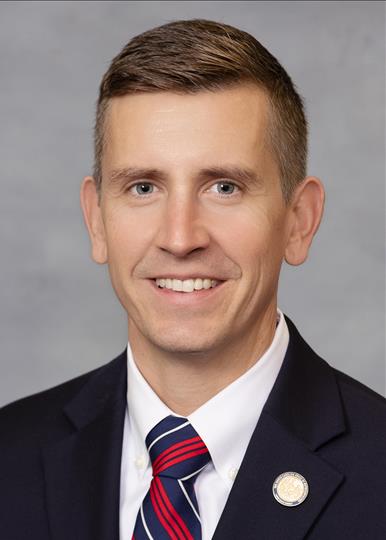
Rep. Jonathan Almond
Sponsored bills
Maddy summaryThis bill allocates $6 million in state funds to expand two food assistance programs in North Carolina for the 2026-2027 fiscal year. The first $4 million supports FarmSHARE, which provides grants to buy locally grown food and distribute it for free to food-insecure individuals and households. The second $2 million funds the Double Up Food Bucks Program, allowing people receiving nutrition assistance to use their benefits to purchase fresh fruits and vegetables at farmers markets and other local retailers. Both programs require the state department to submit annual reports detailing participation numbers, distribution metrics, and financial data to legislative oversight committees. The legislation takes effect on July 1, 2026.
Maddy summaryHB 122, the North Carolina Healing Arts Act, would establish a new North Carolina Healing Arts Commission to regulate specific complementary medicine professions. It directly affects reflexologists and music therapists by requiring them to obtain state licenses to practice, ensuring they meet standards for public safety and professional competence. The bill creates the Commission to develop licensing rules, issue and enforce licenses, handle disciplinary actions, and set fees - all funded by practitioner fees rather than state funds. This legislation aims to protect consumers by standardizing qualifications for these healing arts professions while creating a formal regulatory structure.
Maddy summaryHouse Bill 433 allows licensed registered nurses (RNs) to serve as school nurses in North Carolina public schools. The bill prohibits the State Board of Education from requiring a four-year degree for school nurse employment. It specifies that RNs with at least two years of experience in a hospital or health clinic can work as school nurses without needing additional certifications or licenses. These qualified registered nurses will be paid under the certified school nurse pay scale.
Maddy summaryHouse Bill 390, titled "Alleviate the Dangers of Surgical Smoke," establishes new standards for surgical smoke evacuation in North Carolina. This bill requires all licensed hospitals and ambulatory surgical facilities to adopt and implement policies mandating the use of a smoke evacuation/filtering system during surgical procedures likely to generate surgical smoke. A smoke evacuation/filtering system is defined as equipment that captures, filters, and eliminates surgical smoke at its origin. The Department of Health and Human Services is authorized to take adverse action against facilities that violate these new requirements. This act is scheduled to become effective on January 1, 2026.
Maddy summaryThis bill allows the North Carolina Department of Transportation to mow highway rights-of-way in May for major sporting events, overriding the usual prohibition on mowing during that month. It applies specifically to events expected to have at least 5,000 attendees and requires local governments to submit a request at least 30 days in advance. Under the new rules, the state would mow the area within a five-mile radius of the event between two and seven days before it takes place, with $10,000 appropriated to cover these costs.
Maddy summaryThis bill allows wastewater treatment system operators in North Carolina to calculate sewage flow rates for new homes at a lower standard of 55 gallons per day per bedroom, provided the state environmental department approves the change based on local usage data. Under the new rules, operators must still ensure that reducing the flow rate does not harm public health or the environment, while systems without allocated capacity for future connections must continue using the standard rate of 75 gallons per day per bedroom. To support these changes, the state will allocate $10,000 to the Department of Environmental Quality in the 2026-2027 fiscal year to review and evaluate the proposed lower flow rates. The legislation is set to take effect on July 1, 2026.
Maddy summaryThis bill requires local public school districts and charter schools in North Carolina to allow students with disabilities who attend private schools to enroll part-time in public programs. It mandates that schools create written policies permitting these students to access specific courses, services, or specialized education while remaining enrolled in their nonpublic schools. Additionally, the legislation clarifies that part-time students will not count toward a charter school's official enrollment growth numbers and provides $10,000 in funding to help schools cover the administrative costs of implementing these changes.
Maddy summaryThis bill aims to improve support for people with intellectual and developmental disabilities in North Carolina through three main changes. It mandates a minimum wage increase of $18 per hour for direct care workers by raising Medicaid reimbursement rates for providers and facilities, with funds appropriated starting in fiscal year 2026-2027. Additionally, the legislation adds at least 1,000 slots to the state's Medicaid waiver program and requires the creation of a ten-year plan to address unmet service needs. Finally, it seeks to remove income and asset limits for the state's Medicaid buy-in program for workers with disabilities, allowing more individuals to qualify for coverage regardless of their earnings or savings.
Maddy summaryThis bill establishes a program to provide free hyperbaric oxygen therapy to North Carolina veterans diagnosed with traumatic brain injury or posttraumatic stress disorder. The legislation appropriates $3 million from the state General Fund to a nonprofit organization to deliver approximately 15,000 treatments to an estimated 350 eligible veterans over the 2026-2027 fiscal year. The program includes structured clinical care and requires the provider to submit a detailed report on outcomes and fund usage by June 2027.