

Maddy summaryHB 261 establishes new sentence enhancements for individuals convicted of certain crimes. It increases the severity of a felony sentence (excluding Class A) if the person was unlawfully in the United States and had prior immigration issues, raising the felony by one or two classes. The bill also enhances sentences for felonies (excluding Class A) and misdemeanors committed while conspiring with others to benefit or promote criminal activity. For these offenses, the sentence is increased by one class, or a Class A1 misdemeanor becomes a Class I felony. These enhancements apply if the specific conditions are proven beyond a reasonable doubt during trial.
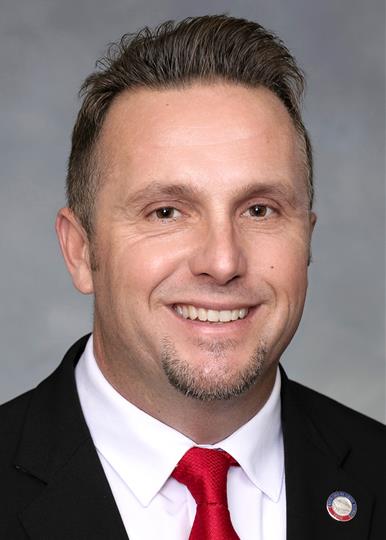
Rep. Brian Biggs
Sponsored bills
Maddy summaryHB 575, known as "The Hunter Robinson Act," revises North Carolina's laws governing post-release supervision for criminal offenders. The bill modifies how the "maximum imposed term" is calculated for prisoners serving consecutive sentences by adjusting the months deducted based on felony class. It also changes when prisoners become eligible for post-release supervision and extends the required length of the supervision period for most felony categories. These changes generally result in longer post-release supervision terms for affected offenders. The act applies to offenses committed on or after December 1, 2025.
Maddy summaryHouse Bill 146 amends North Carolina's driver's license renewal process. It allows active duty members of the U.S. Armed Forces, or reserve components serving on active duty and stationed outside North Carolina, to renew their driver's licenses remotely multiple times in a row. Currently, a remote renewal requires the previous renewal to have been done in person, but this bill removes that restriction for eligible military personnel. This change aims to make it easier for these individuals to maintain their licenses while serving away from the state. The act becomes effective October 1, 2025, applying to licenses renewed on or after that date.
Maddy summaryHouse Bill 38, known as the Second Amendment Financial Privacy Act, prohibits payment card networks from using a specific "firearms code" to identify or track purchases made at firearms merchants in North Carolina. It also forbids these networks from knowingly maintaining records of individuals in the state who own firearms. The bill aims to prevent the separate tracking of lawful firearm and ammunition purchases and protect the financial privacy of individuals exercising their right to bear arms. Payment card networks are also prohibited from discriminating against firearms merchants based on code assignment. Violations can lead to civil penalties assessed by the Attorney General or civil lawsuits from affected merchants or individuals.
Maddy summaryHB 163 regulates Pharmacy Benefits Managers (PBMs) to ensure fair practices for pharmacies and insured individuals. The bill prohibits PBMs from charging insurers more for a prescription drug than they pay the pharmacy (spread pricing) and requires patient out-of-pocket costs to be based on the net price after any PBM concessions. It establishes minimum reimbursement standards for pharmacies, preventing PBMs from paying less than the national average drug acquisition cost plus a dispensing fee. Additionally, it clarifies that PBMs cannot restrict accredited pharmacies from dispensing specialty drugs and strengthens audit protections for pharmacies.
Maddy summaryHB 570, the "Responsible Firefighting Foam Management Act," restricts the use of firefighting foams containing PFAS chemicals for training and testing. It prohibits any person, local government, or state agency from discharging Class B firefighting foam with intentionally added PFAS for training or practice purposes. For testing, these foams are also prohibited unless required by law or an authority, and the testing facility has implemented measures to prevent environmental releases. The bill mandates the use of non-fluorinated alternatives for training and is set to become effective on December 1, 2025.
Maddy summaryHouse Bill 288 requires the official Prisoner of War/Missing in Action (POW/MIA) flag to be displayed at all state-owned buildings and public schools in North Carolina. This applies whenever the United States flag is flown, provided an existing flagpole can accommodate the POW/MIA flag. The state will purchase these flags for state-owned buildings, while local boards of education may accept donations or use available funds for their schools.
Maddy summaryHB 729, titled the "Farmland Protection Act," makes several changes related to solar energy development. It reduces the property tax exclusion for solar energy electric systems from 80% to 40% of their appraised value, which will increase the taxable value of these systems. The bill also prohibits the construction of new utility-scale solar projects that are not qualifying facilities under federal law, unless they are sited on specific types of land such as brownfields, non-agricultural land, or clear-cut timberland. Additionally, it updates the effective dates for requirements regarding financial assurance and decommissioning plans for utility-scale solar projects, affecting both existing and new facilities.
Maddy summaryHB 217 requires individuals aged 18 and older who are applying for a North Carolina driver's license and are not licensed in another state or haven't completed a state driver education course to complete a mandatory alcohol and drug abuse awareness course. This also applies to applicants licensed in other countries. The three-hour course, available online or in person, will cover the effects of substance abuse on driving, state traffic laws, and high-risk driving behaviors. Third-party vendors will offer these courses under the Division's oversight, and participants will pay a fee.
Maddy summaryHB 806, titled "Public School Operational Relief," proposes changes to North Carolina's public school regulations concerning class sizes and teacher licensure. The bill removes state-mandated class size requirements for kindergarten through third grade, making them recommendations, and eliminates penalties for exceeding these former maximums. It also introduces a new provision requiring that at least 50% of teachers in a public school hold a teaching license. Unlicensed teachers hired under this provision would need to complete preservice training in areas such as educating children with disabilities and managing student behavior. These changes would apply to public schools and local school administrative units beginning with the 2025-2026 school year.