

Maddy summaryHouse Joint Resolution 379 is an application from the State of North Carolina to the U.S. Congress. It requests that Congress call a "convention of the states" as outlined in Article V of the U.S. Constitution. The purpose of this convention would be to propose new amendments to the Constitution. These amendments would focus on imposing fiscal restraints on the federal government, limiting its power, and setting term limits for federal officials and members of Congress. This application is considered ongoing until two-thirds of the states submit similar requests.
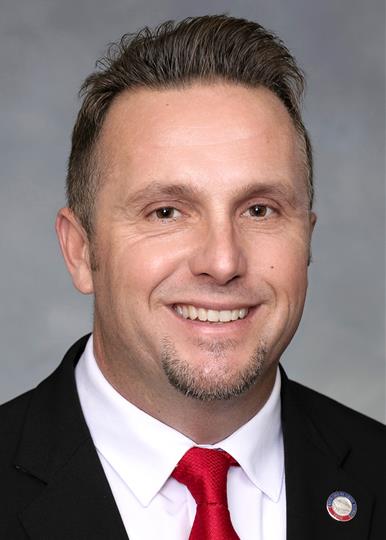
Rep. Brian Biggs
Sponsored bills
Maddy summaryHB 690, "The Citizens Support Act," directs several state and local agencies to ensure that state-funded benefits are provided only to U.S. citizens and noncitizens legally authorized to reside in the United States. The Department of Health and Human Services, Department of Commerce, Housing Finance Agency, and local housing authorities must develop plans to review eligibility criteria and verify the immigration status of applicants for various benefits, including housing, welfare, and medical assistance. State-funded institutions of higher education are required to adopt policies to verify applicants' legal residency for tuition and educational benefits. Additionally, the Division of Employment Security must implement a policy to verify legal residency for unemployment benefit applicants. These agencies are also mandated to report on their implementation progress and any federal laws that prevent them from denying benefits.
Maddy summaryHouse Bill 818 aims to standardize access to new birth certificates for adopted individuals, making the process similar to those who are not adopted. It directs the State Registrar to prepare a new birth certificate for adoptees that lists their adoptive parents and contains no reference to the adoption itself. The bill specifies that certified copies of these new birth certificates can be provided to the adoptee, their children, adoptive parents, and other immediate adoptive family members. It also ensures original birth certificates and adoption records remain sealed, while counties receive copies of the new certificate to replace the original. This act is intended to apply to new birth certificates for persons adopted before, on, or after October 1, 2025.
Maddy summaryHB 781 bans unauthorized public camping or sleeping on public property across North Carolina, directly affecting individuals experiencing homelessness and local governments. It prohibits counties and municipalities from allowing such activities, but permits them to designate specific public property for temporary camping for up to one year. These designated sites must meet standards for safety, sanitation (including restrooms and water), and access to behavioral health services, and prohibit illegal substance use. Such designations require certification from the Department of Health and Human Services, which assesses factors like shelter bed availability and proximity to residential areas. Residents or businesses can take legal action against local governments that fail to enforce the ban.
Maddy summaryThis bill, HB 519, revises laws regarding when minors can consent to medical treatment and parental access to their children's medical records. It restricts the medical services a minor can consent to on their own to primarily pregnancy-related care, removing their ability to consent for venereal diseases, substance abuse, or emotional disturbance treatment. The bill also requires written parental consent for minors to receive vaccines authorized for emergency use but not yet fully FDA approved. Additionally, it grants parents the right to access all their minor child's medical records, including those for care the minor could consent to, with exceptions for suspected abuse or neglect, court orders, or active law enforcement investigations.
Maddy summaryHB 414 aims to give equal credit for community college courses towards high school graduation requirements for dually enrolled students, including those in the Career and College Promise program. It directs the State Boards of Community Colleges and Education to collaborate on developing a system where one community college course grants one full high school credit in core subjects, without requiring corresponding high school end-of-course tests. Until this system is fully established, specific community college courses will temporarily satisfy certain high school credits starting in the 2025-2026 academic year. Additionally, the bill modifies high school math graduation requirements, affecting which math courses require an end-of-course test.
Maddy summaryHB 121 provides local boards of education with additional flexibility in adopting their school calendars. It removes the current state-mandated earliest opening date for students (the Monday closest to August 26) and the latest closing date (the Friday closest to June 11). This change allows local boards to determine the specific opening and closing dates for public schools under their authority. The bill directly affects public schools and students in North Carolina and would apply starting with the 2025-2026 school year.
Maddy summaryHouse Bill 4, also known as "Sam's Law," aims to improve seizure preparedness and response in North Carolina schools. The bill requires public school units, charter schools, and other educational institutions to develop individualized Seizure Action Plans for students diagnosed with seizure disorders, in collaboration with their parents. It mandates annual seizure education programs for all K-12 school personnel and requires principals, school counselors, and teachers to complete an annual self-study on seizure disorders. Furthermore, the bill ensures at least one employee in each school is trained to administer seizure medication and requires the posting of seizure first aid information in visible areas. Various educational boards are tasked with adopting policies to implement these requirements, with $50,000 appropriated to the Department of Public Instruction for development costs.
Maddy summaryHouse Bill 618, the "Ivermectin Access Act," directs the State Health Director to issue a statewide standing order that allows licensed pharmacists to dispense ivermectin for human use. Under this order, pharmacists would be authorized to provide ivermectin without requiring a written prescription or consultation from a healthcare professional. The bill also grants immunity from civil or criminal liability to the State Health Director for issuing the order and to any pharmacist who dispenses ivermectin in accordance with it. The State Health Director is required to issue this statewide standing order by October 1, 2025.
Maddy summaryHouse Bill 535, known as the "Title Fraud Prevention Act," aims to combat property title fraud by increasing penalties for filing fraudulent deeds and enhancing recording procedures. The bill requires Registers of Deeds to verify the identity of individuals, who are not designated "trusted submitters" (such as attorneys or title companies), presenting certain property instruments for recording by requiring a government-issued photographic identification card. It also authorizes Registers of Deeds to refuse to register instruments deemed "suspicious" or if identity verification requirements are not met. Additionally, the bill escalates the criminal penalties for filing fraudulent deeds, making it a felony offense.