

Maddy summaryHB 91 amends North Carolina statutes to include the U.S. Space Force in the definition of "Armed Forces" for state benefits, ensuring Space Force members and their families qualify for military-related tax exemptions, tuition assistance, and residency rules. The bill also changes the name of Fort Bragg to Fort Liberty to align with the U.S. Department of Defense's renaming of the base. These updates reflect the federal establishment of the Space Force and ensure state law matches current military structure and base designations.
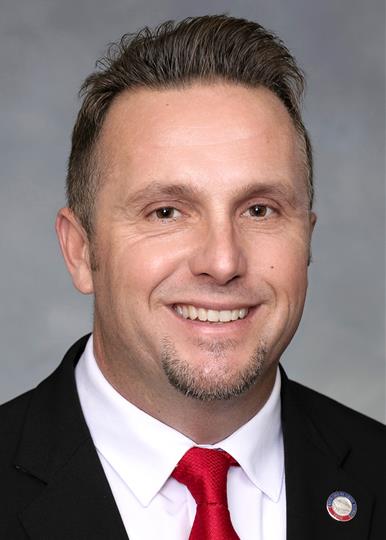
Rep. Brian Biggs
Sponsored bills
Maddy summaryHB 59 would increase the income eligibility limit for North Carolina's elderly or disabled property tax homestead exclusion from $25,000 to $48,000 for taxable years beginning July 1, 2026. This change would directly affect homeowners aged 65 or older, or those who are totally and permanently disabled, who meet other criteria (like being a North Carolina resident and owning their home as a permanent residence). The bill modifies the existing rule that currently limits eligibility to those with incomes under $25,000, raising the threshold to $48,000 while maintaining the exclusion amount as the greater of $25,000 or 50% of the home's appraised value. The change aims to expand access to this property tax relief for qualifying low-to-moderate income homeowners. (Note: The bill was withdrawn in June 2025 and has not become law.)
Maddy summaryHB 480 creates a new pathway for doctors, physician assistants, and anesthesiologist assistants to obtain North Carolina medical licenses by transferring licenses from other states ("licensure by endorsement"). To qualify, applicants must have held an active license in another U.S. jurisdiction for at least five years (with two years of practice post-residency for doctors), have a verified full-time job offer in North Carolina, maintain good standing with no recent disciplinary actions, and meet practice hour requirements. The bill increases application fees for endorsement (e.g., $825 for physicians vs. $400 for standard licensure) and requires additional documentation within 180 days to keep the license active. This directly affects out-of-state medical professionals seeking to practice in North Carolina without retaking exams.
Maddy summaryHB 126 requires state and local agencies to seek input from agricultural advisory boards before condemning or rezoning farmland within voluntary agricultural districts. It mandates that agencies request public hearings on such proposals, giving boards 45 days to review and submit recommendations. Agencies cannot proceed with condemnation or rezoning actions while the board is processing the request, extending the timeline to 120 days after the board submits its findings. The bill directly affects landowners in these districts and agencies making land use decisions, effective October 1, 2025.
Maddy summaryHB 661, the Building Industry Efficiency Act of 2025, modifies North Carolina's construction and street regulations to streamline development. It prohibits inspection departments from charging fees for canceling inspections more than one business day early (Section 1.1), and limits municipalities from imposing stricter street design standards than the North Carolina Department of Transportation (NCDOT) for both public and private streets (Sections 1.2-1.3). For private streets, developers must disclose if engineered designs fall below NCDOT standards and provide disclosures to buyers before sales. Municipalities and counties must accept pedestrian facilities or street improvements into public road systems after project completion, but counties need agreements with NCDOT or municipalities first (Sections 1.4-1.5). The bill takes effect July 1, 2025, directly affecting developers, municipalities, engineers, and property buyers.
Maddy summaryHB 50 creates two new options for retired state and local law enforcement officers with at least 30 years of service or 55 years old with 5+ years of service. It allows officers retiring before age 62 to choose between two calculation methods for an annual separation allowance: either 0.85% of their most recent base pay for each year of service, or a fixed amount based on pay at 30 years of service. The allowance stops when officers turn 62 or pass away. This directly affects qualifying law enforcement officers who retire under North Carolina's state retirement system.
Maddy summaryHB 478 changes how North Carolina fills vacancies in district attorney (DA) offices. It requires the Governor to appoint a replacement from a list of up to three candidates recommended by the political party of the outgoing DA (or by the General Assembly if the DA was unaffiliated), within 30 days of the vacancy. If recommendations aren't provided in time, the Governor can appoint directly. This affects all unexpired DA terms in the state, ensuring appointments align with the political party of the vacating official.
Maddy summaryHouse Bill 560, known as the "Parents Protection Act," makes several changes to laws governing juvenile care and child adoption. The bill specifies that parents, guardians, or caretakers who raise a juvenile consistent with their biological sex, including related mental health or medical decisions, shall not be subject to abuse or neglect petitions or child abuse charges solely based on those actions. Additionally, it prohibits adoption and foster care agencies from denying opportunities or placements to prospective parents based on their refusal to support a child's gender transition. These provisions apply to petitions filed and offenses committed on or after December 1, 2025.
Maddy summaryHB 415 modifies North Carolina high school mathematics graduation requirements, primarily affecting students and the State Board of Education. It requires completion of NC Math 1 and 2, plus two additional math courses aligned with a student's postsecondary plans, and eliminates the end-of-course test for NC Math 3. The bill establishes an "Extended Math" pathway, dividing NC Math 1 and 2 content into four courses for students needing more time and support. Students scoring below proficient on certain math assessments will be enrolled in these extended courses, which are set to begin in the 2025-2026 school year.
Maddy summaryHB 674, "The Firearms Liberty Act," proposes several changes to firearms regulations. It would allow for the issuance of lifetime concealed handgun permits, in addition to the current five-year permits, affecting individuals seeking to carry concealed handguns. The bill also specifies that permittees whose concealed carry permits lapse would not need to retake a firearms safety course for renewal under certain conditions. Furthermore, it aims to protect the property rights of individuals subject to domestic violence protective orders by enabling them to store or sell their firearms through qualified licensed dealers. Finally, the bill authorizes the storage and use of defensive devices in biometric safes for schools.