

Maddy summaryHB 490 revises North Carolina's community college funding model to prioritize enrollment in workforce-focused programs. It requires the State Board of Community Colleges to allocate base funding plus additional funds based on full-time student enrollment in curriculum, workforce training, and Basic Skills courses, with weighted funding for high-demand fields. The bill also creates an "Enrollment Increase Reserve" to fund colleges with enrollment growth exceeding 5% in targeted programs and permits community colleges to add up to a 10% tuition surcharge for eligible courses, with funds restricted to instructional costs. These changes directly affect community colleges and students in workforce education, effective July 1, 2025.
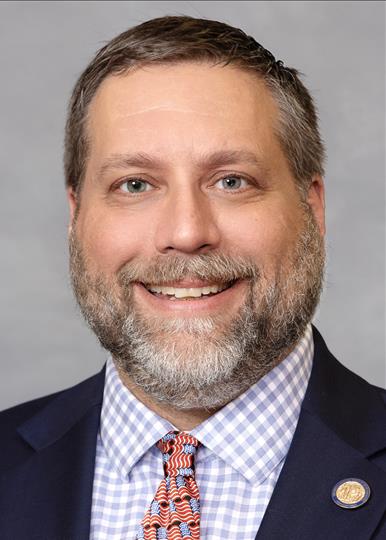
Rep. David Willis
Sponsored bills
Maddy summaryHB 47, the Disaster Recovery Act of 2025 - Part I, allocates $524 million from the Helene Fund to support recovery efforts in North Carolina counties impacted by Hurricane Helene. The bill directs funds to specific programs including home reconstruction ($120 million), agricultural crop loss assistance ($200 million), road and bridge repairs ($100 million), small business infrastructure grants ($55 million), debris removal ($20 million), fire department equipment ($10 million), and tourism promotion ($4 million). These resources directly assist residents, farmers, local governments, and businesses in designated hurricane-affected counties by addressing immediate rebuilding needs and supporting economic recovery. The bill requires programs to align with federal disaster recovery guidelines to maximize potential federal reimbursement, with reporting requirements for certain initiatives.
Maddy summaryHB 186, the "Stars and Stripes Commitment Act," requires all North Carolina public schools (including charter, regional, and laboratory schools) to schedule the daily recitation of the Pledge of Allegiance within one hour of the start of the instructional day. It also mandates that schools display U.S. and North Carolina flags in classrooms when available and provide age-appropriate instruction about the flag and pledge’s meaning. The bill applies to all school governing bodies and state education board meetings, requiring the pledge to open each meeting. Crucially, it explicitly states the policy does not compel anyone to stand, salute, or recite the pledge. The law takes effect for the 2025-2026 school year.
Maddy summaryHB 430 would raise North Carolina's legal sales age for all tobacco and nicotine products (including e-cigarettes and vaping devices) to 21. It requires retailers to obtain a tobacco sales permit and verify customers' ages using acceptable ID. The bill directly affects tobacco retailers (who must get permits) and youth under 21 (who would be barred from purchasing these products). Key provisions include defining "vapor products" and establishing penalties for violations, such as fines up to $1,000 for repeat offenses.
Maddy summaryHB 37 standardizes monthly pension benefits for North Carolina firefighters and rescue squad workers under the state pension fund. It sets a uniform $175 monthly pension for members with 20+ years of service who reach age 55, replaces the previous $180 amount, and maintains $175 for disability benefits and line-of-duty death benefits. The bill also allows members affected by city annexations or department closures to continue contributing $15 monthly until they reach 20 years of service for pension eligibility. These changes apply to current and future members of the pension fund who meet the service requirements. The bill does not alter contribution rates or eligibility for most members but adjusts benefit amounts and extends certain provisions.
Maddy summaryHB 5, the NC Constitutional Carry Act, allows any U.S. citizen aged 18 or older to carry a concealed handgun without a permit, effective upon enactment. This directly affects most adult residents who are not prohibited from firearm ownership under existing state or federal law. The bill removes the permit requirement for concealed carry (per new Section 14-415.35(a)), while maintaining all existing prohibitions - such as for felons, domestic violence offenders, or those under indictment. It also preserves the ability to obtain permits for reciprocity or other purposes, and continues allowing officials with permits to carry while on duty. The law does not change restrictions for prohibited individuals, who remain barred from concealed carry.
Maddy summaryHB 425 raises North Carolina's legal sales age for all tobacco products, including vaping devices and e-liquids, from 18 to 21. It directly affects retailers (who must obtain a tobacco sales permit) and youth (who are prohibited from purchasing these products). The bill requires retailers to verify purchasers' ages using accepted ID and mandates inspections of retail locations to enforce compliance, with penalties including fines up to $1,000 for violations.
Maddy summaryHB 35 designates November of each year as Military Appreciation Month in North Carolina. The bill creates a symbolic recognition within state law, honoring military service members and veterans during this month. It does not establish new programs, funding, or requirements - it simply formally names November for this purpose. The bill affects the state government's official calendar and public recognition efforts, with no direct impact on individuals or organizations.
Maddy summaryHB 62, the Farmers Protection Act, prohibits banks from denying or canceling financial services to farmers based on their greenhouse gas emissions, fertilizer use, or machinery type. It creates a rebuttable presumption that banks violating this rule are acting on ESG (environmental, social, governance) commitments, requiring banks to prove decisions were financially motivated. Banks must annually attest to compliance under penalty of perjury, and violations may result in civil penalties up to $10,000 per incident. The law directly affects farmers, banks, credit unions, and state financial associations by restricting discriminatory lending practices tied to environmental factors.
Maddy summaryHB 182 creates two key policy changes: First, it allows judges to issue lifetime no-contact orders against defendants convicted of certain violent offenses (including sex offenses requiring registration), requiring a show-cause hearing to determine if the victim fears future contact. Second, it clarifies that caregivers of children under 16 who commit or allow sexual acts with the child face Class D felony charges, specifically expanding penalties for permitting such abuse. The law directly affects victims of violent crimes (through the no-contact protections) and caregivers of children under 16 (through updated felony charges for sexual abuse). These provisions apply to offenses committed on or after December 1, 2025.