

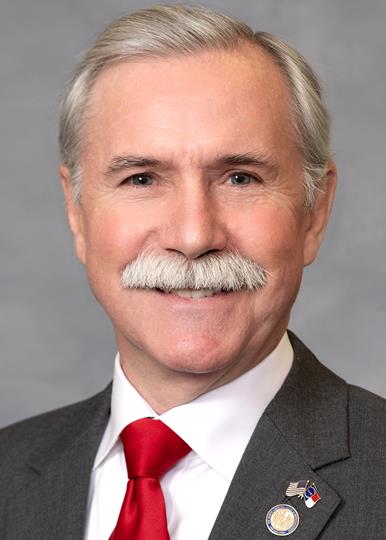
Photo of Dennis Riddell
R North Carolina House · District 64 On the 2026 ballot

Rep. Dennis Riddell

Compare
Total votes
4,754
all sessions
Attendance
98%
113 missed
Higher than 91% of chamber peers
With party
97%
of cast votes
Higher than 87% of chamber peers
Bipartisan score
2%
crosses aisle rarely
Lower than 89% of chamber peers
Sponsored
1,195
bills & resolutions
Near the chamber average
Committees
12
assignments
1,195 bills and resolutions

Sponsored bills

Total
1,195
Primary
132
Co-sponsor
1,063
This page
1,195
matching current filters
Co-sponsor HB 211
Passed · North Carolina House · Co-sponsor
The Kelsey Smith Act.

Maddy summaryHB 211, "The Kelsey Smith Act," authorizes wireless telecommunications carriers to provide a device's location information to law enforcement under specific emergency circumstances. This includes situations where a 911 call was made or there is reasonable suspicion of an emergency involving risk of death or serious physical harm. Wireless carriers are required to submit their emergency contact information to the State Bureau of Investigation, which will maintain a database for public safety answering points. The bill protects carriers from legal action if they provide this information in good faith.

Passed Apr 16, 2025 1 co-sponsor
Co-sponsor HB 272
Passed · North Carolina House · Co-sponsor
The Sergeant Mickey Hutchens Act.

Maddy summaryHouse Bill 272, known as "The Sergeant Mickey Hutchens Act," allows certain law enforcement, probation/parole, and correctional officers in North Carolina to purchase additional retirement service credit. Officers who hold an advanced law enforcement or corrections certificate and have at least five years of membership service can buy up to four years of creditable service. This purchase applies to members of the Teachers' and State Employees' Retirement System or the Local Governmental Employees' Retirement System. To do so, they must pay a lump sum covering the full cost of the increased retirement system liability and an administrative fee, with the option for their employer to contribute to this cost.

Passed Apr 16, 2025 1 co-sponsor
Primary HB 632
died · North Carolina House · Lead sponsor
Amend Hazing Laws.

Maddy summaryHB 632 revises North Carolina's hazing laws, repealing the existing statute and creating a new one with an expanded definition of hazing. It establishes criminal offenses for individuals who participate in hazing against minors or students, and for local, national, and postsecondary educational institutions whose leadership or employees knowingly fail to intervene or actively participate. The bill also introduces penalties for individuals who fail to seek medical assistance for an injured minor or student during hazing. Penalties for violations range from misdemeanors to felonies, including potential fines for both individuals and organizations.

died Apr 16, 2025 0 co-sponsors
Co-sponsor HB 106
In committee · North Carolina House · Co-sponsor
Revive High-Need Retired Teachers Program.

Maddy summaryThis bill revives and expands a program that allows eligible retired educators to return to work in high-need schools. It defines "high-need retired teachers" as beneficiaries of the Teachers' and State Employees' Retirement System who meet specific retirement and service criteria, and are reemployed by local boards of education. A key provision ensures that earnings from this reemployment do not count against post-retirement earnings limits, allowing these teachers to receive both their full retirement allowance and a salary. The Department of Public Instruction is tasked with certifying these teachers, and local boards must report their employment status to the Retirement System.

In committee Apr 16, 2025 1 co-sponsor
Co-sponsor HB 114
In committee · North Carolina House · Co-sponsor
Employment Preference for Military Personnel.

Maddy summaryHB 114 (Employment Preference for Military Personnel) updates North Carolina's state employment policy to expand eligibility for hiring preference. It removes the requirement that military service must have occurred during a "period of war" and now includes active-duty service members, National Guard and Reserve members, and their spouses/dependents in the preference program. The bill ensures state departments, agencies, and institutions must grant hiring preference to qualifying individuals (including active-duty personnel during service) for all employment events like initial hires, promotions, and transfers. This change directly affects military service members, their families, and North Carolina state employers by broadening who qualifies for employment preference without wartime service restrictions.

In committee Apr 15, 2025 1 co-sponsor
Co-sponsor HB 113
died · North Carolina House · Co-sponsor
Create Committee on Medicaid Sustainability.

Maddy summaryHB 113 creates a joint legislative committee to study potential changes to North Carolina's Medicaid program if federal funding decreases. The 12-member committee (six senators appointed by the Senate President Pro Tempore, six representatives appointed by the House Speaker) will examine cost-saving options like reducing optional services, adjusting provider payments, or improving managed care efficiency. It must submit a final report with recommendations to the General Assembly by April 30, 2026, but the bill itself does not make any direct policy changes to Medicaid. This is a procedural measure establishing a study body, not a policy enactment.

died Apr 15, 2025 1 co-sponsor
Co-sponsor HB 890
In committee · North Carolina House · Co-sponsor
School Internet Emergency Access Act.

Maddy summaryHB 890 requires North Carolina's Department of Public Instruction to create an Emergency Internet Service Plan (EISP) ensuring public schools can access temporary internet during state emergencies, like natural disasters. The bill establishes a dedicated Emergency Internet Service Fund with $3.9 million in initial funding for equipment and service contracts, which schools cannot be charged to activate. Key provisions include requiring the plan to cover activation conditions, equipment needs, data protection, and third-party partnerships, while ensuring the fund is nonreverting (unused money carries over). This directly affects all public school units by guaranteeing emergency internet access without requiring school-level funding. The plan must be updated annually and reported to the legislature.

In committee Apr 14, 2025 1 co-sponsor
Co-sponsor HB 905
In committee · North Carolina House · Co-sponsor
Public School Part-Time Enrollment.

Maddy summaryThis bill requires public schools and charter schools in North Carolina to allow students from nonpublic schools to enroll part-time for access to specific courses, programs, or services. The law mandates that local school boards create policies for this enrollment and make them available on their websites, while charter schools must also post relevant information online. Schools will receive state funding for part-time students, with full per-pupil funding for those attending one-third or more of instructional time and half funding for those attending less. The legislation also clarifies that part-time nonpublic school students will not count toward a charter school's enrollment growth metrics.

In committee Apr 14, 2025 1 co-sponsor
Primary HB 996
In committee · North Carolina House · Lead sponsor
Further Limit General Fund Operating Budget.

Maddy summaryHB 996 reduces North Carolina's state budget spending limit by lowering the cap on the General Fund operating budget from 7% to 6% of projected total state personal income each year. This directly affects the state government's annual budget planning, requiring it to spend less relative to the state's economic output. The bill maintains the existing process for exceeding the cap, which still requires a two-thirds vote in both legislative chambers. It takes effect July 1, 2025, for budgets adopted on or after that date.

In committee Apr 14, 2025 0 co-sponsors
Co-sponsor HB 844
In committee · North Carolina House · Co-sponsor
Finding Grace Family Bill.

Maddy summaryHB 844, the Finding Grace Family Bill, revises North Carolina's adoption and abortion laws. It requires the state to provide adoptive families with resources to prevent adoption dissolution (such as counseling and support services) and clarifies parental consent processes before birth (e.g., allowing biological mothers to seek court determination of consent after three months of pregnancy). The bill bans most abortions after 12 weeks of pregnancy, with exceptions for medical emergencies and procedures performed within the first 12 weeks. These changes directly affect adoptive families, prospective adoptive parents, and individuals seeking abortion care in North Carolina.

In committee Apr 10, 2025 1 co-sponsor
Showing 61 to 70 of 1,195 bills
Previous 1 … 6 7 8 … 120 Next