

Maddy summaryHB 495, the "Accessing Midwives Act," establishes a licensing system for Certified Professional Midwives (CPMs) in North Carolina. It requires CPMs to obtain a state license to practice midwifery care - covering pregnancy, birth, and postpartum support - while exempting existing Certified Nurse-Midwives (CNMs), physicians, and emergency care. The bill creates the North Carolina Council of Midwives to set standards and oversee licensing, with members including CPMs, physicians, and community representatives. This directly affects CPMs seeking legal practice and aims to standardize midwifery care under state regulation.
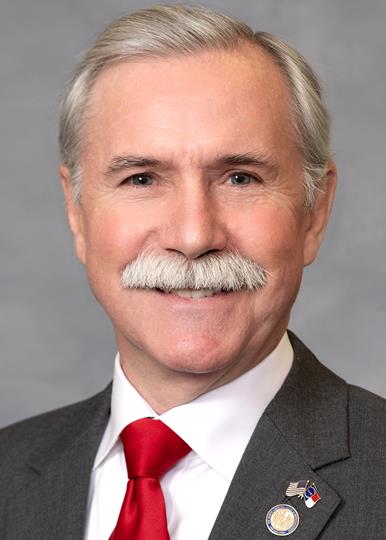
Rep. Dennis Riddell
Sponsored bills
Maddy summaryHB 466 creates a special license plate for North Carolina vehicle owners commemorating the 1776 Halifax Resolves, the first official colonial resolution supporting independence. The plate features a blue background with a feather pen logo and "Birthplace of American Independence" text, with a $30 annual fee added to registration. Proceeds are split: $10 goes to the Special Registration Plate Account and $20 to the Collegiate and Cultural Attraction Plate Account, with the latter's funds for this plate specifically directed to Halifax County for 250th-anniversary events. This is a commemorative plate option, not a policy change affecting laws or regulations.
Maddy summaryHB 47, the Disaster Recovery Act of 2025 - Part I, allocates $524 million from the Helene Fund to support recovery efforts in North Carolina counties impacted by Hurricane Helene. The bill directs funds to specific programs including home reconstruction ($120 million), agricultural crop loss assistance ($200 million), road and bridge repairs ($100 million), small business infrastructure grants ($55 million), debris removal ($20 million), fire department equipment ($10 million), and tourism promotion ($4 million). These resources directly assist residents, farmers, local governments, and businesses in designated hurricane-affected counties by addressing immediate rebuilding needs and supporting economic recovery. The bill requires programs to align with federal disaster recovery guidelines to maximize potential federal reimbursement, with reporting requirements for certain initiatives.
Maddy summaryHB 184 allows small North Carolina sawmills (those milling under 1 million board feet annually) to sell ungraded lumber directly to homeowners for residential construction. The bill amends building codes to permit this ungraded "dimension lumber" in one- and two-family homes and certain small structures, provided mills meet specific requirements. These include operators holding state-approved lumber grading training certifications, marking lumber with detailed specifications (species, mill ID, PS20 compliance), and providing purchaser certificates. Code officials must review construction for safety compliance (excluding grade-stamp requirements) and are protected from liability for structural issues related to ungraded lumber use. The law aims to support local sawmills while maintaining safety standards through defined labeling, training, and oversight.
Maddy summaryHB 186, the "Stars and Stripes Commitment Act," requires all North Carolina public schools (including charter, regional, and laboratory schools) to schedule the daily recitation of the Pledge of Allegiance within one hour of the start of the instructional day. It also mandates that schools display U.S. and North Carolina flags in classrooms when available and provide age-appropriate instruction about the flag and pledge’s meaning. The bill applies to all school governing bodies and state education board meetings, requiring the pledge to open each meeting. Crucially, it explicitly states the policy does not compel anyone to stand, salute, or recite the pledge. The law takes effect for the 2025-2026 school year.
Maddy summaryHB 449 increases penalties for computer solicitation of minors, making second offenses or those involving actual meetings Class D felonies (up from Class H). It requires sex offender registration petitions to be filed with courts and placed on criminal dockets for timely review. The bill also creates new offenses: "habitual indecent exposure" (Class F felony for two prior convictions) and "aggravated habitual indecent exposure" (Class E felony), both mandating sex offender registration. These changes directly affect individuals convicted of repeated indecent exposure or online solicitation of minors in North Carolina.
Maddy summaryHB 28, the "Gun Violence Prevention Act," creates a new criminal offense for individuals convicted of a felony who possess a firearm or "weapon of mass death and destruction" (as defined in state law) during the commission or attempt of another felony. It imposes stricter penalties: a Class C felony if the weapon is discharged, Class D for brandishing (displaying the weapon), and Class F for other violations. This law applies specifically to convicted felons who already face restrictions on firearm possession, treating this additional offense as separate from the underlying felony. The bill takes effect December 1, 2025, for offenses committed on or after that date.
Maddy summaryHB 21 creates a voluntary designation on North Carolina driver's licenses for individuals with autism spectrum disorder (ASD), as defined by state law. People with a medical diagnosis of ASD can request this designation by providing acceptable documentation, such as a healthcare professional's certification, to the Division of Motor Vehicles. The designation appears only in the license record and is accessible solely to law enforcement during interactions to promote safety - no other use is permitted. Individuals may add or remove the designation at any time without affecting their license eligibility or rights.
Maddy summaryHB 37 standardizes monthly pension benefits for North Carolina firefighters and rescue squad workers under the state pension fund. It sets a uniform $175 monthly pension for members with 20+ years of service who reach age 55, replaces the previous $180 amount, and maintains $175 for disability benefits and line-of-duty death benefits. The bill also allows members affected by city annexations or department closures to continue contributing $15 monthly until they reach 20 years of service for pension eligibility. These changes apply to current and future members of the pension fund who meet the service requirements. The bill does not alter contribution rates or eligibility for most members but adjusts benefit amounts and extends certain provisions.
Maddy summaryHB 400, "Bentley's Law," requires defendants convicted of certain felony death-by-vehicle offenses (specifically violations of G.S. 20-141.4 subsections (a1), (a5), or (a6)) to pay child support as restitution to the minor children of the deceased victim. The court must order payments until each child turns 18 and graduates high school, considering the child’s needs, living standards, and custody arrangements. Payments are made to the clerk of court for distribution to the surviving parent or guardian within 10 days, with enforcement treated as a civil judgment. This law directly affects children of victims in these specific vehicular homicide cases and mandates financial support through the criminal sentencing process.