

Maddy summaryHB 408 appropriates $869,000 from the General Fund to complete remaining construction at Fort Fisher State Historic Site, which is North Carolina's most-visited historic site. The funding covers specific items not included in prior appropriations, such as a visitor center tower sign, interior partitions, historic gun carriages, and an ammunition magazine inside reconstructed earthworks. This bill directly supports the site's operations and visitor experience by finishing Phase 1 (visitor center/parking) and Phase 2 (reconstructed earthworks) capital improvements. The funds are designated for the 2025-2026 fiscal year and become effective July 1, 2025.
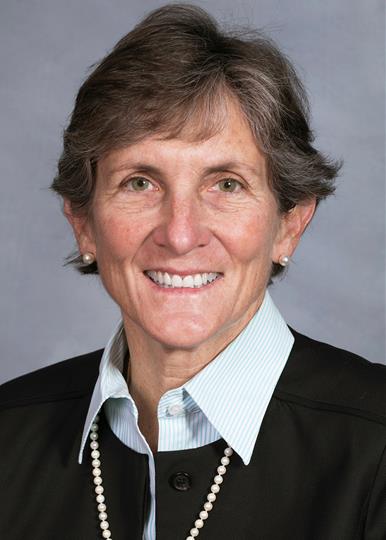
Rep. Pricey Harrison
Sponsored bills
Maddy summaryHB 409 appropriates $1.7 million in one-time state funds to Caswell County for the replacement of the Caswell Volunteer Fire Department's facility. The bill directly affects Caswell County's volunteer fire department by providing dedicated funding to replace their physical building. Key provisions include a specific grant allocation from the General Fund for the 2025-2026 fiscal year, with the funds to be directed to the county for this purpose. The bill becomes effective July 1, 2025, and does not establish new policies or alter existing laws.
Maddy summaryHB 418 mandates that all North Carolina public schools provide required arts education for K-5 students beginning in the 2026-2027 school year. It requires at least one 30-minute session per week in music, dance, or theatre arts (taught by a licensed instructor) and one session per week in visual arts (also taught by a licensed instructor), with classes kept at appropriate sizes. The bill directly affects every K-5 public school student and their educators across North Carolina, ensuring consistent arts instruction aligned with state curriculum standards. It does not alter funding or create new programs but sets specific instructional requirements for elementary schools.
Maddy summaryHB 416 appropriates $30,000 from the state General Fund for the 2025-2026 fiscal year to provide a directed grant to the Boys & Girls Clubs of Durham and Orange Counties. The funds will support a six-part youth development program focusing on teen recruitment, emotional safety, leadership, trauma-informed practices, cultural inclusion, and college/career readiness for area youth. This bill directly affects the Boys & Girls Clubs in those counties and the young people they serve, becoming effective July 1, 2025.
Maddy summaryHB 413 would legalize recreational marijuana for adults 21 and older in North Carolina, allowing possession of up to 2 ounces, 15 grams of concentrate, or products with 2,000mg THC. It establishes new regulations for cannabis businesses (like retail stores and cultivation facilities), requires lab testing and responsible packaging, and mandates that businesses prioritize diversity and community investment. Crucially, it creates two funds to reinvest tax revenue: the Community Reinvestment and Repair Fund for historically impacted communities, and the Cannabis Enterprise Opportunity Fund to support minority-owned businesses. The bill directly affects consumers aged 21+, cannabis businesses, and communities disproportionately affected by past cannabis enforcement.
Maddy summaryHB 419 appropriates $4.5 million from the state General Fund to purchase a building and improvements adjacent to Winston-Salem's Stevens Center (411 W. 4th Street) for the University of North Carolina School of the Arts. The funds, designated for the 2025-2026 fiscal year, directly support the School of the Arts' facility expansion needs. The bill becomes effective July 1, 2025, and modifies standard budgeting procedures to enable this one-time purchase. This is a direct funding allocation with no broader policy changes beyond the specified property acquisition.
Maddy summaryHB 410 directs the North Carolina Institute of Medicine to study the legalization of medical aid in dying (MAID) in North Carolina. The study will examine processes, safeguards, and impacts in states where MAID is legal, including applicant qualifications, family effects, medication options, and healthcare system impacts. The Institute must hold a public hearing and submit findings by April 2027 to state health committees. The bill appropriates $150,000 for this study but does not legalize MAID or change current law. It aims to inform future policy decisions about adding MAID as an end-of-life option for terminally ill, mentally competent adults.
Maddy summaryHB 422, the "Beyond The Choice Act," eliminates a 12-month residency wait period for eligible veterans and their dependents at North Carolina public colleges and universities. It allows veterans who served 90+ days of active duty, their dependents, or other individuals covered under federal law (38 U.S.C. § 3679) to pay in-state tuition rates immediately upon admission, without needing to establish residency first. This change applies to all qualifying students enrolling in the 2025-2026 academic year and beyond. The bill directly benefits veterans and their families by reducing financial barriers to higher education in North Carolina.
Maddy summaryHB 420 allocates $4.3 million annually to fund teacher recruitment programs like "Grow-Your-Own" and "2+2" pathways in high-need schools, targeting efforts to recruit and prepare new educators. It requires the State Board of Education to develop a teacher licensure and compensation reform plan by March 2026, including pathways for new teachers and retention strategies. The bill also funds a study to expand educator preparation programs to graduate 5,000 in-state teachers annually, with a focus on increasing diversity among educators. These provisions directly affect public schools, teacher preparation programs, and prospective teachers through new funding streams and policy requirements.
Maddy summaryHB 392 appropriates $250,000 in one-time state funds for the 2025-2026 fiscal year to The United Way of Forsyth County, Inc., to fund summer learning programs for students in Forsyth County who would otherwise not have access to such programs through their local school system. The United Way will issue a Request for Proposals (RFP) to contract with community agencies offering these programs, either extending existing services or partnering with vetted new organizations. This bill directly affects eligible Forsyth County students and community agencies providing summer learning support, with funds becoming available July 1, 2025. The legislation focuses on creating a structured grant process to expand educational opportunities during summer months.