

Maddy summaryHB 163 regulates Pharmacy Benefits Managers (PBMs) to ensure fair practices for pharmacies and insured individuals. The bill prohibits PBMs from charging insurers more for a prescription drug than they pay the pharmacy (spread pricing) and requires patient out-of-pocket costs to be based on the net price after any PBM concessions. It establishes minimum reimbursement standards for pharmacies, preventing PBMs from paying less than the national average drug acquisition cost plus a dispensing fee. Additionally, it clarifies that PBMs cannot restrict accredited pharmacies from dispensing specialty drugs and strengthens audit protections for pharmacies.
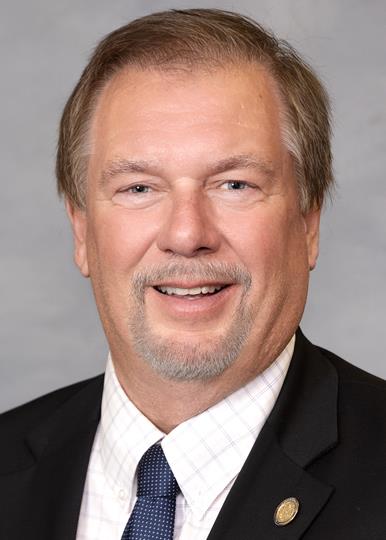
Rep. Joe Pike
Sponsored bills
Maddy summaryHB 806, titled "Public School Operational Relief," proposes changes to North Carolina's public school regulations concerning class sizes and teacher licensure. The bill removes state-mandated class size requirements for kindergarten through third grade, making them recommendations, and eliminates penalties for exceeding these former maximums. It also introduces a new provision requiring that at least 50% of teachers in a public school hold a teaching license. Unlicensed teachers hired under this provision would need to complete preservice training in areas such as educating children with disabilities and managing student behavior. These changes would apply to public schools and local school administrative units beginning with the 2025-2026 school year.
Maddy summaryHB 767 establishes the Joint Legislative Study Commission on Market Rate Compensation for Teachers. This commission will study public school teacher pay and benefits in North Carolina, comparing them to other states and professions, and analyze teacher attrition rates. Composed of legislators, gubernatorial appointees, and the State Superintendent, the commission will hold public meetings across the state. Its purpose is to gather data and provide legislative recommendations on teacher compensation to the General Assembly by the end of 2026.
Maddy summaryHouse Bill 244, titled "Depoliticize Government Property Act," restricts the types of flags that can be flown or displayed on property owned or leased by the State of North Carolina or its local government entities. The bill specifies a limited list of permissible flags, including the U.S. flag, the North Carolina flag, flags of local government agencies, military branch flags, the POW/MIA flag, the Honor and Remember flag, and flags of recognized nations during official visits. It also clarifies that local governments cannot prohibit the display of official governmental flags on private or public property with consent. Any violation of the display restrictions on government property would be classified as a Class 3 misdemeanor.
Maddy summaryHouse Bill 432 aims to provide various forms of property tax relief to North Carolina homeowners. It increases the property tax exclusion amounts for qualifying elderly or disabled homeowners and expands the exclusion for disabled veterans, allowing more of their home's value to be exempt from taxation. The bill also establishes a new "Homeowner Advantage Property Tax Relief Program" designed to cap the annual increase in a permanent residence's taxable value, based on inflation and a cumulative limit. To qualify for this program, homeowners must have occupied their residence for at least two years. Additionally, the bill creates an "Elderly Property Tax Homestead Circuit Breaker Program" and exemptions from the forced sale of a homestead.
Maddy summaryHB 985 increases the criminal penalty for assaulting a school employee or volunteer in North Carolina. It reclassifies such assaults from a Class A1 misdemeanor to a Class I felony when the incident occurs while the individual is performing their duties or as a result of their duties. The bill broadly defines "school employee or volunteer" to include staff, independent contractors, and adult volunteers involved in school activities. It also protects school personnel from civil or criminal liability for taking reasonable actions to end student fights. Finally, the bill updates supervisor reporting requirements for assaults and prohibits intimidating employees from reporting these incidents.
Maddy summaryHB 246, also known as "Liam's Law," increases penalties for specific driving offenses. The bill elevates reckless driving that causes serious bodily injury to a Class I felony. For street racing, it establishes new felony classifications for causing serious injury (Class F felony) or death (Class B2 felony), and mandates longer driver's license revocations, including permanent revocation for fatalities. Additionally, the bill increases the penalty for hit-and-run offenses that result in death to a Class D felony. These provisions directly affect drivers involved in such incidents.
Maddy summaryHB 964 allows individuals with a valid concealed handgun permit (or those exempt from needing one) to carry concealed non-handgun weapons like bowie knives, stun guns, or other deadly weapons described in existing law. It directly affects permit holders by expanding their permitted concealed carry to include specific weapons beyond handguns, provided they are not in locations where concealed handgun carry is prohibited. The bill amends North Carolina law to clarify that permit holders may carry these weapons concealed when permitted to carry handguns, without requiring additional permits. The law takes effect December 1, 2025, applying only to offenses committed after that date.
Maddy summaryHB 996 reduces North Carolina's state budget spending limit by lowering the cap on the General Fund operating budget from 7% to 6% of projected total state personal income each year. This directly affects the state government's annual budget planning, requiring it to spend less relative to the state's economic output. The bill maintains the existing process for exceeding the cap, which still requires a two-thirds vote in both legislative chambers. It takes effect July 1, 2025, for budgets adopted on or after that date.
Maddy summaryHB 986, "Support Our Teachers," prohibits North Carolina school districts from requiring teachers to post lesson plans or objectives and bans schools from assigning work during teachers' designated lunch breaks. It also mandates that school districts compensate teachers financially for time spent leading professional development sessions for colleagues. The bill directly affects public school teachers and administrators across North Carolina, taking effect for the 2025-2026 school year. These provisions aim to reduce administrative burdens and recognize teachers' time spent in professional roles.