

Maddy summaryThis North Carolina joint resolution urges the U.S. Congress to eliminate the United States Department of Education by returning control of education to the states. The bill argues that federal involvement has led to excessive regulations and mandates without improving student reading scores, asserting that states are better equipped to handle education based on local needs. It also states that removing the department would not stop federal funding programs from reaching states but would instead allow taxpayer dollars to be used more efficiently. As a non-binding resolution, it does not directly change laws or allocate funds but serves as a formal statement of support for federal efforts to abolish the department.
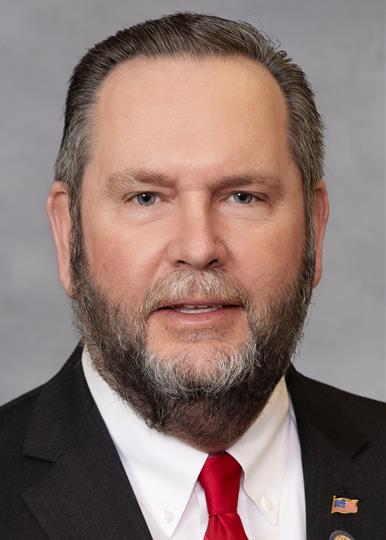
Rep. Alan Branson
Sponsored bills
Maddy summaryThis bill allows North Carolina public schools to use an extra three days or 15 hours of remote instruction when they face ongoing emergencies after already using their standard emergency allowance. Schools that have exhausted their initial five-day limit for weather, power outages, or other crises can now count this additional time toward their required school calendar. To ensure accountability, school districts must report details about these extra days and the specific emergencies that caused them to the state by July 1 each year. The legislation also allocates $5,000 in state funds to help cover administrative costs and provide technical support for enforcing these new rules starting in the 2026-2027 school year.
Maddy summaryHB 165 establishes the Child and Family Welfare Ombudsman Office within North Carolina's Department of Health and Human Services, directly serving foster parents, birth families, and resource parents navigating the state's child welfare system. The office will investigate complaints about foster care licensing, placement, and adoption processes; provide educational resources; mediate conflicts; and protect whistleblowers reporting violations. It requires confidentiality for all communications and mandates annual public reports on trends and complaints handled. Funded with $137,000 for 2025-2026 and $145,000 for 2026-2027, the office must begin operations by January 1, 2026.
Maddy summaryHB 1042 updates North Carolina's property tax exemptions for nonprofit organizations that provide housing for low- or moderate-income individuals. The bill clarifies that land held by nonprofits for future affordable housing projects can remain tax-exempt for up to five years, with unpaid taxes deferred until the project is completed or the land is no longer used for this purpose. Additionally, the legislation establishes a new specific exemption for affordable rental housing, defining it as developments where more than half the units are rented to tenants earning at or below 80% of the area median income. These changes aim to provide clearer tax incentives for nonprofits developing and operating affordable rental properties.
Maddy summaryThis bill proposes a constitutional amendment that would require the North Carolina legislature to establish a statewide limit on how much local property tax levies can increase each year. The measure also mandates that any local government wanting to raise property taxes beyond this limit must first obtain approval from a majority of voters in that specific area. Because this change alters the state constitution, it will not take effect immediately but will instead be placed on the November 3, 2026, ballot for voters to decide whether to adopt. If approved by the public, the amendment would legally bind the General Assembly to create the specific tax increase caps mentioned in the text.
Maddy summaryThis bill establishes a two-year pilot program in North Carolina to test data-driven systems aimed at reducing chronic absenteeism, which currently affects one in four public school students. The Department of Public Instruction will select a single public school unit serving up to 15,000 diverse students to implement a vendor-provided platform that offers real-time monitoring, automated family communication, and targeted intervention strategies. Appropriated funds totaling $75,000 will cover technology costs, staff training, and program evaluation, with the pilot running from the 2026-2027 fiscal year through the 2027-2028 fiscal year. By the end of the program, the department must report findings on attendance improvements and operational efficiencies to determine if the initiative should be expanded statewide.
Maddy summaryHB 144 is a proposed constitutional amendment that would change how North Carolina's State Board of Education is structured. It requires voters to elect all board members (except the Lieutenant Governor and Treasurer, who are Council of State members) from districts established by the General Assembly, with terms of four years. The Superintendent of Public Instruction would automatically serve as the board's chair (ex officio member) without needing separate election. This amendment must be approved by voters in the 2026 election and would take effect for terms beginning January 1, 2029. It does not change the current composition of the board but alters how members are selected and who serves as chair.
Maddy summaryThis bill, known as the Mike Clampitt 1st Responder Tax Fairness Act, aims to expand tax exemptions for volunteer fire departments and rescue squads in North Carolina. Specifically, it allows these independent groups, which have two or fewer paid employees and are already exempt from state income tax, to avoid paying a highway use tax on specific emergency vehicles like fire trucks, forest firefighting units, and other emergency service vehicles. The change applies to vehicles when a certificate of title is issued on or after July 1, 2026, ensuring these organizations can acquire necessary equipment without incurring this particular tax. By broadening the existing exemption, the legislation directly benefits volunteer responders who operate outside of local government units.
Maddy summaryThis bill allocates $6 million in state funds to expand two food assistance programs in North Carolina for the 2026-2027 fiscal year. The first $4 million supports FarmSHARE, which provides grants to buy locally grown food and distribute it for free to food-insecure individuals and households. The second $2 million funds the Double Up Food Bucks Program, allowing people receiving nutrition assistance to use their benefits to purchase fresh fruits and vegetables at farmers markets and other local retailers. Both programs require the state department to submit annual reports detailing participation numbers, distribution metrics, and financial data to legislative oversight committees. The legislation takes effect on July 1, 2026.
Maddy summaryThis bill prohibits individuals from updating their voter registration information, such as changing addresses or names, at the North Carolina Division of Motor Vehicles (DMV) or through its website. Instead, any changes to an existing registration must now be processed exclusively at the local County Board of Elections. The legislation requires that applications for these updates be forwarded electronically to the appropriate election board within five business days of submission. This change directly affects drivers who previously could manage their voting records while handling their license renewals or corrections at a DMV office.