

Maddy summaryHB 222 appropriates $217 million from the State Emergency Response Fund to North Carolina's Office of Recovery and Resiliency (NCORR) for homeowner recovery projects related to Hurricanes Matthew and Florence. The bill requires NCORR to submit detailed monthly reports on fund usage, including expenditures and project progress, and mandates weekly financial reports to the State Auditor for oversight. It also establishes a public online dashboard tracking funds versus actual spending and includes a clawback provision to return unused funds to the Savings Reserve after projects conclude. The law revises NCORR's responsibilities, ending its role in future storm recovery programs.
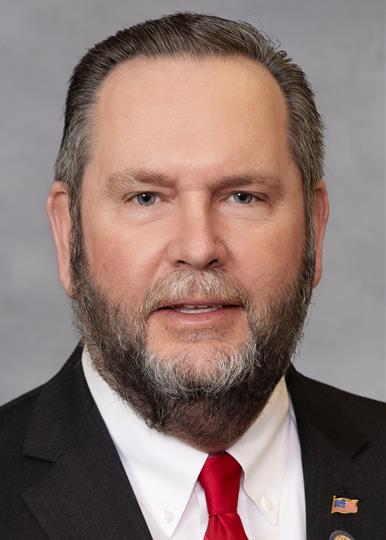
Rep. Alan Branson
Sponsored bills
Maddy summaryHB 239 modifies North Carolina's funding formula for children with disabilities in public schools. It changes how funds are allocated to local school districts by capping per-child funding at 13% of a district's total enrollment plus students using state scholarship programs. The bill requires the State Education Assistance Authority to provide annual scholarship data by March 15 to help calculate district funding. It also appropriates $25 million in recurring funds for the 2025-2026 fiscal year to support this revised funding structure, effective July 1, 2025.
Maddy summaryHB 130 establishes a $475 million program to provide financial assistance to North Carolina farmers who suffered crop losses from natural disasters in 2024. It directly affects farmers in counties designated by the USDA as disaster areas, requiring verified losses of eligible agricultural commodities (like crops, livestock, or specialty plants) planted but not harvested by January 1, 2024. The program uses county and state yield/price averages to calculate payments, mandates submission of USDA Form 578 or equivalent documentation within 30 days, and allocates funds from state reserves (Stabilization, IT, and Economic Development) to cover verified losses. Farmers must provide documentation for verification, and the Department of Agriculture may audit claims to ensure proper use of funds, with refunds required for inaccurate information.
Maddy summaryHB 177 requires North Carolina's State Human Resources Commission (SHRC) to review job requirements across state agencies and identify positions where a four-year college degree is unnecessary. The bill directs the SHRC to replace degree requirements with alternative qualifications like military service, apprenticeships, or trade school training where appropriate, and to remove unnecessary degree language from job postings. This policy change directly affects state job applicants who may qualify through non-degree pathways. The SHRC must report annually starting October 2025 on progress toward reducing these barriers.
Maddy summaryHB 159 establishes a $75 million grant program within North Carolina's Department of Transportation to improve subdivision streets that don't meet state highway standards and aren't maintained by local governments. It directly affects counties and municipalities with these "orphan roads," providing funds for repairs up to $250,000 per subdivision, requiring a 25% local match (25 cents for every dollar awarded). Once roads meet standards, ownership transfers to the state or local government for ongoing maintenance. The program runs from July 2025 through June 2030, with unspent funds rolling over to the Highway Fund.
Maddy summaryHB 164 requires parental or guardian consent before releasing autopsy records for children under 18. It makes all autopsy-related materials - including photos, videos, and reports - confidential, except when disclosure is needed for public health, research, legal compliance, or to address safety concerns. If parents withhold consent, a court may override this through a special proceeding after reviewing factors like public interest and privacy intrusion. The bill also allows public access to autopsy recordings (with supervision) unless parents request confidentiality under this law. It applies to all child deaths under 18 in North Carolina, affecting medical examiners, families, and entities seeking autopsy records.
Maddy summaryHB 31 would amend North Carolina's State Human Resources Act to make every statewide general election day a paid holiday for state employees. This change would add election days to the current list of paid holidays (which includes Martin Luther King Jr.'s Birthday and Veterans Day), while maintaining the limit of 13 paid holidays per year. The bill directly affects state workers, ensuring they receive paid time off on election days without reducing the total number of paid holidays. It does not change election dates or voting procedures, only the employment benefits for state employees on those days. The legislation is currently pending in committee review.
Maddy summaryHB 145 appropriates $50 million in one-time state funds to the University of North Carolina at Chapel Hill (UNC-CH) for the development of a diabetes research institute. This bill directly affects UNC-CH as the recipient of the funds and will support diabetes research activities at the university. The funds are designated for the 2025-2026 fiscal year and become effective July 1, 2025. The legislation is a straightforward funding allocation with no policy changes beyond the specified financial commitment.
Maddy summaryHB 89, the "University Vaccination Freedom Act," repeals North Carolina's requirement for college and university students to provide vaccination records. It removes the mandate for students to submit immunization certificates to institutions, effective for the 2026-2027 academic year. The bill retains existing religious exemption provisions (G.S. 130A-157), allowing students to opt out by submitting a written statement of religious beliefs. This change directly affects all students attending public or private colleges and universities in North Carolina.
Maddy summaryHB 61 increases penalties for assaulting certain emergency personnel with a firearm in North Carolina. It reclassifies assaults against law enforcement officers, probation/parole officers, National Guard members, detention facility staff, emergency medical technicians, medical responders, firefighters, and law enforcement telecommunicators as a Class B1 felony (instead of Class D) when committed during their duties. The bill specifically targets firearm assaults, making them punishable by more severe prison sentences. This law takes effect December 1, 2025, for offenses occurring on or after that date.