

Maddy summaryHB 177 requires North Carolina's State Human Resources Commission (SHRC) to review job requirements across state agencies and identify positions where a four-year college degree is unnecessary. The bill directs the SHRC to replace degree requirements with alternative qualifications like military service, apprenticeships, or trade school training where appropriate, and to remove unnecessary degree language from job postings. This policy change directly affects state job applicants who may qualify through non-degree pathways. The SHRC must report annually starting October 2025 on progress toward reducing these barriers.
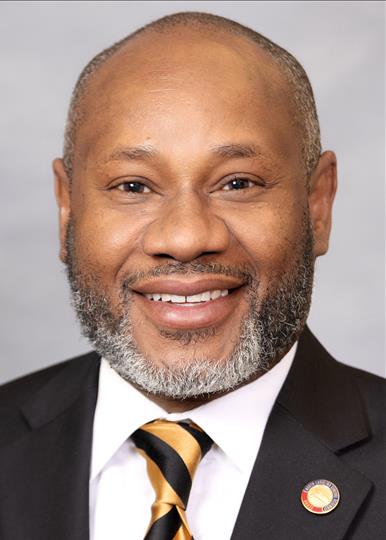
Rep. Amos Quick
Sponsored bills
Maddy summaryHB 181 reinstates North Carolina's Earned Income Tax Credit (EITC) for working families with children, providing a state tax credit equal to 5% of the federal EITC amount. The credit is refundable, meaning eligible families receive cash payments even if they owe no state tax, directly benefiting low-to-moderate income households struggling with housing, childcare, and basic living costs. It applies to taxable years beginning January 1, 2025, and aligns with federal EITC eligibility criteria. The bill reenacts the credit after its prior expiration, creating a concrete policy change to supplement family income.
Maddy summaryHB 168, the North Carolina CROWN Act, prohibits employment discrimination based on hair texture or protective hairstyles like braids, locks, or twists. It explicitly adds these characteristics to the definition of "race" under North Carolina's anti-discrimination law, covering all employers and job applicants. The bill also strengthens protections by banning retaliation against employees who report such discrimination. It applies to all public and private employers statewide upon becoming law.
Maddy summaryHB 31 would amend North Carolina's State Human Resources Act to make every statewide general election day a paid holiday for state employees. This change would add election days to the current list of paid holidays (which includes Martin Luther King Jr.'s Birthday and Veterans Day), while maintaining the limit of 13 paid holidays per year. The bill directly affects state workers, ensuring they receive paid time off on election days without reducing the total number of paid holidays. It does not change election dates or voting procedures, only the employment benefits for state employees on those days. The legislation is currently pending in committee review.
Maddy summaryHB 145 appropriates $50 million in one-time state funds to the University of North Carolina at Chapel Hill (UNC-CH) for the development of a diabetes research institute. This bill directly affects UNC-CH as the recipient of the funds and will support diabetes research activities at the university. The funds are designated for the 2025-2026 fiscal year and become effective July 1, 2025. The legislation is a straightforward funding allocation with no policy changes beyond the specified financial commitment.
Maddy summaryHB 129, the "Judge Joe John Nonpartisan Judicial Elections Act," reestablishes nonpartisan elections for all North Carolina judicial offices, including Supreme Court justices, Court of Appeals judges, and superior and district court judges. The bill requires candidates to run without party labels, with primaries held only when more than two candidates file for an office, and winners elected based on highest vote totals (using a random draw only in tie situations). It also restores public financing for judicial campaigns, aiming to reduce partisan influence in judicial races. This bill directly affects judicial candidates, voters, and the election process for all statewide and local judicial positions in North Carolina.
Maddy summaryHB 128 appropriates $2 million annually for fiscal years 2025-2026 and 2026-2027 to create a statewide prostate cancer screening program administered by North Carolina's Department of Health and Human Services. The program provides free or low-cost screenings and follow-up care to uninsured or underinsured men aged 50-70 (40-70 with family history of prostate cancer) who meet income requirements (below 250% of federal poverty level). Eligibility requires no Medicare Part B or Medicaid coverage and specific age/family history criteria as defined in the bill. The program begins July 1, 2025.
Maddy summaryHB 115 exempts properly licensed child care facilities from property tax if they are used exclusively for child care. It applies to facilities operating under North Carolina's child care licensing rules (Chapter 110) and excludes both the building and necessary adjacent land from taxation. Partial exemptions are allowed if only part of a facility serves child care, but facilities on probation or with suspended licenses lose the exemption. The tax exemption takes effect for property taxes due on or after July 1, 2026.
Maddy summaryThis bill proposes repealing a literacy test requirement from the North Carolina Constitution, which would affect all voters by removing a historical barrier to voting. The amendment must be approved by voters in the November 2026 election, with the ballot explicitly stating: "Constitutional amendment to remove the literacy test requirement... The federal Voting Rights Act of 1965 prohibits implementation of this requirement." If approved, the change takes effect upon certification by the State Board of Elections. The bill does not alter current voting procedures, as the literacy test has been prohibited by federal law since 1965.
Maddy summaryHB 77 requires North Carolina state agencies to evaluate the cumulative environmental impact of proposed permits on minority and low-income communities before approving them. It directly affects developers seeking permits for mining, solid waste facilities, hazardous waste sites, and other projects, as well as the communities near these sites. Key provisions mandate that agencies deny permits if proposed actions would disproportionately harm these communities when considering existing pollution sources in the area, and require detailed impact analyses in all relevant reports and plans. The law takes effect July 1, 2025, applying to pending permit applications on that date.