

Maddy summaryHB 262 designates a specific overpass on Interstate 74 crossing South Main Street in Laurinburg, Scotland County, as the "Chief Robert Lee Malloy Overpass." The bill requires the North Carolina Department of Transportation to formally name the structure in honor of Chief Malloy, a local law enforcement officer. This is a ceremonial naming resolution with no policy changes or financial impact, directly affecting the public infrastructure location. The bill is procedural and non-substantive, focusing solely on commemoration.
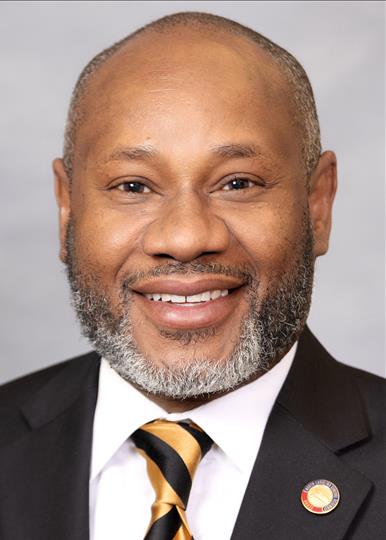
Rep. Amos Quick
Sponsored bills
Maddy summaryHB 257 allocates $185.2 million in one-time state funds for specific infrastructure and facility projects in Scotland and Hoke counties, along with the cities of Laurinburg, Gibson, and Wagram, and St. Andrews University. The bill directs funding for water and sewer systems, courthouse construction, law enforcement facilities, workforce training centers, social services buildings, fire department improvements, and road repairs. It specifically targets nonrecurring 2025-2026 fiscal year funds for projects like a new sheriff's office in Hoke County, a courthouse/jail in Scotland County, and water system upgrades in Laurinburg. The bill becomes effective July 1, 2025, and does not create new policy but provides state funding for pre-planned local projects.
Maddy summaryHB 103 exempts members of North Carolina-recognized tribes from needing hunting, trapping, or fishing licenses when hunting or fishing on tribal land (requiring ID verification) or off tribal land (requiring ID plus compliance with reporting, hunter education, and federal stamp rules). It directly affects tribal members recognized under Chapter 71A of North Carolina law, both on tribal property and in state waters/lands outside tribal areas. The bill amends licensing rules to remove fee requirements while maintaining other regulatory obligations like wildlife reporting and federal stamp purchases. It becomes effective October 1, 2025.
Maddy summaryHB 241 allocates $15.8 million in one-time state funds for specific projects in Person County and nearby areas. It provides $10 million for Roxboro’s wastewater plant repairs, $800,000 for Person County’s splash pad construction, and $5 million for Piedmont Community College’s health/trades center equipment. The funds are directed to these specific entities via grants from the Office of State Budget and Management for the 2025-2026 fiscal year. The bill becomes effective July 1, 2025, with no policy changes beyond the funding allocations.
Maddy summaryHB 245 modifies North Carolina's low-income housing tax credit program to prioritize affordable housing development in rural communities and counties with higher poverty rates. It requires the state housing committee to adopt allocation rules that favor projects within 10 miles of amenities (like grocery stores) in towns under 10,000 people, measure distances by straight-line radius (not driving routes), and use poverty levels as a tiebreaker when projects score equally. The bill directs the committee to publish proposed rules for public comment and hold hearings before finalizing annual allocation plans. This policy change redirects existing housing tax credits toward qualifying rural and high-poverty areas without creating new funding. The bill takes effect October 1, 2025, for future allocation plans.
Maddy summaryHB 256 repeals North Carolina's current ban on public employee collective bargaining, allowing state and local government workers (like teachers, police, and administrative staff) to negotiate wages and working conditions with their employers. The bill removes existing legal restrictions (Article 12 of Chapter 95) and explicitly states that public employees' bargaining rights apply to all state and local government employers. It does not create new benefits or funding but aligns public sector bargaining rights with those already available to private sector employees. The bill’s key provision is the repeal of the prohibition, enabling public employees to collectively bargain under existing state law.
Maddy summaryHJR 157 is a procedural resolution inviting Governor Josh Stein to address a joint session of the North Carolina General Assembly on March 12, 2025. It directs a committee of five House members and five Senate members to extend the invitation and specifies that the governor's cabinet, Council of State members, and state judges may attend. This resolution does not create new policy or affect any laws; it solely schedules a ceremonial address. The invitation is effective upon ratification, as noted in the resolution's text.
Maddy summaryHB 197 appropriates $25 million annually for the 2025-2026 and 2026-2027 fiscal years to North Carolina's local health departments (LHDs) for communicable disease programs. The funding aims to address a 70% staff shortage in LHDs by enabling them to retain existing staff, hire additional public health professionals (including nurses), and expand essential services. Funds are allocated with half distributed equally among LHDs based on the number of counties served, and half distributed based on the percentage of state population each LHD serves. The bill becomes effective July 1, 2025, to support North Carolina's response to diseases like avian flu and mpox.
Maddy summaryHB 196 appropriates $1.5 million from the General Fund to the North Carolina Museum of Life and Science, Inc., for a new biotechnology exhibit and laboratory. The funds will showcase North Carolina's biotech achievements and promote STEM career interest, directly benefiting the museum and students in the state. The bill creates a specific funding mechanism for this educational project, effective July 1, 2025. As a funding allocation, it does not alter laws or regulations.
Maddy summaryHB 120 appropriates $1,040,514 annually for fiscal years 2025-2026 and 2026-2027 to expand North Carolina's Project C.A.R.E. program. The bill directly funds support services for family caregivers of individuals living with Alzheimer's disease or related dementias. It provides recurring state funding to the Division of Aging and Adult Services to enhance existing caregiver assistance programs. The legislation becomes effective July 1, 2025, without altering eligibility or service requirements.