

Maddy summaryHB 755 provides a sales tax exemption for qualifying North Carolina nonprofits, including hospitals, federally tax-exempt community organizations, volunteer fire departments, and university-affiliated groups. To qualify, nonprofits must obtain a state sales tax exemption number, with annual limits of $31.7 million for state tax and $13.3 million for local tax. The exemption covers most goods and services purchased for nonprofit activities but excludes electricity, telecommunications, alcohol, and certain other items. Real property contractors must provide documentation to retailers when buying materials for nonprofit projects to ensure proper tax treatment.
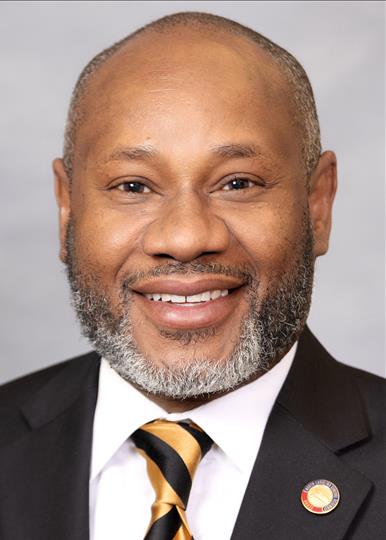
Rep. Amos Quick
Sponsored bills
Maddy summaryHB 780 appropriates $2 million to expand the All Pro Dad program in North Carolina through Family First, Inc., funding school-based chapters, father-child engagement events, and parenting resources. It also creates the "Responsible Fatherhood NC" program under the Department of Health and Human Services, requiring a nonprofit manager to run a statewide media campaign, provide father-focused resources, and promote existing fatherhood initiatives. The bill directs grants to community organizations addressing fathers' needs - such as employment, child support, and parenting skills - with priority given to areas facing high unemployment, incarceration, or single-parent households. The program directly supports North Carolina fathers and their children, aiming to improve family well-being through increased paternal involvement.
Maddy summaryHB 713 mandates that all North Carolina public schools provide free breakfast and lunch to every student, eliminating meal fees for all. This affects every student enrolled in public schools, including those in charter schools and regional school units, starting with the 2025-2026 school year. The bill appropriates $144 million from the state General Fund to cover costs, with funds allocated based on school size, student eligibility for free/reduced meals, and nutritional quality standards. Schools must comply with federal nutrition guidelines while using state funds to supplement, not replace, existing meal program funding.
Maddy summaryHB 682 allows North Carolina to override federal restrictions that block food and cash assistance (TANF) for people convicted of certain drug-related felonies. It directly affects individuals with Class H or I controlled substance felony convictions who complete substance abuse treatment (while incarcerated or in the community) and avoid new drug offenses for six months. The bill requires counties to offer food and cash benefits to eligible individuals who meet these conditions, making treatment participation a requirement for accessing aid. This change aims to support successful reintegration by removing a barrier to basic needs assistance for this group.
Maddy summaryHB 665 creates the Public School Disaster Preparedness Fund to help North Carolina schools in high-risk natural disaster areas improve or replace vulnerable buildings. The fund, starting with $25 million for 2025-2026, requires schools to submit disaster preparedness plans detailing structural risks and improvement costs before receiving funding. Approved projects must meet state-set preparedness standards, with schools reporting annually on fund use and progress. The Department of Public Instruction administers applications on a rolling basis, requiring unanimous approval from the State Board of Education for disbursements.
Maddy summaryHB 691, the "Voter Protection and Reliance Act," ensures voters' ballots are counted based on election-day rules by prohibiting the exclusion of valid ballots cast under procedures in place on election day. It requires courts and election officials to apply election rules as they existed on election day, not later changes, and mandates that technical registration errors (like incomplete forms) cannot invalidate a ballot if the voter relied on the process. The bill also creates expedited court procedures for election challenges filed within 90 days before an election or after an election concludes, directing such cases to Wake County Superior Court for faster resolution. This directly affects voters, election officials, and courts by prioritizing ballot integrity based on election-day procedures over post-election interpretations.
Maddy summaryHB 685, the Rural NC Reinvestment Act, allocates $605 million in nonrecurring state funds for rural North Carolina communities during the 2025-2026 fiscal year. It provides grants for water/sewer infrastructure ($200M), law enforcement/fire equipment ($10M), economic development land ($20M), rural school construction ($200M), broadband expansion ($50M), early childhood education ($100M), and physician placement ($5M). Local governments, schools, emergency services, and healthcare providers in rural areas directly receive these funds, with allocations prioritized based on need, efficiency, and community impact. The bill becomes effective July 1, 2025, focusing on tangible infrastructure and service improvements without creating new regulations.
Maddy summaryHB 684 establishes North Carolina's first formal environmental justice framework to address disproportionate health and environmental risks faced by BIPOC, low-income, and marginalized communities. The bill defines key terms like "communities of color" (40%+ nonwhite residents or 10% higher than county/state) and "disproportionate impact" to guide state agencies. It requires all state agencies to identify and reduce environmental health disparities by considering environmental justice in decision-making, ensuring equitable distribution of benefits like clean air, green spaces, and renewable energy. The law aims to create consistent standards for addressing pollution burdens and health inequities across North Carolina.
Maddy summaryHB 749 appropriates $9,818,000 in one-time state funds to the City of Greensboro for public safety projects. The bill directs $9 million to construct a new fire station serving the north side of Piedmont Triad International Airport and $818,000 to relocate, enhance, and operate the Greensboro Police Department's Real Time Intelligence Center. These funds are allocated for the 2025-2026 fiscal year and become effective July 1, 2025. The bill directly affects Greensboro's fire and police services by funding specific infrastructure and technology upgrades.
Maddy summaryThis bill provides $5 million in state funds to the City of Greensboro for planning water and wastewater infrastructure improvements at Piedmont Triad International Airport. The grant, administered through the Department of Environmental Quality, will cover preliminary work to extend services to economic development sites at the airport. It directly supports Greensboro's efforts to expand infrastructure needed for new business growth in that area. The funds are designated for the 2025-2026 fiscal year and take effect July 1, 2025.