

Maddy summaryHB 160 requires North Carolina's University of North Carolina School of Medicine Area Health Education Centers (NC AHEC) to create and share evidence-based information about sudden unexpected death in epilepsy (SUDEP) with all healthcare practitioners in the state. This includes current risk factors, conditions, and contact details for epilepsy support organizations, available on NC AHEC's website. Healthcare providers treating epilepsy patients will directly receive this standardized resource, which must be compiled by consulting medical boards and professional societies. NC AHEC must report the completed resource to the legislature by September 1, 2025.
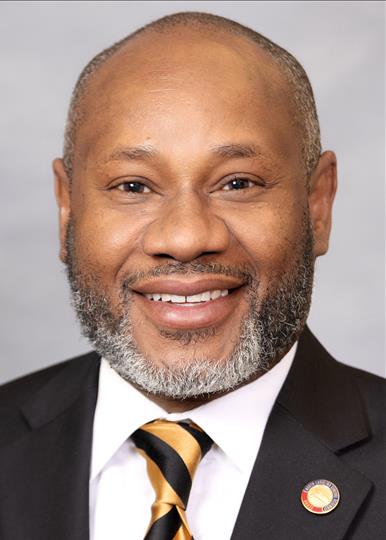
Rep. Amos Quick
Sponsored bills
Maddy summaryHB 335 expands eligibility for emergency judges in North Carolina by allowing retired judges who previously served in both Superior Court and District Court to qualify for emergency judge roles on either court. Currently, retired judges could only serve as emergency judges on the specific court they retired from, but this bill removes that restriction for judges with dual court experience. The change directly affects retired judges who held positions in both court systems before retiring, making them eligible to be assigned to emergency duties in either court. This adjustment streamlines the pool of available judges for temporary court needs without altering compensation or other existing rules.
Maddy summaryHB 807 raises teacher salaries for the 2025-2026 school year with new pay scales based on experience and adds supplements for certified teachers, school nurses, counselors, and specialists. It allocates $89.4 million annually and $109.2 million as a one-time fund to provide weighted, per-child funding for children with disabilities based on the cost of services provided. The bill also mandates free breakfast and lunch for all public school students, funded through state appropriations tied to school food authority evaluations, and includes funding for a one-to-one device refresh in public schools.
Maddy summaryHB 815 revises North Carolina's Opportunity Scholarship Program, which provides state-funded vouchers for private school tuition. It expands eligibility to include students in foster care, military families, and those previously enrolled in public school, while prioritizing low-income students (households at or below 200% of the federal free/reduced lunch income threshold) for full tuition coverage (90% for full-time, 45% for part-time). Nonpublic schools receiving funds must meet reporting standards, and the program now requires schools to document student enrollment and academic progress. This bill directly affects low-income families, military-connected students, and participating private schools seeking state-funded tuition assistance.
Maddy summaryHB 816, the Voucher School Transparency Act, requires nonpublic schools receiving Opportunity Scholarship funds in North Carolina to meet new reporting and accountability standards. These schools must annually provide parents with student test scores, maintain criminal background checks for staff with decision-making authority, administer standardized tests for grades 3+, and submit financial audits to the state if enrolling 70+ scholarship students or receiving $100,000+ in funds. The bill also mandates detailed annual data submissions to the state Division, including enrollment, teacher licensing, facility safety, and disability support compliance. The State Auditor must annually review audits of at least three such schools to ensure accountability. This directly affects voucher-funded nonpublic schools and their reporting practices, not public schools or general education policies.
Maddy summaryHB 809 amends North Carolina law to include students enrolled in the state's NC Pre-K program within the average daily membership count for local school districts. Specifically, it requires school boards participating in NC Pre-K to count Pre-K students receiving instruction in school-owned buildings toward their district's daily membership calculation. This change directly affects school districts that operate or host NC Pre-K programs in their facilities, as it will increase their reported student count for state funding purposes. The bill takes effect on July 1, 2025, altering how school funding is calculated for participating districts.
Maddy summaryHB 810, effective July 1, 2025, provides North Carolina state employees with paid bereavement leave: up to 40 hours for the death of an immediate family member (spouse, parent, child, sibling, or dependent living with them) and up to 8 hours for the death of a colleague. It applies to all state employees, public school staff, and community college workers, requiring documentation like a death certificate but allowing leave without exhausting sick or vacation time. Employees must use family leave within 180 days of the death and provide funeral attendance proof for colleague leave, with no annual limit on usage. The bill appropriates $2 million annually from the General Fund to cover these leave costs through the 2025-2027 fiscal biennium.
Maddy summaryHB 798 appropriates $1.72 million annually from the General Fund to create a Cold Weather Shelters Grant Program, administered by the Department of Health and Human Services, Division of Aging. The program provides grants to municipalities and nonprofits to establish or expand temporary emergency shelters for people experiencing homelessness during severe weather events. Grants are limited to $215,000 per recipient annually, with selection considering poverty rates in the service area and existing funding availability. Recipients must report annually on shelter usage, funds spent, and the number of people served, starting in 2027.
Maddy summaryHB 786, the "Working Families Act," reduces child care costs for low-income families by lowering parent copayments from 10% to 7% of income (effective 2025), reinstates a refundable state child tax credit with income-based payments (effective 2025), and phases up North Carolina’s minimum wage to $15/hour by 2030 with annual inflation adjustments. It also increases income limits for property tax relief, creates a homebuyers’ assistance program for public servants (like firefighters and EMTs) as first-time buyers, and establishes a paid family leave insurance program funded through an employer grant program. The bill directly affects working families, hourly workers, public-sector employees, and households using subsidized child care or property tax relief. Key mechanisms include phased wage increases, income-tiered tax credits, and targeted housing support, all designed to reduce financial strain on low-to-moderate-income households.
Maddy summaryHB 760 requires tattoo artists in North Carolina to complete annual bloodborne pathogen training compliant with OSHA standards (29 C.F.R. § 1910.1030) to obtain or renew their state tattooing permits. This applies directly to all tattoo artists seeking permits from the Department of Health and Human Services, excluding licensed physicians and their supervised staff who perform tattooing as part of medical practice. The bill mandates that permit applications (both new and renewal) must include proof of this training, which the Department will verify before issuing or renewing permits. The requirement becomes effective October 1, 2025, for all permit applications received on or after that date.