

Maddy summaryHB 603 creates a $40 million revolving loan fund within North Carolina's Housing Finance Agency to cover preconstruction costs (like land surveys, permits, and site work) for workforce housing projects. It directly affects developers building housing affordable to households earning 60%-120% of local median income, requiring them to contribute 20%-35% in project equity. The fund reserves 80% of loans for high-priority counties (tier 1-2) and 20% for other counties, with each loan capped at $1 million. The program requires annual reporting on loan details and becomes effective July 1, 2025.
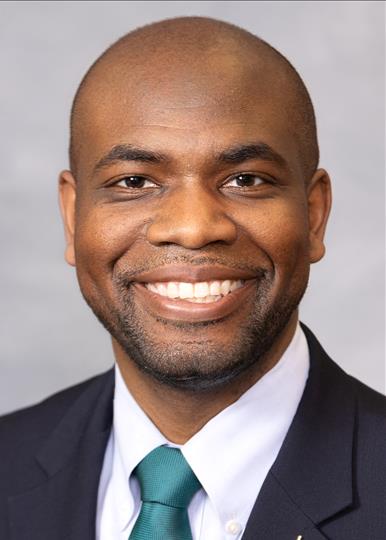
Rep. Allen Buansi
Sponsored bills
Maddy summaryHB 604 creates two grant programs to support economic development: the Rural Community Development Grant Program and the Downtown Revitalization Grant Program. Both programs allocate $40 million each from the state budget for 2025-2026, providing grants to local governments (counties and municipalities) to fund projects that improve community amenities like grocery stores, childcare, parks, or downtown infrastructure. Grants require a 1:1 local match, max $2 million per award, and must align with comprehensive plans for revitalization or community growth. The programs aim to reverse rural depopulation, attract business investment, and enhance downtown livability through targeted, competitive funding.
Maddy summaryHB 617 creates a $20 million grant program for North Carolina small farmers with gross income under $300,000, funding equipment (like harvest machinery), infrastructure (such as fencing), and cold storage. It also lowers the income threshold for farm sales tax exemption from $10,000 to $7,500 annually, expanding eligibility for tax relief. The bill directly affects small farmers meeting these income criteria by providing financial support through grants and reduced tax burdens. Grants require applications and prioritize those facing economic hardship, with funding allocated for specific purposes like equipment and the FarmsSHARE program.
Maddy summaryHB 580 updates North Carolina election laws based on recommendations from the State Board of Elections. It requires county boards to keep absentee ballot request records confidential until voting begins, then make daily lists of approved absentee applications public. The bill also sets specific timing rules for counting different ballot types (e.g., election day ballots must start counting immediately after polls close, while early voting ballots can start between 9 AM-5 PM on election day) and mandates counties to notify voters of fixable absentee ballot errors (like missing signatures) with a deadline to correct them by 12 PM on the third business day after the election. These changes directly affect county election boards and voters requesting absentee ballots.
Maddy summaryHB 571 appropriates $500,000 from the state General Fund to the Department of Public Safety for a grant program treating police officers diagnosed with PTSD. It directly affects North Carolina police officers who have received a clinical PTSD diagnosis. The key provision establishes a state-funded grant program to cover treatment costs, with funds allocated for the 2025-2026 fiscal year. The program becomes effective July 1, 2025, and focuses solely on providing financial support for treatment, not on expanding eligibility or altering diagnosis standards.
Maddy summaryThis bill creates a $17 million annual Tobacco Use Prevention Fund within North Carolina's Department of Health and Human Services, funded by a portion of the state's annual Tobacco Master Settlement Agreement payments. The fund directly targets youth (high and middle school students) by supporting community-based programs, evidence-based media campaigns, school initiatives, and tracking of e-cigarette use to prevent nicotine dependence. Key provisions include funding local health departments for youth education, launching health-risk media campaigns, supporting tobacco-free college campuses, and evaluating program effectiveness. The fund uses $17 million yearly from the $140 million settlement allocation, with up to 10% of funds allowed for administrative costs.
Maddy summaryHB 551 aims to improve access to Clubhouse model programs for North Carolinians with severe mental illness by creating a statewide reimbursement system for these services. It requires the state mental health agency to develop a plan by 2026 that includes incentives for Clubhouses to gain accreditation, consistent funding rates across regions, and staff training. The bill allocates $2.5 million in recurring funds starting July 2026 to support accredited Clubhouses for current programs, expansion, accreditation costs, and staff training. It also mandates Medicaid coverage for services under this new reimbursement system, directly affecting individuals with severe mental illness and Clubhouse providers.
Maddy summaryHB 564 provides a 2% cost-of-living adjustment for retirees in North Carolina's Teachers' and State Employees' Retirement System, Consolidated Judicial Retirement System, and Legislative Retirement System. It increases retirement payments for retirees who retired on or before specific dates (July 1, 2024, for most systems, or January 1, 2025, for the Legislative system) and offers a prorated increase for those retiring between July 1, 2024, and June 30, 2025. The bill appropriates $106.2 million from the General Fund to fund this adjustment, effective July 1, 2025. This policy change directly affects current retirees in these systems by increasing their monthly benefits.
Maddy summaryHB 275 increases penalties for drivers who fail to yield the right-of-way to blind or partially blind pedestrians using a white cane (white or red-tipped) or a guide dog. It requires drivers to come to a full stop, leave a clear path, and remain stopped until the pedestrian has crossed at both uncontrolled intersections and signal-controlled crossings where the pedestrian is already moving when lights change. This bill directly affects drivers operating vehicles in North Carolina and blind/partially blind pedestrians using visible signals. The penalty for violating this law becomes a Class 2 misdemeanor, effective December 1, 2026.
Maddy summaryHB 522 prohibits crisis pregnancy centers (CPCs) in North Carolina from falsely advertising that they provide abortion or emergency contraceptive services when they do not. It defines this as a deceptive practice, requiring CPCs to clearly disclose staff qualifications and service offerings (like abortion care) on-site or via corrective advertising. The bill establishes a complaint process for the Attorney General to enforce violations, with civil penalties up to $5,000 per violation, and mandates a state health department evaluation of CPCs’ impact on reproductive healthcare access by 2026. This directly affects CPCs operating in the state, particularly those receiving public funds and targeting marginalized communities.