

Maddy summaryHB 649 directs the North Carolina Collaboratory to study the state's county tier designation system. The study will examine potential changes to the criteria used for ranking counties, how tier designations are assigned, and the ranking timeframe. It will evaluate the impact of these changes on all 100 counties, programs that use the tier system, and the ease of doing business in the state. The Collaboratory is required to submit a preliminary report by December 2025 and a final report by December 2026.
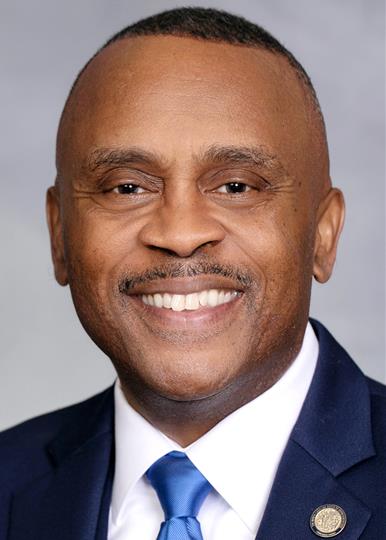
Rep. Robert Reives
Sponsored bills
Maddy summaryHouse Bill 110 establishes the National Guard Student Loan Repayment Program in North Carolina. This program provides student loan repayment awards to active members of the North Carolina National Guard, incentivizing them to begin or complete a term of service of at least three years. Awards cannot exceed the recipient's total student loan debt or $50,000 for a three-year service term, with potential for additional funds for longer service. Recipients must sign an agreement to repay a portion of the award if they voluntarily terminate their service early. The bill appropriates over $25.5 million to a new fund for the program for the 2025-2026 fiscal year.
Maddy summaryHouse Bill 363 allows regional public transportation authorities to operate buspool services further than ten miles beyond their usual service area. This bill amends G.S. 160A-610(20), removing the previous mileage restriction specifically for buspool services. The change enables these authorities to extend buspool routes into more distant communities, potentially affecting a broader range of commuters.
Maddy summaryThis bill allows federally licensed gun dealers in North Carolina to safely store firearms for private owners without charging a fee. It provides legal protection for these dealers against lawsuits if someone is injured or killed during the storage period, unless the dealer was negligent or acted unlawfully. The state Bureau of Investigation will create a standard form for these agreements and keep them confidential, while dealers cannot store illegally possessed guns or return weapons to prohibited individuals. The law takes effect on July 1, 2025.
Maddy summaryHB 955, the NC Junk Fee Prevention Act, requires businesses like short-term lodging providers (e.g., Airbnb), telecom companies (internet, mobile, voice services), and ticket sellers to show the full price - including all mandatory fees - before a purchase. It bans deceptive or excessive fees, such as surprise resort charges or hidden ticket costs, and mandates that total prices displayed at the start of a transaction cannot increase during checkout. Businesses must clearly disclose all fees (e.g., processing or delivery charges) upfront and cannot charge unreasonable early termination fees for telecom services. This law directly affects consumers buying lodging, telecom services, or event tickets by ensuring transparent pricing and preventing hidden costs.
Maddy summaryHB 974 requires North Carolina's Department of Health and Human Services (DHHS) to study how hospice care facilities handle complaints from patients and families. The study will analyze complaint data, engage hospice administrators and care associations, and identify common issues and best practices for improving complaint procedures, investigations, communication, and family involvement. DHHS must submit findings and recommendations to legislative committees by April 2026, focusing on actionable steps for hospice facilities to enhance accountability. This bill does not change current laws but mandates a review to inform future policy.
Maddy summaryHB 960 would temporarily increase North Carolina's unemployment insurance weekly benefits to $600 during declared disasters, directly affecting unemployed workers in areas impacted by disaster declarations under state emergency management law. It requires the state to set aside specific funds in the unemployment insurance fund for these enhanced benefits and mandates certification that sufficient funds are available before implementation. The benefit increase applies only for the duration of an official disaster declaration and ends when the declaration expires. The bill takes effect July 1, 2025.
Maddy summaryHB 984 creates a framework for medical cannabis research in North Carolina, permitting studies on cannabis as a treatment for qualifying medical conditions. It establishes a state database requiring research institutions (like hospitals or universities), physicians, caregivers, and patients to register, while setting strict product limits (under 0.9% THC, at least 5% CBD). The bill protects registered researchers, caregivers, and patients from prosecution for participating in approved studies and requires secure disposal of unused cannabis. It directly affects medical researchers, healthcare providers issuing certifications, and patients enrolled in these studies, but does not legalize recreational use or broader medical access.
Maddy summaryHB 1004 proposes to allocate $16 million (one-time) and $8 million annually to establish up to eight Artificial Intelligence Hubs at UNC campuses, including at least one HBCU or UNC Pembroke, requiring institutions to match 10% with non-state funds. It also appropriates $70 million for Technology Hubs at all UNC campuses to drive innovation, workforce development, and entrepreneurship, plus $30 million for research grants focused on AI applications in education, healthcare, ethics, and infrastructure. The bill directly affects UNC system campuses, researchers, and students through funding for hubs, infrastructure, and project grants. It requires reporting on hub activities and becomes effective July 1, 2025, pending legislative approval.
Maddy summaryHB 980 removes barriers to employment by ending North Carolina's practice of suspending driver's licenses for unpaid traffic-related fines, fees, or court appearances. It automatically reinstates licenses suspended under these rules without requiring action from the person, waives associated fees, and requires the DMV to notify affected individuals. The bill also mandates data collection on suspended licenses (disaggregated by race, gender, and zip code) and forgives fines for past "Driving While License Revoked" convictions tied to these suspensions. This directly affects North Carolinians whose licenses were suspended solely for unpaid traffic debts or non-appearance, restoring their ability to drive for work or daily needs.