

Maddy summaryThis bill establishes new salary schedules for public school teachers and principals in North Carolina effective for the 2026-2027 fiscal year. It sets specific monthly pay rates for teachers based on years of experience and adds bonuses for those with advanced certifications or degrees, while also adjusting compensation for school support staff like nurses and counselors. Principals will receive annual salaries determined by their school's student enrollment and performance growth scores over the previous three years. Additionally, the legislation enhances sick leave benefits for state employees and provides a cost-of-living adjustment for certain retirees.
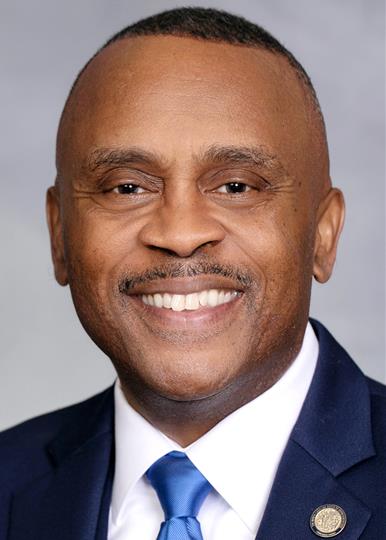
Rep. Robert Reives
Sponsored bills
Maddy summaryThis bill aims to improve the connection between the court system and mental health services in North Carolina to reduce unnecessary jail time. It directs state agencies to create training for judges and staff on spotting mental health risks and to build a framework for sending court-involved individuals to treatment instead of detention. The legislation also updates legal standards for determining when someone is a danger to others and provides funding to support these new programs and data-sharing systems.
Maddy summaryHB 1017 aims to improve teacher quality and availability in North Carolina by creating new roles, funding recruitment programs, and launching studies to address workforce challenges. The bill directs the state to develop a comprehensive plan for reforming teacher licensing and compensation to attract more educators, while also studying how to better prepare and graduate 5,000 in-state teachers annually. Significant funding is allocated to support existing and new teacher recruitment initiatives, such as "Grow-Your-Own" programs and the Teaching Fellows loan program, specifically targeting high-need schools and subjects like special education and STEM. Additionally, the legislation mandates a study to coordinate recruitment efforts between universities and local school districts to ensure a more efficient statewide system.
Maddy summaryHB 1031 mandates that all public schools in North Carolina, including charter and laboratory schools, provide free breakfast and lunch to every student starting in the 2026-2027 school year. The bill requires the State Board of Education to allocate state funds based on factors like school size, student eligibility for free meals, and the quality of food served, while ensuring these funds supplement rather than replace existing resources. An initial appropriation of $116 million is designated to support this program, with the legislation taking effect on July 1, 2026.
Maddy summaryHB 373 allows University of North Carolina (UNC) institutions to offer tuition discounts to two specific groups: military students receiving federal or North Carolina National Guard tuition assistance, and students enrolled in employer-sponsored financial support programs approved by UNC. The discount covers the difference between the military/employer funding and full tuition, without creating new free tuition programs. UNC must report annually to the legislature on the number of students receiving these discounts and their financial impact on institutions. The policy takes effect for the 2025-2026 academic year.
Maddy summaryHR 778 is a non-binding resolution passed by the North Carolina House of Representatives expressing support for the state's historical and economic ties with the United Kingdom. It highlights North Carolina's cultural connections (e.g., city names like Raleigh and Charlotte), economic partnerships (including $1 billion in UK investment and 218 UK-owned companies employing 43,200 workers), and trade relationships (over $2.5 billion in annual trade). The resolution urges the U.S. Congress to strengthen trade and investment cooperation with the UK and directs transmission to the UK Embassy, consulates, and North Carolina's congressional delegation. As a symbolic gesture, it does not create new laws or policy changes but reinforces existing diplomatic and economic bonds.
Maddy summaryThis resolution (HR 777) expresses the North Carolina House of Representatives' support for the longstanding friendship and economic ties between North Carolina and France. It highlights historical connections (like French Huguenot settlements and General Lafayette's role), notes France as a major investor in NC ($429M since 2013) and employer (15,500 jobs), and urges closer U.S.-France trade cooperation. The resolution is purely symbolic, with no new policies or funding, and serves to affirm existing bilateral relations through ceremonial recognition.
Maddy summaryHB 569 requires PFAS manufacturers (those who produce PFAS compounds like GenX) to pay public water systems for cleaning up PFAS contamination in drinking water when levels exceed EPA safety limits. It allows the Environmental Quality Secretary to order polluters to cover actual cleanup costs, including technology to reduce PFAS levels, and applies retroactively to expenses since 2017. The bill appropriates $300,000 for implementation and mandates annual reports on fund use, with water systems refunding ratepayers when manufacturers cover costs. This directly affects water systems burdened by PFAS cleanup, PFAS manufacturers deemed responsible, and ratepayers who may see reduced future water rates.
Maddy summaryHB 485 requires North Carolina's Medicaid agency to request federal approval to extend Medicaid coverage for personal care services to adults living in licensed adult care homes who earn more than the current State-County Special Assistance income limit but stay below 180-200% of the federal poverty level. The bill specifically targets individuals who would qualify for lower-income Medicaid assistance if not for their higher earnings. Before implementing this coverage, the agency must submit a CMS request meeting three conditions: covering the specified income group, ensuring cost savings offset new expenses, and complying with legal requirements. This bill does not immediately change coverage - it only authorizes a federal request, pending CMS approval.
Maddy summaryThis bill, titled Reagan's Law, aims to improve access to prosthetic and orthotic devices for North Carolinians with limb loss or limb difference by requiring most health benefit plans to cover these devices and related care. Key provisions mandate that plans cover all materials, instruction, and repairs for prosthetics and orthotics, allow for multiple devices based on medical needs, and prohibit denying claims for these devices that would otherwise be covered for non-disabled individuals seeking similar medical treatment. The legislation also requires insurers to provide coverage for device replacements when medically necessary due to changes in the insured's condition or device damage, without limiting coverage based on the device's age or useful lifetime. Additionally, the bill repeals state requirements for health plans to cover emergency care that duplicates federal law, aligning state regulations with federal standards.