

Maddy summaryHB 175 proposes amending North Carolina's constitution to remove the current provision stating "marriage between one man and one woman is the only domestic legal union." If approved by voters in the 2026 general election, this change would allow the state to recognize all marriages equally, directly affecting all North Carolinians seeking marriage licenses or legal recognition. The bill requires voter approval via a yes/no ballot question in November 2026, with the amendment taking effect January 1, 2027, if passed. This is a constitutional referendum, not an immediate law, and would replace the existing constitutional language without altering current marriage laws.
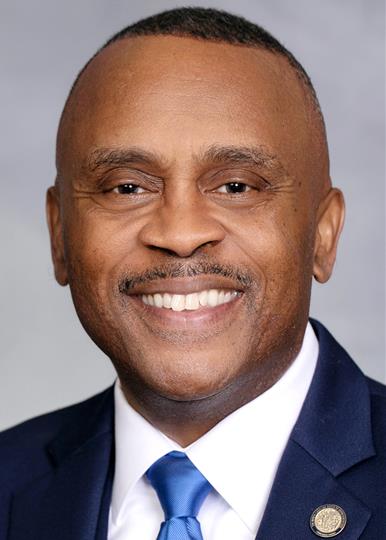
Rep. Robert Reives
Sponsored bills
Maddy summaryHB 181 reinstates North Carolina's Earned Income Tax Credit (EITC) for working families with children, providing a state tax credit equal to 5% of the federal EITC amount. The credit is refundable, meaning eligible families receive cash payments even if they owe no state tax, directly benefiting low-to-moderate income households struggling with housing, childcare, and basic living costs. It applies to taxable years beginning January 1, 2025, and aligns with federal EITC eligibility criteria. The bill reenacts the credit after its prior expiration, creating a concrete policy change to supplement family income.
Maddy summaryHB 111 grants Chatham County Schools flexibility to set an earlier school start date (as early as August 19) and adjust assessment timing. It allows the district to open before the standard August 26 date if they demonstrate "good cause" (eight or more emergency closures in four of the last ten years due to weather or other emergencies). The bill also permits administering annual assessments earlier if the fall semester ends before December 31. These changes apply only to Chatham County Schools beginning in the 2025-2026 school year. The bill modifies existing education statutes to create this specific exception for the county.
Maddy summaryHB 161 restores local government authority to initiate down-zoning in Randolph County and its municipalities without requiring written consent from all affected property owners. The bill amends state law to allow counties or towns to change zoning to reduce development density, limit permitted land uses, or address nonconforming properties - without needing individual property owner approval. This directly affects property owners whose land might be subject to down-zoning changes under Randolph County or municipal zoning rules. The law applies retroactively to December 11, 2024, and takes effect upon passage.
Maddy summaryHB 159 establishes a $75 million grant program within North Carolina's Department of Transportation to improve subdivision streets that don't meet state highway standards and aren't maintained by local governments. It directly affects counties and municipalities with these "orphan roads," providing funds for repairs up to $250,000 per subdivision, requiring a 25% local match (25 cents for every dollar awarded). Once roads meet standards, ownership transfers to the state or local government for ongoing maintenance. The program runs from July 2025 through June 2030, with unspent funds rolling over to the Highway Fund.
Maddy summaryHB 167 (North Carolina) prohibits leaving a firearm in an unattended vehicle unless the vehicle is locked and the firearm is secured with a trigger lock or stored in a locked container. This law directly affects vehicle owners who store firearms in their cars, making it illegal to leave them unsecured in an unattended vehicle. Violations carry a Class 2 misdemeanor penalty. The bill becomes effective December 1, 2025, applying to offenses committed on or after that date.
Maddy summaryHB 129, the "Judge Joe John Nonpartisan Judicial Elections Act," reestablishes nonpartisan elections for all North Carolina judicial offices, including Supreme Court justices, Court of Appeals judges, and superior and district court judges. The bill requires candidates to run without party labels, with primaries held only when more than two candidates file for an office, and winners elected based on highest vote totals (using a random draw only in tie situations). It also restores public financing for judicial campaigns, aiming to reduce partisan influence in judicial races. This bill directly affects judicial candidates, voters, and the election process for all statewide and local judicial positions in North Carolina.
Maddy summaryThis bill proposes repealing a literacy test requirement from the North Carolina Constitution, which would affect all voters by removing a historical barrier to voting. The amendment must be approved by voters in the November 2026 election, with the ballot explicitly stating: "Constitutional amendment to remove the literacy test requirement... The federal Voting Rights Act of 1965 prohibits implementation of this requirement." If approved, the change takes effect upon certification by the State Board of Elections. The bill does not alter current voting procedures, as the literacy test has been prohibited by federal law since 1965.
Maddy summaryHB 60 increases Medicaid dental reimbursement rates from 35% to 46% of average dentist charges (2023 rates) to align with neighboring states. The bill allocates $52 million annually from North Carolina's General Fund, matched by $95 million in federal funds, to cover this rate increase starting July 1, 2025. It directly affects dentists who accept Medicaid patients and Medicaid beneficiaries seeking dental care, aiming to boost provider participation and prevent costly emergency treatments. The change addresses years of stagnant rates that reduced dental provider enrollment in Medicaid.
Maddy summaryHB 20, the "Fair Maps Act," proposes amending the North Carolina Constitution to establish an independent redistricting process. It would create a Citizens Redistricting Commission to redraw congressional and state legislative districts after each federal census, removing the General Assembly and Governor from the process. The bill requires districts to be contiguous, avoid splitting counties, and ensure equal population representation, with changes taking effect only after voter approval in 2026. This directly affects all North Carolina voters by changing how electoral districts are drawn for state and federal offices. The amendment must be ratified by voters in November 2026 before it becomes effective.