

Maddy summaryHB 365, the Workforce Education Act, revises North Carolina's community college funding model to base allocations on student enrollment in workforce-focused programs like career training and continuing education, starting in 2025-2026. It creates an Enrollment Increase Reserve (funded with $6 million initially) to provide additional support to colleges experiencing enrollment growth exceeding 5% or 325 students, preventing funds from reverting to the general budget. The bill also expands funding for cooperative high schools in underserved areas, with tiered payments based on county development status (e.g., $740,000 for first high schools in "Tier One" regions). These changes directly affect community colleges, public school students accessing career programs, and participating high schools seeking to expand workforce education opportunities.
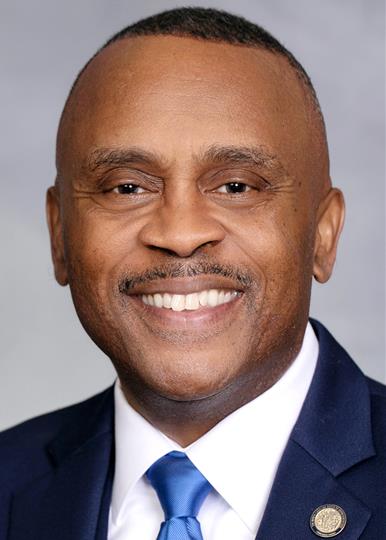
Rep. Robert Reives
Sponsored bills
Maddy summaryHB 360, the Homeowner Protection Act, targets fraud involving residential property documents. It increases penalties for forging deeds, leases, or wills related to homes (making it a Class D felony instead of Class H) and creates an expedited court process for victims. Homeowners affected by fraudulent property records can file a "memorandum of possible fraud" to trigger a court hearing, where judges can void the false documents and clear title clouds. The law also requires recording offices to flag fraudulent instruments and prohibits fees for these protective filings. The bill is currently pending in the House Judiciary Committee.
Maddy summaryHB 316 reenacts North Carolina's Child Tax Credit to help families cover child care costs, with reimbursement percentages based on income and child age (e.g., 7-13% for dependents aged 6-12). It allocates $200 million annually to expand the NC Pre-K program, adding 32,000 slots for 4-year-olds, and $35 million to increase subsidized child care funding. The bill also requires public schools to provide free lunches at no cost to students through state funding tied to school nutrition evaluations. Additionally, it mandates a report on creating a high school child care apprenticeship program. The bill directly affects families with children, public schools, and child care providers across North Carolina.
Maddy summaryHB 280 allocates $30,000 in one-time state funds to support the North Carolina Senior Tar Heel Legislature, a program for older residents to engage with state policy. The funding, from the General Fund for the 2025-2026 fiscal year, covers operational costs for this existing program established under state law. It directly affects the Senior Tar Heel Legislature by providing financial resources for its activities. The bill becomes effective July 1, 2025, and does not create new policy but enables the program's continued operation.
Maddy summaryHB 252, the Steele Creek Investment and Improvement Act, allocates $1.25 million in one-time state funds for community projects in Mecklenburg County’s Steele Creek area. It directs $250,000 to Steele Creek Community Place, Inc. for wellness programs focused on economic opportunity, health, and mental health; $500,000 to Steele Creek Fire and Rescue for equipment and facilities; and $500,000 to the NC Department of Transportation for a traffic study on Shopton Road West. The bill directly supports Steele Creek residents - particularly those in unincorporated areas lacking municipal services - and local nonprofits. It becomes effective July 1, 2025, with no policy changes beyond funding allocations.
Maddy summaryHB 256 repeals North Carolina's current ban on public employee collective bargaining, allowing state and local government workers (like teachers, police, and administrative staff) to negotiate wages and working conditions with their employers. The bill removes existing legal restrictions (Article 12 of Chapter 95) and explicitly states that public employees' bargaining rights apply to all state and local government employers. It does not create new benefits or funding but aligns public sector bargaining rights with those already available to private sector employees. The bill’s key provision is the repeal of the prohibition, enabling public employees to collectively bargain under existing state law.
Maddy summaryHJR 157 is a procedural resolution inviting Governor Josh Stein to address a joint session of the North Carolina General Assembly on March 12, 2025. It directs a committee of five House members and five Senate members to extend the invitation and specifies that the governor's cabinet, Council of State members, and state judges may attend. This resolution does not create new policy or affect any laws; it solely schedules a ceremonial address. The invitation is effective upon ratification, as noted in the resolution's text.
Maddy summaryHB 195 restores Chatham County and its municipalities' authority to change zoning to reduce development density or permitted land uses (down-zoning) without needing written consent from all affected property owners. It specifically amends state law to remove the requirement for all property owner consent when local governments initiate down-zoning, which was previously required under a 2024 law. The bill applies exclusively to Chatham County and takes effect retroactively to December 11, 2024, meaning any down-zoning ordinances affected by the prior law will revert to their pre-December 11 status. This directly impacts property owners in Chatham County whose land might be subject to zoning changes that limit future development or uses.
Maddy summaryHB 196 appropriates $1.5 million from the General Fund to the North Carolina Museum of Life and Science, Inc., for a new biotechnology exhibit and laboratory. The funds will showcase North Carolina's biotech achievements and promote STEM career interest, directly benefiting the museum and students in the state. The bill creates a specific funding mechanism for this educational project, effective July 1, 2025. As a funding allocation, it does not alter laws or regulations.
Maddy summaryHB 179 would allow North Carolina taxpayers to deduct labor union membership dues from their state income tax starting in 2026. The bill creates a new tax deduction for dues, fees, assessments, or other payments required to maintain membership in a labor organization, as defined by state law. This applies specifically to individuals who pay such costs as a condition of union participation. The policy change takes effect for tax years beginning January 1, 2026.