

Maddy summaryHB 448 creates a temporary sales tax exemption in North Carolina for specific firearm storage equipment designed to prevent unauthorized access. The exemption applies to devices like gun safes, lockboxes, biometric locks, and similar home-use storage, but excludes display cases. It directly affects firearm owners purchasing qualifying storage solutions, eliminating the state sales tax on these items. The exemption is limited to sales between October 1, 2025, and October 1, 2026.
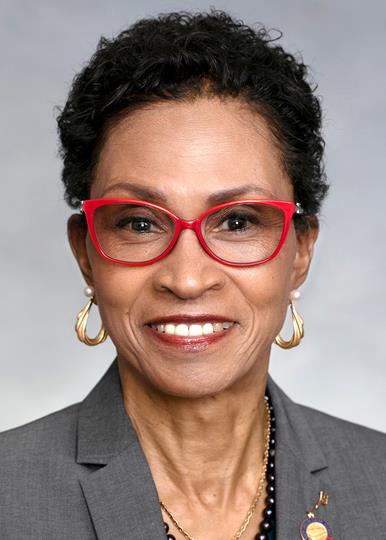
Rep. Renée Price
Sponsored bills
Maddy summaryHB 464 requires every public school in North Carolina - including traditional, charter, regional, and laboratory schools - to have at least one full-time, permanent school nurse starting in the 2025-2026 school year. The bill appropriates $95 million from the state General Fund for the 2025-2026 school year to fund these additional nursing positions, with funds designated to supplement - not replace - existing school nurse funding. It amends multiple statutes to mandate this staffing requirement across all public school units. The law becomes effective July 1, 2025, with implementation beginning for the 2025-2026 school year.
Maddy summaryHB 459 modifies North Carolina's income tax rate reduction trigger to lower the revenue threshold that could lead to future tax cuts. It adjusts the required General Fund revenue levels (e.g., $34.76 billion for FY 2027-2028) that would trigger a tax rate decrease below 4.25% starting in 2029. This change affects all individual taxpayers in North Carolina by making it easier for tax rates to decrease if state revenue meets the new lower thresholds. The bill does not change current tax rates but alters the conditions under which future reductions might occur. The modification follows the state's recovery needs after major hurricanes, though the summary focuses solely on the policy mechanism.
Maddy summaryHB 446 prevents law enforcement from sharing booking photographs (taken during initial arrest) with websites or publications that require payment to remove the photos. It requires those "pay-to-remove" sites to delete such photos within seven business days if the person was not convicted (and provides proof of dismissal, acquittal, or expungement). Sites that fail to comply face civil penalties, including $100 per day for each day the photo remains visible. This directly affects individuals arrested but not convicted and "pay-to-remove" online platforms.
Maddy summaryHB 465 waives the renewal fee for North Carolina drivers licenses that display an "active duty military designation" or "veteran military designation." It directly affects military service members (currently serving) and veterans who have these designations on their licenses. The bill amends state law to remove the standard $5.50 annual renewal fee for these specific license holders when renewing their licenses. The fee waiver takes effect July 1, 2025, for licenses renewed on or after that date.
Maddy summaryHB 28, the "Gun Violence Prevention Act," creates a new criminal offense for individuals convicted of a felony who possess a firearm or "weapon of mass death and destruction" (as defined in state law) during the commission or attempt of another felony. It imposes stricter penalties: a Class C felony if the weapon is discharged, Class D for brandishing (displaying the weapon), and Class F for other violations. This law applies specifically to convicted felons who already face restrictions on firearm possession, treating this additional offense as separate from the underlying felony. The bill takes effect December 1, 2025, for offenses committed on or after that date.
Maddy summaryHB 37 standardizes monthly pension benefits for North Carolina firefighters and rescue squad workers under the state pension fund. It sets a uniform $175 monthly pension for members with 20+ years of service who reach age 55, replaces the previous $180 amount, and maintains $175 for disability benefits and line-of-duty death benefits. The bill also allows members affected by city annexations or department closures to continue contributing $15 monthly until they reach 20 years of service for pension eligibility. These changes apply to current and future members of the pension fund who meet the service requirements. The bill does not alter contribution rates or eligibility for most members but adjusts benefit amounts and extends certain provisions.
Maddy summaryHB 438 requires North Carolina employers to provide employees working six-hour shifts or longer with at least one 20-minute paid rest break, scheduled near the middle of the workday. The bill directly affects workers in North Carolina covered by the Wage and Hour Act, mandating employers offer this break (though employees may decline it). Employers who fail to comply face civil penalties of up to $100 for a first violation and $500 for subsequent violations, with penalties adjusted for business size and violation severity. The law takes effect upon enactment and applies to all employment in North Carolina on or after that date.
Maddy summaryHB 425 raises North Carolina's legal sales age for all tobacco products, including vaping devices and e-liquids, from 18 to 21. It directly affects retailers (who must obtain a tobacco sales permit) and youth (who are prohibited from purchasing these products). The bill requires retailers to verify purchasers' ages using accepted ID and mandates inspections of retail locations to enforce compliance, with penalties including fines up to $1,000 for violations.
Maddy summaryHB 428 directs North Carolina's Department of Public Instruction to study how increased parent involvement might reduce repeated student discipline issues. The study will examine specific approaches, such as requiring parents to attend meetings or counseling with their child after discipline incidents, and assess impacts of remote learning alternatives. It explicitly excludes students with Individualized Education Plans (IEPs) or 504 plans and must be completed by April 2026. The $25,000 allocated for the study will result in a report with recommendations for potential policy changes, but the bill itself does not change current discipline practices.