

Maddy summaryHB 550 updates North Carolina legislators' travel reimbursement rates to match the current federal IRS business mileage rate and federal employee per diem rates for meals and lodging, effective for travel starting in 2027. It directly affects all state legislators traveling for official legislative duties, including committee work and sessions. The bill sets mileage reimbursement to the IRS standard rate (referencing specific IRS notices) and aligns per diem allowances with federal rates for Raleigh-based travel, as detailed in the 2024 IRS notices. This eliminates separate state rates, instead tying allowances to ongoing federal updates. The change applies to all travel, including out-of-state trips where legislators may choose a flat $26/day meal rate plus lodging receipts.
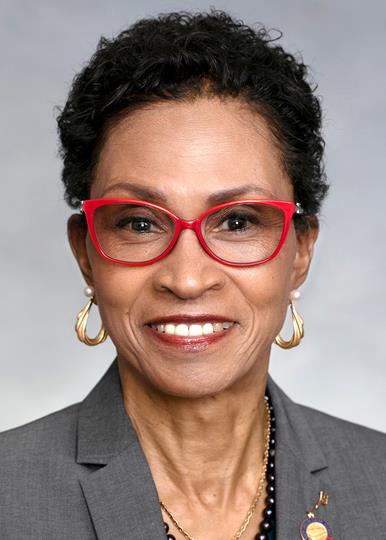
Rep. Renée Price
Sponsored bills
Maddy summaryHB 548 requires North Carolina's Department of Commerce to conduct biannual analyses of the state's economic progress and well-being using specific community-focused metrics. It allocates $200,000 annually from the General Fund to fund these reports, which must measure poverty rates, housing and childcare costs relative to income, job quality, and neighborhood poverty patterns across all counties. The reports, due to the General Assembly by January 31 each odd-numbered year, will use public data and community input to assess economic conditions beyond traditional market indicators. This bill directly affects how state policymakers evaluate economic policy impacts, focusing on tangible quality-of-life factors for all North Carolinians.
Maddy summaryHB 522 prohibits crisis pregnancy centers (CPCs) in North Carolina from falsely advertising that they provide abortion or emergency contraceptive services when they do not. It defines this as a deceptive practice, requiring CPCs to clearly disclose staff qualifications and service offerings (like abortion care) on-site or via corrective advertising. The bill establishes a complaint process for the Attorney General to enforce violations, with civil penalties up to $5,000 per violation, and mandates a state health department evaluation of CPCs’ impact on reproductive healthcare access by 2026. This directly affects CPCs operating in the state, particularly those receiving public funds and targeting marginalized communities.
Maddy summaryHB 525 reorganizes North Carolina's Advisory Council on Rare Diseases by moving it from the University of North Carolina at Chapel Hill School of Medicine to the Department of Health and Human Services (DHHS) and appropriates funds to cover its operating costs. The council, composed of 19 diverse members including patients, caregivers, medical professionals, researchers, and industry representatives, directly serves the rare disease community by advising state leaders on research, treatment, and policy. Key provisions include requiring the council to coordinate statewide efforts on rare disease awareness, incidence tracking, and policy initiatives, and to submit annual reports to the Governor, DHHS, and legislative committees. This bill formalizes DHHS oversight of the council and ensures dedicated funding for its operations, streamlining coordination with state health programs.
Maddy summaryHB 541 allows North Carolina political parties to optionally use a "top-two, same-day runoff" system in certain primaries where no candidate receives 30% of the vote. Under this system, voters rank up to three candidates; if no candidate hits 30%, the top two advance, and ballots for eliminated candidates are redistributed based on second and third preferences to determine the winner - all on the primary election day. The bill applies to primaries for state and federal offices (including U.S. Senate, House, state legislature, and judicial seats), but excludes presidential primaries. This change aims to reduce the need for separate runoff elections while ensuring nominees have broader support.
Maddy summaryHB 514 defines the scope of practice for Advanced Practice Registered Nurses (APRNs) in North Carolina, including nurse practitioners (NPs), certified nurse midwives (CNMs), certified registered nurse anesthetists (CRNAs), and clinical nurse specialists (CNSs). The bill explicitly outlines the specific responsibilities for each role - such as CNMs managing reproductive health care, NPs diagnosing and treating illnesses, and CRNAs administering anesthesia - removing ambiguity in current law. It directly affects over 20,000 APRNs in North Carolina who currently face restrictions due to undefined practice parameters. The legislation aims to align North Carolina with 36 other states that have clarified APRN authority without compromising patient safety, as supported by research cited in the bill. This statutory definition is intended to improve healthcare access and reduce costs by enabling APRNs to practice to the full extent of their training.
Maddy summaryHB 501 amends North Carolina law to ensure domestic violence protective orders cover same-sex couples in dating relationships. It removes the requirement that dating relationships must involve "opposite-sex" partners, explicitly including same-sex couples under the definition of "dating relationship" in protective order law. This change directly affects same-sex partners who experience domestic violence and seek protection through the dating relationship provision. The bill takes effect for orders issued after it becomes law, making the legal standard for dating relationships gender-neutral.
Maddy summaryHB 503, the "Don't Tread on Me Act," proposes new protections for North Carolinians by restricting government overreach in privacy, healthcare, education, and employment. It prohibits state agencies from conducting warrantless surveillance, demanding private medical or political information for services, denying reproductive care based on ideology, interfering with parental decisions without due process, or censoring fact-based education. The bill also bans discrimination in employment, housing, or public services based on private beliefs, medical history, or lawful conduct. Currently in early legislative stages (filed March 24, passed 1st reading March 26), it would take effect if enacted.
Maddy summaryHB 513 appropriates $1 million annually from the General Fund to fund North Carolina's Long-Term Care Ombudsman Program through fiscal years 2025-2027. It allocates $855,000 yearly to create nine new full-time Regional Ombudsman positions in areas most needing support, as determined by the State Ombudsman, to help meet national staffing standards. The remaining funds cover operational costs like equipment, supplies, and transportation for existing program staff. This directly benefits long-term care residents by expanding access to ombudsman services that address facility concerns and advocate for their rights.
Maddy summaryHB 504 allocates $474,680 over the 2025-2027 fiscal biennium to fund a pilot program in Mecklenburg County towns (Matthews, Pineville, and Mint Hill), directly affecting these localities and residents experiencing mental health crises. The bill provides funds to hire full-time mental health professionals who will work alongside police officers during mental health-related emergency calls, integrating clinical support into law enforcement responses. Each participating town receives specific annual allocations ($131,280 for Matthews, $171,700 each for Pineville and Mint Hill) to support this co-responder model. The program aims to improve outcomes for individuals in mental health distress by pairing law enforcement with mental health professionals during crisis calls. The bill becomes effective July 1, 2025.