

Maddy summaryHB 788 ("Fix Our Democracy") proposes amending the North Carolina Constitution to establish a nonpartisan redistricting process for state legislative and U.S. House districts. It would require a constitutional amendment (voting required in 2026) to remove the General Assembly's role in drawing districts, mandating that districts be contiguous, avoid dividing counties where possible, and remain unchanged until the next census. The bill also includes related provisions like online voter registration, automatic registration, banning voter roll purging, and campaign finance transparency changes. This constitutional change would directly affect how electoral districts are created for state legislators and U.S. representatives in North Carolina.
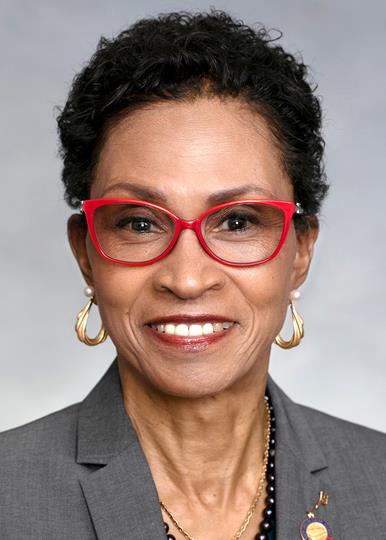
Rep. Renée Price
Sponsored bills
Maddy summaryHB 816, the Voucher School Transparency Act, requires nonpublic schools receiving Opportunity Scholarship funds in North Carolina to meet new reporting and accountability standards. These schools must annually provide parents with student test scores, maintain criminal background checks for staff with decision-making authority, administer standardized tests for grades 3+, and submit financial audits to the state if enrolling 70+ scholarship students or receiving $100,000+ in funds. The bill also mandates detailed annual data submissions to the state Division, including enrollment, teacher licensing, facility safety, and disability support compliance. The State Auditor must annually review audits of at least three such schools to ensure accountability. This directly affects voucher-funded nonpublic schools and their reporting practices, not public schools or general education policies.
Maddy summaryHB 787 establishes a matching program for North Carolina residents contributing to the Parental Savings Trust Fund (a 529 program) and creates a tax deduction for such contributions. It provides a 2:1 state match (up to $1,500 per student annually) for eligible contributors - North Carolina residents with household income under 250% of the federal poverty level who open accounts for children aged 14 or younger. The bill also allows a state tax deduction of up to $2,000 per individual ($4,000 for joint filers) for contributions to the fund, with rules to adjust income if funds are withdrawn for non-education purposes. These changes aim to boost college savings for lower-income families, with the matching program starting July 1, 2025, and the tax deduction effective January 1, 2026.
Maddy summaryHB 798 appropriates $1.72 million annually from the General Fund to create a Cold Weather Shelters Grant Program, administered by the Department of Health and Human Services, Division of Aging. The program provides grants to municipalities and nonprofits to establish or expand temporary emergency shelters for people experiencing homelessness during severe weather events. Grants are limited to $215,000 per recipient annually, with selection considering poverty rates in the service area and existing funding availability. Recipients must report annually on shelter usage, funds spent, and the number of people served, starting in 2027.
Maddy summaryHB 784 prohibits the manufacture, transfer, and possession of semiautomatic assault weapons (like AR-15s) and large-capacity ammunition magazines holding more than 10 rounds in North Carolina, effective December 1, 2025. The bill defines specific firearms and features (e.g., folding stocks, pistol grips) that classify weapons as "assault weapons," while setting a 10-round limit for magazines. Exceptions include existing owners of such weapons before the law’s effective date, law enforcement, antique firearms, and weapons that cannot accept large magazines. Violations are punishable as a Class E felony.
Maddy summaryHB 786, the "Working Families Act," reduces child care costs for low-income families by lowering parent copayments from 10% to 7% of income (effective 2025), reinstates a refundable state child tax credit with income-based payments (effective 2025), and phases up North Carolina’s minimum wage to $15/hour by 2030 with annual inflation adjustments. It also increases income limits for property tax relief, creates a homebuyers’ assistance program for public servants (like firefighters and EMTs) as first-time buyers, and establishes a paid family leave insurance program funded through an employer grant program. The bill directly affects working families, hourly workers, public-sector employees, and households using subsidized child care or property tax relief. Key mechanisms include phased wage increases, income-tiered tax credits, and targeted housing support, all designed to reduce financial strain on low-to-moderate-income households.
Maddy summaryHB 774 ("School Breakfast for All") mandates that all North Carolina public schools (pre-K through 12) provide free breakfast to every student, eliminating costs for families. It establishes a Farm-to-Table Initiative requiring schools to partner with local farmers for fresh, locally sourced ingredients in breakfast meals. The bill allocates $39 million in recurring state funds for the 2025-2026 fiscal year to cover program costs, while requiring annual reports on participation rates, costs, and impacts on student health and academic performance. This directly affects all public school students, school districts, and North Carolina agricultural producers.
Maddy summaryHB 713 mandates that all North Carolina public schools provide free breakfast and lunch to every student, eliminating meal fees for all. This affects every student enrolled in public schools, including those in charter schools and regional school units, starting with the 2025-2026 school year. The bill appropriates $144 million from the state General Fund to cover costs, with funds allocated based on school size, student eligibility for free/reduced meals, and nutritional quality standards. Schools must comply with federal nutrition guidelines while using state funds to supplement, not replace, existing meal program funding.
Maddy summaryHB 714 creates a state-run universal healthcare benefit plan administered by North Carolina's Commissioner of Insurance. It requires the plan to offer sliding-scale premiums based on household income, covering residents whose incomes exceed Medicaid eligibility but who cannot afford private insurance. The bill mandates the Commissioner to develop the plan by January 1, 2026, with a report to the legislature detailing implementation steps. It also appropriates $100,000 for initial planning in the 2025-2026 fiscal year and ensures coverage meets or exceeds federal Affordable Care Act standards.
Maddy summaryHB 725, the "MOMnibus 3.0," establishes a state grant program to address preventable maternal health disparities affecting Black birthing people in North Carolina. The bill directs the Department of Health and Human Services to award competitive grants ($10,000-$50,000 per recipient) to community-based organizations focused on improving maternal health outcomes for Black women. Key provisions require grantees to address social barriers (like housing, transportation, and nutrition), provide culturally respectful care training for health workers, and offer services including mental health support, doula care, and evidence-based education. The program specifically prioritizes Black-led organizations serving communities with high maternal health disparities, aiming to reduce preventable deaths and complications through targeted community support.