

Maddy summaryHB 840 modifies North Carolina's school grading system to provide separate "achievement" and "growth" scores for all public schools, replacing a single combined score. Achievement grades reflect current student performance (based on test scores, graduation rates, and proficiency), while growth grades measure how much students improved over time using the EVAAS system. Schools earn an overall performance grade combining 80% achievement and 20% growth scores, displayed on school websites and report cards. This affects all North Carolina public schools (K-12), their administrators, and parents, who will receive detailed grade breakdowns for each school annually. The bill does not create new funding rewards but changes how school performance is measured and reported.
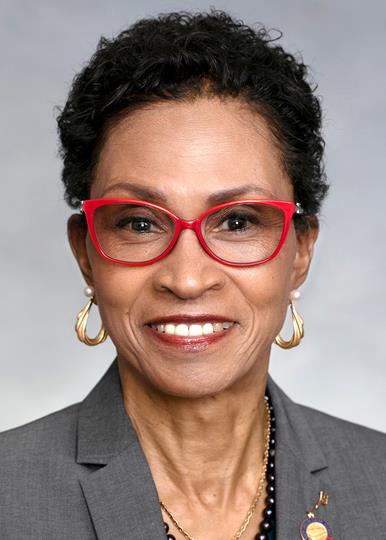
Rep. Renée Price
Sponsored bills
Maddy summaryHB 857 creates North Carolina's Missing with Disability Alert System, requiring law enforcement to issue rapid statewide alerts for missing persons or children with disabilities (as defined by state law) who face potential harm, neglect, or exploitation. The system mandates that alerts include only essential recovery information while protecting sensitive health details, and requires coordination with broadcasters and highway message signs for public dissemination. All law enforcement agencies and the state missing persons center must develop new guidelines and training procedures to implement the alert system. This policy change directly affects law enforcement, broadcasters, and individuals with disabilities who go missing.
Maddy summaryHB 266 designates June 12th of each year as Women Veterans Day in North Carolina. The bill directly affects North Carolinians by establishing an annual state observance to recognize women veterans' service. It adds this date to North Carolina's official calendar through a simple statutory change in Chapter 103 of the General Statutes, requiring no new funding or administrative implementation. The bill creates a ceremonial recognition without altering existing veteran benefits or programs.
Maddy summaryHB 845 requires state agencies and local governments to install visible, accessible water safety rescue equipment - including ring life buoys meeting federal safety standards - at public docks, piers, and shoreline access points. The law mandates that buoys be placed within 200 feet of shorelines, stored in bright orange/yellow stations, and not permanently secured, with specific requirements for buoyant lines and retroreflective marking. It also appropriates $25,000 for the Wildlife Resources Commission and provides up to $500 grants to local governments in economic tier one areas to cover installation costs. The bill takes effect July 1, 2025, directly affecting public water access facilities owned by state or local entities.
Maddy summaryHB 335 expands eligibility for emergency judges in North Carolina by allowing retired judges who previously served in both Superior Court and District Court to qualify for emergency judge roles on either court. Currently, retired judges could only serve as emergency judges on the specific court they retired from, but this bill removes that restriction for judges with dual court experience. The change directly affects retired judges who held positions in both court systems before retiring, making them eligible to be assigned to emergency duties in either court. This adjustment streamlines the pool of available judges for temporary court needs without altering compensation or other existing rules.
Maddy summaryHB 807 raises teacher salaries for the 2025-2026 school year with new pay scales based on experience and adds supplements for certified teachers, school nurses, counselors, and specialists. It allocates $89.4 million annually and $109.2 million as a one-time fund to provide weighted, per-child funding for children with disabilities based on the cost of services provided. The bill also mandates free breakfast and lunch for all public school students, funded through state appropriations tied to school food authority evaluations, and includes funding for a one-to-one device refresh in public schools.
Maddy summaryHB 802 requires all North Carolina public schools to adopt written policies banning the use of nicotine, hemp, and vaping products (including e-cigarettes and delta-8) in school buildings, on campuses, and at school events. Students under 21 found in possession of these products will have them confiscated, with parents notified within 24 hours; first offenses require schools to provide evidence-based cessation resources and education, while repeat offenses trigger disciplinary action. Schools must also distribute age-appropriate, Department of Health and Human Services-approved prevention materials to students at the start of each school year. The bill mandates schools to enforce these policies through clear signage, staff training, and collaboration with health officials.
Maddy summaryHB 790 prohibits the sale of tobacco, vape, and alternative nicotine products within 1,000 feet of any public or nonpublic school building. It directly affects vape and tobacco shops located near schools, banning sales in those zones while excluding home schools and colleges. The law includes an exception for incidental sales tied to a business's primary operations but classifies violations as Class 2 misdemeanors. The bill takes effect December 1, 2025, and applies to offenses occurring on or after that date.
Maddy summaryHB 796, the Student Mental Health Line Awareness Act, requires all North Carolina public schools serving grades 6-12 to print three specific suicide prevention contact numbers on new student identification cards. The mandated information includes the 988 Lifeline (call/text), Crisis Text Line (text HOME to 741741), and the NC Statewide Warmline (1-855-733-7762), displayed prominently on the ID. Schools must verify these numbers are current annually and use updated contact information. The bill applies to local school boards, charter schools, regional schools, and laboratory schools, but explicitly states it does not require issuing student IDs. It takes effect for the 2025-2026 school year.
Maddy summaryHB 815 revises North Carolina's Opportunity Scholarship Program, which provides state-funded vouchers for private school tuition. It expands eligibility to include students in foster care, military families, and those previously enrolled in public school, while prioritizing low-income students (households at or below 200% of the federal free/reduced lunch income threshold) for full tuition coverage (90% for full-time, 45% for part-time). Nonpublic schools receiving funds must meet reporting standards, and the program now requires schools to document student enrollment and academic progress. This bill directly affects low-income families, military-connected students, and participating private schools seeking state-funded tuition assistance.