

Maddy summaryHB 941 expands North Carolina's Teaching Fellows Program to address teacher shortages by providing forgivable loans to students pursuing teaching careers in high-need areas like special education, STEM, elementary education (K-6), and specific secondary subjects. The bill establishes a Trust Fund to cover loan amounts (up to $12,000 annually for up to four years), administrative costs, mentorship, and extracurricular programs like summer initiatives and alumni engagement. It requires selected colleges to meet strict standards, including high graduate effectiveness rates, alignment with "Science of Reading" training for elementary programs, and diverse school practicum opportunities. The program directly affects prospective teachers enrolled at up to 14 approved institutions of higher education who commit to teaching in qualifying licensure areas across North Carolina public schools.
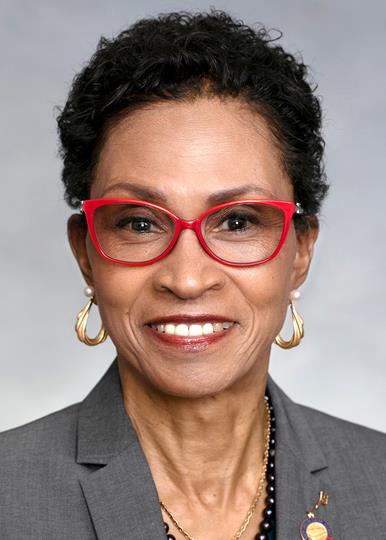
Rep. Renée Price
Sponsored bills
Maddy summaryHB 916 strengthens North Carolina's Do Not Call and Do Not Text Registry by requiring telemarketers to remove registered numbers from their contact lists within 30 business days when a resident requests no further calls, reducing the previous timeframe from 60 days. It directly affects North Carolina residents who have registered their phone numbers and telemarketers operating in the state, including partner companies. Key provisions include clarifying that "telephone solicitation" covers text messages and automated calls, and holding companies jointly liable if they accept sales leads generated by illegal telemarketing calls. The bill updates state law to align with federal telemarketing rules and enforce stricter compliance.
Maddy summaryThis bill establishes the Free to Learn Library Bill of Rights Act in North Carolina to protect residents' rights to access information, maintain privacy, and participate in library services without discrimination or undue restriction. It applies to all public libraries, including their online services and digital resources, and outlines specific rights such as unrestricted access to materials regardless of viewpoint, protection from surveillance and intimidation, confidentiality of library records, and fair access for all patrons regardless of personal characteristics. The legislation also includes anti-retaliation protections for library employees and volunteers who report violations, requires regional library systems to document compliance, and mandates strict data privacy practices for online usage tracking. Additionally, the bill appropriates funds to support implementation and directs the State Library to provide model language for interlocal agreements to ensure consistent compliance across the state.
Maddy summaryHB 965 proposes adding a constitutional amendment to guarantee all North Carolinians the right to clean water, clean air, and a preserved environment, including protection of natural resources like air, water, wildlife, and soils. If approved by voters in the 2026 general election, it would automatically become part of the state constitution, requiring the state to act as a trustee of natural resources for present and future generations. The amendment would not change current environmental laws but would establish a new constitutional standard that future legislation must align with. This bill must still pass through the legislature and gain voter approval to take effect.
Maddy summaryHB 973, the Uniform Restrictive Employment Agreement Act, establishes new rules for noncompete, nonsolicitation, and other restrictive employment agreements in North Carolina. It requires employers to provide workers with a written copy of any proposed agreement at least 14 days before signing, clearly state prohibited activities, and give a separate notice as defined by the Department of Labor. The bill directly affects workers and employers by making agreements unenforceable without these specific disclosures and clear terms, covering common restrictions like noncompetes but excluding patent agreements or existing ownership interests. It aims to increase transparency in employment contracts where workers face post-employment work limitations.
Maddy summaryHB 983 prohibits corporal punishment in all North Carolina public schools, directly affecting students and school staff. The bill replaces existing permissive rules with a full ban, requiring schools to maintain detailed records of any past use (though none currently occur), report demographic data on disciplinary actions annually, and allow parents to opt their children out of corporal punishment. It clarifies that physical restraint under federal law or reasonable force isn't considered corporal punishment. The law takes effect for the 2025-2026 school year.
Maddy summaryHB 970 (Preventing Algorithmic Rent Fixing) prohibits landlords and third-party service providers in North Carolina from using algorithms that coordinate rent pricing based on nonpublic competitor data. It bans real estate lessors from paying for or exchanging value for "coordinating functions" (like algorithms analyzing competitors' rent data) and prevents service providers from facilitating non-competition agreements among landlords. The law classifies violations as unfair trade practices under Chapter 75, allowing affected parties to sue and blocking pre-dispute arbitration agreements for such cases. It applies to residential rentals (apartments, houses, etc.) and takes effect October 1, 2025.
Maddy summaryHB 842 clarifies that North Carolina public schools may conduct vision, hearing, dental, and developmental screenings for students without requiring parental consent, but must notify parents at the start of each school year about all screenings offered and provide results for their child. This bill directly affects parents of students in public schools across North Carolina, particularly for kindergarten through third grade as noted in the bill text. Key provisions require schools to provide written notice of screenings and results to parents (instead of seeking consent for each screening), while maintaining existing requirements for other health services that do require consent. The law updates school health screening procedures under North Carolina General Statutes § 115C-76.46.
Maddy summaryHB 852, "Safe Dogs, Safe Owners," creates uniform statewide leash laws and requires dog owners to pay for injuries caused when their dog runs unleashed in public and harms a person or domestic animal. The bill defines a dog as "at large" when not under reasonable physical control (e.g., off-leash without sufficient control to prevent an attack) and makes owners strictly liable for resulting damages. It also prohibits allowing dogs over six months old to run unleashed at night without an owner or authorized person present, with violations punishable as a Class 3 misdemeanor and liability for damages. The law takes effect December 1, 2025, replacing inconsistent local ordinances.
Maddy summaryHB 879 requires landlords in North Carolina to provide and maintain operable air conditioning in residential rental units that supply AC. It directly affects landlords (who must ensure systems work at the start of each tenancy) and tenants (who gain a right to functional cooling during warm weather). The bill amends landlord obligations to explicitly mandate that air conditioning must cool premises to a reasonable indoor temperature, with repairs required upon written tenant notice (except emergencies). This applies to all new rental agreements and renewals entered into after the law takes effect. The legislation focuses on ensuring basic comfort and safety by making AC a standard maintenance requirement, not a discretionary amenity.