

Maddy summaryHB 766 appropriates $1.87 million to fund expanded Teen Mental Health First Aid (tMHFA) training for North Carolina high school students in grades 9-12 (ages 14-18). The bill directly affects students by providing evidence-based training to help them recognize, understand, and respond to peers' mental health and substance use challenges. Key provisions include funding for the Department of Health and Human Services to scale up tMHFA programs statewide, building on a pilot that trained 1,519 teens and showed a 50% increase in teens' willingness to seek adult support. The training focuses on connecting peers to trusted adults during crises, addressing high rates of unmet mental health needs among teens (64% don’t seek help, per the bill’s rationale).
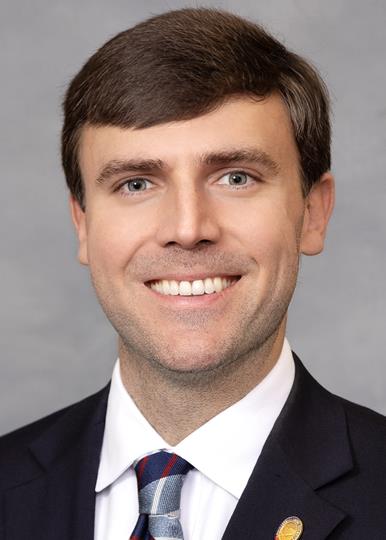
Rep. Charles Smith
Sponsored bills
Maddy summaryHB 679 appropriates $5.4 million in one-time state funds to the Town of Spring Lake for specific public projects. The funding directs $200,000 for restoring the Historic Spring Lake Civic Center, $100,000 to the Spring Lake Fire Department, $5 million for general infrastructure, and $100,000 to support the Manchester Fire Department or other rural fire departments serving the Spring Lake area. The bill becomes effective July 1, 2025, and directly affects Spring Lake town operations and the designated fire departments through these targeted grants.
Maddy summaryHB 682 allows North Carolina to override federal restrictions that block food and cash assistance (TANF) for people convicted of certain drug-related felonies. It directly affects individuals with Class H or I controlled substance felony convictions who complete substance abuse treatment (while incarcerated or in the community) and avoid new drug offenses for six months. The bill requires counties to offer food and cash benefits to eligible individuals who meet these conditions, making treatment participation a requirement for accessing aid. This change aims to support successful reintegration by removing a barrier to basic needs assistance for this group.
Maddy summaryHB 692 requires all North Carolina public schools to install at least two automatic external defibrillators (AEDs) per school building - one in a state-identified location and one in athletic facilities - and provide annual training for school staff in AED use and CPR. The bill directly affects public school personnel, students, and school districts by mandating specific installation, maintenance, and training protocols through new rules from the State Board of Education. Key provisions include requiring schools to coordinate with emergency medical systems, maintain AEDs properly, and develop policies aligned with state guidelines. The law takes effect for the 2025-2026 school year, using existing school funding for implementation.
Maddy summaryHB 710 establishes a three-year pilot program to fund mental health crisis units in North Carolina public schools. It allocates $2 million total (up to $250,000 annually per district) to select up to eight school districts starting in 2025-2026, prioritizing those with high student mental health needs or trauma history. Each participating district must staff units with at least a school nurse, social worker, and licensed counselor to provide crisis intervention during school hours and rotate across schools. The program requires annual reports on participating districts and student mental health impacts, ending June 30, 2028.
Maddy summaryHB 722 requires North Carolina courts to first assess a defendant's ability to pay before imposing criminal court costs and fees. It modifies rules for collecting specific costs like failure-to-appear fees ($200), crime lab services ($600 max), and digital forensics fees, requiring judges to determine affordability before assessment. The bill also mandates that courts provide 15 days' notice to government entities (like crime labs or prosecutors) before waiving or reducing fees, ensuring affected parties can object. This directly affects defendants convicted in criminal cases and government entities that collect or rely on these fees.
Maddy summaryHB 646 is a constitutional amendment that would permanently ban all slavery and involuntary servitude in North Carolina, removing the current exception allowing forced labor as punishment for crimes. If approved by voters in the November 2026 election, the amendment would change the state constitution to state that slavery and involuntary servitude are "forever prohibited" without any exceptions. This change would directly affect incarcerated individuals by ending the legal basis for requiring prison labor as punishment. The amendment requires voter approval through a statewide referendum before taking effect.
Maddy summaryHB 426 establishes the Workforce Diploma Program to help North Carolina adults aged 21+ without high school diplomas earn diplomas while gaining job skills. The program requires approved providers to offer courses combining diploma requirements with career training, including employability certifications and industry credentials. Participants receive milestone-based funding up to $7,500 per person, with payments tied to completing half-credits, certifications, or diplomas. The program mandates annual reports tracking participant outcomes like diplomas earned, credits, and workforce credentials. It appropriates $5 million for implementation starting July 2025.
Maddy summaryHB 594 allocates $5 million from the state general fund to the City of Fayetteville for constructing a second entrance into the Kings Grant neighborhood. This one-time grant would provide an additional access point for residents of the Kings Grant neighborhood, improving connectivity to the area. The funding is designated for the 2025-2026 fiscal year and becomes effective July 1, 2025.
Maddy summaryHB 603 creates a $40 million revolving loan fund within North Carolina's Housing Finance Agency to cover preconstruction costs (like land surveys, permits, and site work) for workforce housing projects. It directly affects developers building housing affordable to households earning 60%-120% of local median income, requiring them to contribute 20%-35% in project equity. The fund reserves 80% of loans for high-priority counties (tier 1-2) and 20% for other counties, with each loan capped at $1 million. The program requires annual reporting on loan details and becomes effective July 1, 2025.