

Maddy summaryHB 961, the "Hate Crimes Prevention Act," increases sentencing for felony convictions where the victim was targeted due to their race, ethnicity, religion, nationality, country of origin, or gender. If proven, the offender faces a sentence one felony class higher than the original charge (e.g., Class C felony becomes Class B). The bill requires the indictment to allege the bias motivation, and the state must prove it beyond a reasonable doubt during the same trial. It takes effect December 1, 2025, applying to offenses committed after that date.
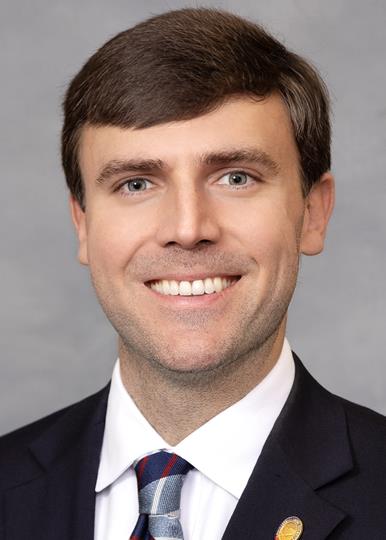
Rep. Charles Smith
Sponsored bills
Maddy summaryHB 883 establishes a grant program for North Carolina school districts to cover extraordinary costs for students with disabilities, particularly for placements outside regular schools (like private special education programs or homebound settings). School districts can apply for 75% reimbursement of eligible costs - such as specialized staff salaries, materials, or private school tuition - provided these costs exceed four times the state average per-pupil expenditure for disabilities. The bill requires annual IEP reviews, mandates that districts maintain legal responsibility for students in private placements, and directs the Department of Public Instruction to report on placements and costs by March 2026. It appropriates $1 million for the 2025-2026 fiscal year to fund this program.
Maddy summaryHB 487 shortens the required separation period for retired assistant district attorneys and assistant public defenders before they can return to state employment. The bill changes North Carolina's retirement rules to allow these professionals to rejoin state work after 30 days instead of the standard six-month waiting period. This adjustment applies specifically to retired assistant district attorneys and public defenders who wish to return to state service. The policy change directly affects these two groups of retired state employees by providing greater flexibility for reemployment.
Maddy summaryThis bill requires North Carolina state agencies and local governments to only purchase U.S. and North Carolina flags made entirely in the United States using domestically grown or produced materials. It prohibits using public funds for any U.S. or state flags not 100% manufactured in America from domestic materials. The rule applies to all new flag purchases starting October 1, 2025. It directly affects all government offices responsible for buying flags with public money.
Maddy summaryHB 335 expands eligibility for emergency judges in North Carolina by allowing retired judges who previously served in both Superior Court and District Court to qualify for emergency judge roles on either court. Currently, retired judges could only serve as emergency judges on the specific court they retired from, but this bill removes that restriction for judges with dual court experience. The change directly affects retired judges who held positions in both court systems before retiring, making them eligible to be assigned to emergency duties in either court. This adjustment streamlines the pool of available judges for temporary court needs without altering compensation or other existing rules.
Maddy summaryHB 793 appropriates $5 million for Fayetteville's Innovation District (to foster collaboration between businesses, universities, and institutions), $2.5 million to consolidate the city and Cumberland County's 911 dispatch center, $25,000 for Hollywood Heights Community Club facility repairs, $400,000 annually for four fire stations, and $100,000 annually for Lake Rim Park maintenance. The bill directs state funds to specific local projects in Fayetteville and Cumberland County, effective July 1, 2025. It provides one-time and recurring funding for infrastructure, public safety, and community facilities without altering existing laws. The bill directly affects Fayetteville city operations, Cumberland County emergency services, and local nonprofit and park entities.
Maddy summaryHB 807 raises teacher salaries for the 2025-2026 school year with new pay scales based on experience and adds supplements for certified teachers, school nurses, counselors, and specialists. It allocates $89.4 million annually and $109.2 million as a one-time fund to provide weighted, per-child funding for children with disabilities based on the cost of services provided. The bill also mandates free breakfast and lunch for all public school students, funded through state appropriations tied to school food authority evaluations, and includes funding for a one-to-one device refresh in public schools.
Maddy summaryHB 800 directs North Carolina's Department of Health and Human Services to study the effectiveness of state child care programs like NC Pre-K and Smart Start, including funding allocation and quality rating systems, with findings due by April 2026. It also allocates $10 million for a pilot program that automatically enrolls preschool-age children (8 weeks-5 years) of full-time licensed child care teachers in state subsidy programs, provided teachers commit to completing early childhood education coursework within 18 months. The pilot targets counties with the highest historical child care capacity loss, requires centers to accept standard subsidy rates without extra fees, and mandates quarterly participation reports starting in 2026. This directly affects licensed child care teachers and their preschool children, aiming to improve child care access and workforce retention.
Maddy summaryHB 814 (PIRE) promotes the use of advanced conductors (lower-resistance wires) and grid-enhancing technologies to improve electricity transmission efficiency and reliability. It directly affects public utilities, electric membership corporations, and municipal power agencies by waiving standard permitting requirements for specific upgrades that increase capacity, reduce congestion, or enhance grid resilience using these technologies. The bill requires applicants to detail the costs and benefits of such upgrades in their applications and mandates environmental reviews for new projects. This policy change streamlines infrastructure modernization without new construction, focusing on optimizing existing transmission systems.
Maddy summaryHB 786, the "Working Families Act," reduces child care costs for low-income families by lowering parent copayments from 10% to 7% of income (effective 2025), reinstates a refundable state child tax credit with income-based payments (effective 2025), and phases up North Carolina’s minimum wage to $15/hour by 2030 with annual inflation adjustments. It also increases income limits for property tax relief, creates a homebuyers’ assistance program for public servants (like firefighters and EMTs) as first-time buyers, and establishes a paid family leave insurance program funded through an employer grant program. The bill directly affects working families, hourly workers, public-sector employees, and households using subsidized child care or property tax relief. Key mechanisms include phased wage increases, income-tiered tax credits, and targeted housing support, all designed to reduce financial strain on low-to-moderate-income households.