

Maddy summaryHB 760 requires tattoo artists in North Carolina to complete annual bloodborne pathogen training compliant with OSHA standards (29 C.F.R. § 1910.1030) to obtain or renew their state tattooing permits. This applies directly to all tattoo artists seeking permits from the Department of Health and Human Services, excluding licensed physicians and their supervised staff who perform tattooing as part of medical practice. The bill mandates that permit applications (both new and renewal) must include proof of this training, which the Department will verify before issuing or renewing permits. The requirement becomes effective October 1, 2025, for all permit applications received on or after that date.
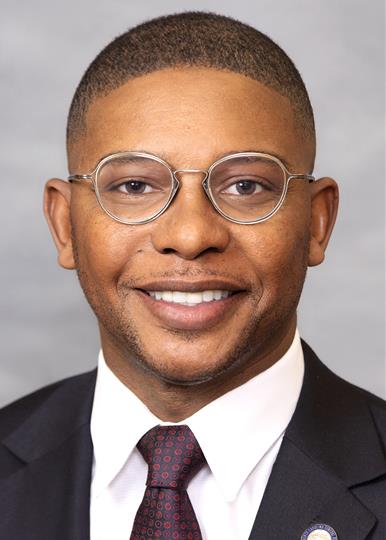
Rep. Mike Colvin
Sponsored bills
Maddy summaryHB 774 ("School Breakfast for All") mandates that all North Carolina public schools (pre-K through 12) provide free breakfast to every student, eliminating costs for families. It establishes a Farm-to-Table Initiative requiring schools to partner with local farmers for fresh, locally sourced ingredients in breakfast meals. The bill allocates $39 million in recurring state funds for the 2025-2026 fiscal year to cover program costs, while requiring annual reports on participation rates, costs, and impacts on student health and academic performance. This directly affects all public school students, school districts, and North Carolina agricultural producers.
Maddy summaryThis is a House Resolution (HR 769), not a bill, urging Congress to support H.R. 4052, which would create a National Infrastructure Bank. The resolution cites North Carolina's infrastructure needs - like roads, bridges, water systems, and lead pipe replacement - and states the proposed bank would be funded through existing Treasury debt (without new taxes or spending). It calls for Congress to pass the bank legislation to finance infrastructure projects nationwide, including those in North Carolina. The resolution itself does not create the bank but advocates for its adoption.
Maddy summaryHB 679 appropriates $5.4 million in one-time state funds to the Town of Spring Lake for specific public projects. The funding directs $200,000 for restoring the Historic Spring Lake Civic Center, $100,000 to the Spring Lake Fire Department, $5 million for general infrastructure, and $100,000 to support the Manchester Fire Department or other rural fire departments serving the Spring Lake area. The bill becomes effective July 1, 2025, and directly affects Spring Lake town operations and the designated fire departments through these targeted grants.
Maddy summaryHB 688 creates a dedicated annual appropriation of $100,000 from the state General Fund to the Parks and Recreation Trust Fund specifically for inclusive playground projects. It directly affects local governments, public schools, and public authorities (as defined in state law) seeking to build or adapt playgrounds to meet the needs of people with disabilities. The bill provides grants of up to $5,000 per project, requiring recipients to match each $5 in state funds with $1 in local funds. This funding operates separately from other Trust Fund allocations, ensuring dedicated resources for accessibility improvements without reducing existing funding for state parks or coastal access. The bill becomes effective July 1, 2025.
Maddy summaryHB 713 mandates that all North Carolina public schools provide free breakfast and lunch to every student, eliminating meal fees for all. This affects every student enrolled in public schools, including those in charter schools and regional school units, starting with the 2025-2026 school year. The bill appropriates $144 million from the state General Fund to cover costs, with funds allocated based on school size, student eligibility for free/reduced meals, and nutritional quality standards. Schools must comply with federal nutrition guidelines while using state funds to supplement, not replace, existing meal program funding.
Maddy summaryHB 714 creates a state-run universal healthcare benefit plan administered by North Carolina's Commissioner of Insurance. It requires the plan to offer sliding-scale premiums based on household income, covering residents whose incomes exceed Medicaid eligibility but who cannot afford private insurance. The bill mandates the Commissioner to develop the plan by January 1, 2026, with a report to the legislature detailing implementation steps. It also appropriates $100,000 for initial planning in the 2025-2026 fiscal year and ensures coverage meets or exceeds federal Affordable Care Act standards.
Maddy summaryHB 715 appropriates $13.3 million annually from the General Fund to expand access to North Carolina's Prekindergarten (NC Pre-K) program for eligible children. The funding, allocated to the state's child development agency, will create additional program slots for children seeking enrollment starting July 1, 2025. This bill directly affects low-income 4-year-olds who qualify for the NC Pre-K program by increasing available spots through dedicated state funding. The legislation focuses solely on providing financial resources for program expansion, with no changes to eligibility criteria or program structure.
Maddy summaryHB 708 establishes a $2.5 million annual grant program to fund after-school robotics education for North Carolina high school students. It provides grants to public schools or community organizations partnering with approved robotics organizations (like nonprofits or universities) to cover robotics kits, coach stipends, competition fees, and program coordination. The bill also requires schools to grant excused absences for students participating in robotics competitions, aligning with existing policies for academic events. This directly supports high school students in STEM fields through structured, competitive robotics programs while mandating annual reporting on grant usage and student outcomes.
Maddy summaryHB 683 expands North Carolina's property tax exclusion for disabled veterans by removing the $45,000 cap and excluding the **entire appraised value** of a qualifying veteran's primary residence from property taxes. It directly affects **disabled veterans** (with VA-certified service-connected disabilities) and their **unremarried surviving spouses**, who previously could only exclude the first $45,000 of their home's value. The bill requires the state to **reimburse local governments** for lost tax revenue through a "hold harmless amount" calculated by multiplying the excluded value by the local tax rate, with counties reporting this by September 1 and receiving funds by December 31 annually. This change takes effect for taxes due in 2026 and ensures no net revenue loss for local governments.