

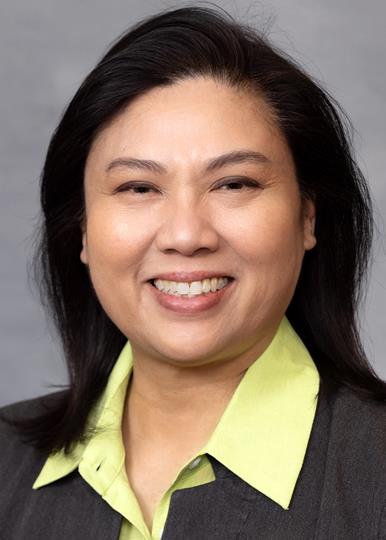
Photo of Maria Cervania
D North Carolina House · District 41 On the 2026 ballot

Rep. Maria Cervania

Compare
Total votes
1,281
all sessions
Attendance
100%
of floor votes
Higher than 91% of chamber peers
With party
93%
of cast votes
Lower than 87% of chamber peers
Bipartisan score
4%
crosses aisle rarely
Higher than 86% of chamber peers
Sponsored
781
bills & resolutions
Higher than 97% of chamber peers
Committees
8
assignments
781 bills and resolutions

Sponsored bills

Total
781
Primary
50
Co-sponsor
731
This page
781
matching current filters
Co-sponsor HB 103
died · North Carolina House · Co-sponsor
NC American Indian Hunting/Fishing Rights.

Maddy summaryHB 103 exempts members of North Carolina-recognized tribes from needing hunting, trapping, or fishing licenses when hunting or fishing on tribal land (requiring ID verification) or off tribal land (requiring ID plus compliance with reporting, hunter education, and federal stamp rules). It directly affects tribal members recognized under Chapter 71A of North Carolina law, both on tribal property and in state waters/lands outside tribal areas. The bill amends licensing rules to remove fee requirements while maintaining other regulatory obligations like wildlife reporting and federal stamp purchases. It becomes effective October 1, 2025.

died Mar 4, 2025 1 co-sponsor
Co-sponsor HB 248
In committee · North Carolina House · Co-sponsor
Live/Work Exemption for One-Family Dwellings.

Maddy summaryHB 248 exempts owner-occupied single-family homes in North Carolina from live/work building code requirements when used for permitted home-based businesses. It defines "home business use" as owner-operated activities incidental to residential living (e.g., consulting, crafts), requiring the owner to reside there, comply with local zoning, and not lease the business space. The bill prevents local governments from reclassifying these homes as commercial or mixed-use solely due to the home business, ensuring they remain subject only to standard single-family dwelling building codes. It does not override private HOA restrictions or exempt businesses from other state/federal licenses, safety rules, or local zoning prohibitions.

In committee Mar 3, 2025 1 co-sponsor
Co-sponsor HB 249
In committee · North Carolina House · Co-sponsor
Diversity in Pickleball Pilot Program.

Maddy summaryHB 249 allocates $10,112 to North Carolina State University for a Wake County pilot program to increase diversity in pickleball, specifically targeting underrepresented communities of color. The program requires focus groups with people of color, branded marketing materials, two 4-week sessions at Raleigh recreation centers (Method Road and Chavis) in fall 2025 and spring 2026, and a post-program toolkit for wider community use. It directly affects residents in Wake County by creating accessible pickleball opportunities through public recreation facilities. The bill focuses on concrete steps to address current underrepresentation in the sport, leveraging its low-cost, inclusive nature. Funds are restricted to these specific activities and do not revert.

In committee Mar 3, 2025 1 co-sponsor
Co-sponsor HB 256
In committee · North Carolina House · Co-sponsor
Allow Public Employee Collective Bargaining.

Maddy summaryHB 256 repeals North Carolina's current ban on public employee collective bargaining, allowing state and local government workers (like teachers, police, and administrative staff) to negotiate wages and working conditions with their employers. The bill removes existing legal restrictions (Article 12 of Chapter 95) and explicitly states that public employees' bargaining rights apply to all state and local government employers. It does not create new benefits or funding but aligns public sector bargaining rights with those already available to private sector employees. The bill’s key provision is the repeal of the prohibition, enabling public employees to collectively bargain under existing state law.

In committee Mar 3, 2025 1 co-sponsor
Co-sponsor HB 130
In committee · North Carolina House · Co-sponsor
Agriculture Crops Disaster Relief.

Maddy summaryHB 130 establishes a $475 million program to provide financial assistance to North Carolina farmers who suffered crop losses from natural disasters in 2024. It directly affects farmers in counties designated by the USDA as disaster areas, requiring verified losses of eligible agricultural commodities (like crops, livestock, or specialty plants) planted but not harvested by January 1, 2024. The program uses county and state yield/price averages to calculate payments, mandates submission of USDA Form 578 or equivalent documentation within 30 days, and allocates funds from state reserves (Stabilization, IT, and Economic Development) to cover verified losses. Farmers must provide documentation for verification, and the Department of Agriculture may audit claims to ensure proper use of funds, with refunds required for inaccurate information.

In committee Feb 26, 2025 1 co-sponsor
Co-sponsor HB 207
In committee · North Carolina House · Co-sponsor
Remove Barriers to Labor Organizing.

Maddy summaryHB 207 removes legal barriers preventing workers from organizing or joining labor unions in North Carolina. It prohibits employers from requiring union membership, dues, or non-membership as a condition of employment or continued work for any employee, including public employees. The bill also invalidates agreements that tie agricultural contracts or litigation terms to union status and allows workers to seek legal damages if denied employment due to these violations. These changes apply to all new employment agreements entered into after the law takes effect, strengthening existing labor protections under North Carolina law.

In committee Feb 26, 2025 1 co-sponsor
Co-sponsor HB 197
In committee · North Carolina House · Co-sponsor
Local Communicable Disease Programs/Funds.

Maddy summaryHB 197 appropriates $25 million annually for the 2025-2026 and 2026-2027 fiscal years to North Carolina's local health departments (LHDs) for communicable disease programs. The funding aims to address a 70% staff shortage in LHDs by enabling them to retain existing staff, hire additional public health professionals (including nurses), and expand essential services. Funds are allocated with half distributed equally among LHDs based on the number of counties served, and half distributed based on the percentage of state population each LHD serves. The bill becomes effective July 1, 2025, to support North Carolina's response to diseases like avian flu and mpox.

In committee Feb 26, 2025 1 co-sponsor
Co-sponsor HB 196
In committee · North Carolina House · Co-sponsor
Museum of Life and Science Exhibit/Lab/Funds.

Maddy summaryHB 196 appropriates $1.5 million from the General Fund to the North Carolina Museum of Life and Science, Inc., for a new biotechnology exhibit and laboratory. The funds will showcase North Carolina's biotech achievements and promote STEM career interest, directly benefiting the museum and students in the state. The bill creates a specific funding mechanism for this educational project, effective July 1, 2025. As a funding allocation, it does not alter laws or regulations.

In committee Feb 26, 2025 1 co-sponsor
Co-sponsor HB 180
In committee · North Carolina House · Co-sponsor
Fiscally Responsible and Sustainable Budgeting.

Maddy summaryHB 180 requires North Carolina's legislative and executive branches to collaborate annually on a long-term budget assessment covering at least five years. The bill mandates analyzing how to maintain current services amid inflation and population changes, the cost of new policies or court mandates, employee salary/benefit adjustments, and economic or federal funding shifts. This assessment must directly inform the Governor's annual budget message, which must include a five-year fiscal outlook for new or expanded programs. The law applies to all state budget planning starting with the next fiscal year, affecting how state agencies and the Governor project spending sustainability.

In committee Feb 25, 2025 1 co-sponsor
Co-sponsor HB 178
In committee · North Carolina House · Co-sponsor
Budgeting Accountability and Transparency.

Maddy summaryHB 178 requires North Carolina's state agencies and legislators to make budget-related requests public once the annual budget bill passes, removing previous confidentiality for communications about funding provisions. It mandates a one-week public comment period with an online portal, at least one public hearing, and three nonvoting committee meetings for budget debate before final votes. The bill directly affects state agencies submitting budget requests, legislators receiving those requests, and the public, who gain access to previously confidential budget discussions. Key changes include requiring legislators to receive budget drafts five days before voting and treating all budget-related documents as public records after enactment.

In committee Feb 25, 2025 1 co-sponsor
Showing 431 to 440 of 781 bills
Previous 1 … 43 44 45 … 79 Next