

Maddy summaryHB 612, the "Fostering Care in NC Act," updates North Carolina's laws governing child abuse, neglect, and dependency cases. It expands the definition of "abused juveniles" to include specific offenses like sexual crimes, human trafficking, and certain violent acts, affecting how cases are classified. The bill requires county social services directors to use either a family-centered assessment or a formal investigation when reviewing reports, and to collect military affiliation details of the juvenile's caregiver. It also clarifies that court jurisdiction over juveniles continues until age 18, emancipation, or death. These changes standardize responses to child welfare reports and improve information gathering for safety decisions.
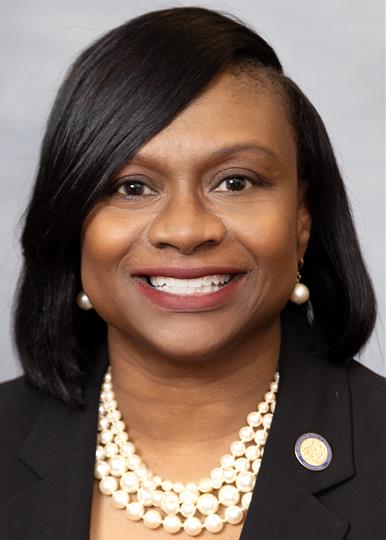
Rep. Monika Johnson-Hostler
Sponsored bills
Maddy summaryHB 79, "North Carolina Work and Save," creates a voluntary retirement savings program for North Carolina workers without access to employer-sponsored plans. It allows covered employers (small businesses not already offering tax-qualified retirement plans) to set up payroll deduction IRAs (traditional or Roth) for employees, enabling automatic retirement savings. The program is administered by a 12-member Board under the Department of Commerce, with funds held in a trust managed by private entities. It directly affects approximately 1.7 million North Carolina workers in small businesses, focusing on moderate- and lower-income households to improve retirement security. Participation is voluntary for both employers and employees, with no state funding required for employer participation.
Maddy summaryHB 59 would increase the income eligibility limit for North Carolina's elderly or disabled property tax homestead exclusion from $25,000 to $48,000 for taxable years beginning July 1, 2026. This change would directly affect homeowners aged 65 or older, or those who are totally and permanently disabled, who meet other criteria (like being a North Carolina resident and owning their home as a permanent residence). The bill modifies the existing rule that currently limits eligibility to those with incomes under $25,000, raising the threshold to $48,000 while maintaining the exclusion amount as the greater of $25,000 or 50% of the home's appraised value. The change aims to expand access to this property tax relief for qualifying low-to-moderate income homeowners. (Note: The bill was withdrawn in June 2025 and has not become law.)
Maddy summaryHB 543 requires all applicants for athlete agent registration in North Carolina to undergo a criminal history background check as a condition of obtaining or renewing their license. This directly affects individuals seeking to work as athlete agents within the state, including new applicants and those renewing existing registrations. The bill mandates that applicants pay a $250 fee for the check (as specified in Section 2 of the bill), consent to fingerprinting, and allows the State Bureau of Investigation to conduct the check using state and federal records. All background information remains confidential and is not considered a public record under North Carolina law.
Maddy summaryHB 429 would have authorized a special license plate for North Carolina vehicle owners supporting the NC State University College of Veterinary Medicine's Turtle Rescue Team. The bill specified a $30 annual fee per plate, with $20 directly funding the Turtle Rescue Team's work rehabilitating turtles, while $10 went to a state fund. However, the bill explicitly states this plate program expired on July 1, 2016, meaning it is no longer active or available for purchase. The legislation primarily affected vehicle owners who chose to buy this specific plate, with the fees supporting the Turtle Rescue Team's wildlife rehabilitation services.
Maddy summaryHB 485 requires North Carolina's Medicaid agency to request federal approval to extend Medicaid coverage for personal care services to adults living in licensed adult care homes who earn more than the current State-County Special Assistance income limit but stay below 180-200% of the federal poverty level. The bill specifically targets individuals who would qualify for lower-income Medicaid assistance if not for their higher earnings. Before implementing this coverage, the agency must submit a CMS request meeting three conditions: covering the specified income group, ensuring cost savings offset new expenses, and complying with legal requirements. This bill does not immediately change coverage - it only authorizes a federal request, pending CMS approval.
Maddy summaryHB 121 provides local boards of education with additional flexibility in adopting their school calendars. It removes the current state-mandated earliest opening date for students (the Monday closest to August 26) and the latest closing date (the Friday closest to June 11). This change allows local boards to determine the specific opening and closing dates for public schools under their authority. The bill directly affects public schools and students in North Carolina and would apply starting with the 2025-2026 school year.
Maddy summaryHouse Bill 515, the North Carolina Economic Abuse Prevention Act, creates a new legal framework to protect survivors of domestic violence and children in foster care from "coerced debt." It defines coerced debt as debt incurred through duress, intimidation, or undue influence and provides pathways for individuals to notify creditors of such debt using specific documentation. Upon receiving adequate documentation, creditors must pause collection efforts while reviewing the claim. The bill also establishes that a person who causes another to incur coerced debt is civilly liable to the claimant for the debt amount, attorney's fees, and costs.
Maddy summaryHouse Bill 520 aims to protect North Carolina citizens and businesses from deceptive telemarketing practices, particularly those involving misleading caller ID. The bill establishes that a telephone number is the property of the subscriber and prohibits telephone solicitors from misrepresenting the origin of a call or transmitting misleading caller identification information. It also prevents telephone carriers from knowingly providing subscriber numbers to entities that will violate these provisions. Individuals who receive calls in violation of the misleading caller ID rules can sue for civil damages, including an additional $10,000 fine for each knowing violation. Knowing violations of the caller ID provision are also classified as a Class H felony.
Maddy summaryHouse Bill 283 establishes the Small Business Investment Grant (SBIG) Program within the One North Carolina Fund, designed to provide financial assistance to eligible small businesses looking to establish or expand facilities in the state. The bill allocates up to $10 million from the Fund to this new account. Through the SBIG Program, competitive grants are offered to businesses meeting specific criteria, such as having 250 or fewer employees or less than $5 million in annual revenue, investing $10-$30 million, and creating new jobs with competitive wages. Grants are capped at $500,000 annually per recipient, up to $2.5 million total, over a maximum of five years. Additionally, the bill renames the "One North Carolina Small Business Account" to the "Small Business Research and Technology Account," which continues to support federal SBIR/STTR grant incentive and matching programs.