

Maddy summaryHB 367 requires North Carolina's State Crime Laboratory to provide sexual assault victims with updates on the status of their examination kits. Victims will be notified if their kit cannot be tested, if testing is declined for reasons other than untestability, or if the kit is scheduled for destruction. The law mandates that the lab develop procedures for these notifications but specifies victims must provide and maintain current contact information. This law takes effect October 1, 2025, applying to all kits submitted before, on, or after that date.
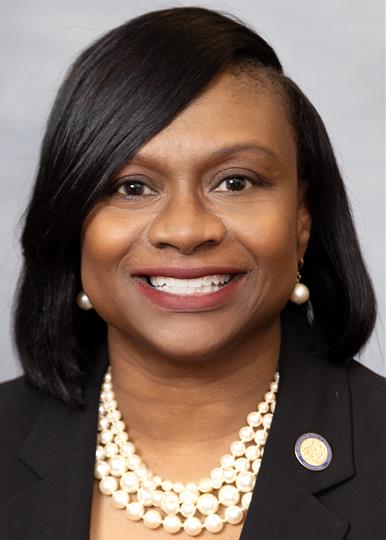
Rep. Monika Johnson-Hostler
Sponsored bills
Maddy summaryHB 340 requires North Carolina's State Board of Education to develop or purchase a screening assessment to identify academically or intellectually gifted students in all sixth-grade classrooms across public middle schools. The bill directly affects all sixth graders in North Carolina public middle schools by mandating universal screening for gifted identification. Key provisions include appropriating $7 million in recurring state funds for the 2025-2026 fiscal year to cover assessment costs and requiring the screening to be administered to every sixth grader. The law becomes effective July 1, 2025, with the Department of Public Instruction responsible for implementing the screening process.
Maddy summaryHB 325 establishes a two-year pilot program (2025-2026 and 2026-2027) to fund public school field trips to North Carolina's Legislative Building. It provides up to $2,000 per school for transportation costs (bus rental, fuel, driver pay) to participating schools, prioritizing those in counties designated as "Tier 1" under state law. The program is funded with $1.5 million annually from the General Fund, requiring schools to submit budget applications by October 1 and reporting usage to the legislature by February 15 each year. The bill directly affects public school units statewide, with priority given to schools in designated underserved counties.
Maddy summaryHB 280 allocates $30,000 in one-time state funds to support the North Carolina Senior Tar Heel Legislature, a program for older residents to engage with state policy. The funding, from the General Fund for the 2025-2026 fiscal year, covers operational costs for this existing program established under state law. It directly affects the Senior Tar Heel Legislature by providing financial resources for its activities. The bill becomes effective July 1, 2025, and does not create new policy but enables the program's continued operation.
Maddy summaryHB 267 automatically expunges court records for certain eviction cases in North Carolina, directly affecting tenants (defendants) in summary ejectment proceedings. It requires clerks to automatically delete records 30 days after cases are voluntarily dismissed before a possession order is issued. For cases where defendants win on the merits or lose but wait three years, they may petition for expungement after proving housing stability (e.g., consistent rent payments and no new eviction filings). The bill takes effect October 2025, with required court forms to be developed by September 2025.
Maddy summaryHB 29 would allow tribal enrollment cards issued by State or federally recognized North Carolina tribes to be used as valid ID for purchasing alcohol and tobacco. It amends existing state laws to explicitly include these cards alongside driver's licenses, passports, and military IDs when verifying a customer's age at point-of-sale. Businesses selling alcohol or tobacco would be permitted to accept tribal cards as proof of age under the same rules as other official identification. The policy change would take effect on December 1, 2025, if the bill is enacted.
Maddy summaryHB 259 establishes a $127,500 pilot grant program for North Carolina public schools to support participation in Science Olympiad competitions during the 2025-2026 school year. The program provides funding to cover registration fees, materials, travel, and teacher stipends for schools that did not have a Science Olympiad team in the previous year, prioritizing these applicants. Public school units must apply by August 31, 2025, and funds must supplement - not replace - existing school budgets. The Department of Public Instruction will report participation data and unfunded applications to the legislature by May 1, 2026.
Maddy summaryHB 245 modifies North Carolina's low-income housing tax credit program to prioritize affordable housing development in rural communities and counties with higher poverty rates. It requires the state housing committee to adopt allocation rules that favor projects within 10 miles of amenities (like grocery stores) in towns under 10,000 people, measure distances by straight-line radius (not driving routes), and use poverty levels as a tiebreaker when projects score equally. The bill directs the committee to publish proposed rules for public comment and hold hearings before finalizing annual allocation plans. This policy change redirects existing housing tax credits toward qualifying rural and high-poverty areas without creating new funding. The bill takes effect October 1, 2025, for future allocation plans.
Maddy summaryHB 248 exempts owner-occupied single-family homes in North Carolina from live/work building code requirements when used for permitted home-based businesses. It defines "home business use" as owner-operated activities incidental to residential living (e.g., consulting, crafts), requiring the owner to reside there, comply with local zoning, and not lease the business space. The bill prevents local governments from reclassifying these homes as commercial or mixed-use solely due to the home business, ensuring they remain subject only to standard single-family dwelling building codes. It does not override private HOA restrictions or exempt businesses from other state/federal licenses, safety rules, or local zoning prohibitions.
Maddy summaryHB 256 repeals North Carolina's current ban on public employee collective bargaining, allowing state and local government workers (like teachers, police, and administrative staff) to negotiate wages and working conditions with their employers. The bill removes existing legal restrictions (Article 12 of Chapter 95) and explicitly states that public employees' bargaining rights apply to all state and local government employers. It does not create new benefits or funding but aligns public sector bargaining rights with those already available to private sector employees. The bill’s key provision is the repeal of the prohibition, enabling public employees to collectively bargain under existing state law.