

Maddy summaryHB 1056 aims to increase housing supply in North Carolina by allowing residential construction in commercial zones and banning minimum parking requirements for new developments. The bill also creates a state program to reimburse local governments for costs associated with speeding up housing permit reviews and provides additional funding to the state housing finance agency. These measures are designed to reduce regulatory barriers that currently limit the number of homes being built and help address rising housing costs.
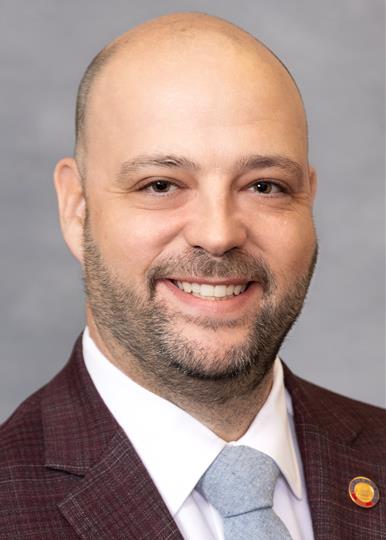
Rep. Bryan Cohn
Sponsored bills
Maddy summaryHB 1053 directs the North Carolina General Assembly to allocate additional state funds to the Department of Public Instruction for classroom supplies and equipment. Starting in the 2026-2027 school year, the bill provides $28.6 million, with further increases of $15.1 million and $22.6 million planned for the 2027-2028 and 2028-2029 fiscal years respectively. These recurring funds are intended to increase the specific allotment given to schools for instructional materials and equipment. The legislation becomes effective on July 1, 2026.
Maddy summaryThis bill requires the North Carolina Department of Commerce to create a biennial report assessing economic opportunity, affordability, and family economic security across the state. The report must use existing public data to track specific metrics such as poverty rates, job wages, household spending on essentials like housing and childcare, and access to education and workforce training. It will be submitted to legislative committees and the public by January 31 of each odd-numbered year, with funding of $200,000 allocated starting in the 2026-2027 fiscal year to support its implementation.
Maddy summaryHB 1045, known as the Fair Wages in Health Care Act, establishes minimum hourly wages for five specific direct care occupations in North Carolina: home care aides, direct support professionals, certified nursing assistants, psychiatric aides, and licensed practical nurses. The bill sets wage floors ranging from $18 to $24 per hour depending on the role, with protections against employers using different job titles to avoid paying the required rates. To help healthcare providers meet these new costs, the Department of Health and Human Services must adjust reimbursement rates for publicly funded programs and update contracts with managed care organizations. The law takes effect on October 1, 2027, and applies to all employers in the state, regardless of whether they are public or private entities.
Maddy summaryThis North Carolina bill allocates $31,000 in state funds to a specific nonprofit organization called Joyful Soul Treasures, Inc. The money is designated for a marketing campaign and an eight-week workshop aimed at improving sexual health education and awareness. The program specifically targets adolescents between the ages of 13 and 18, covering costs for materials, instructors, and event supplies. The funding is intended for the 2026-2027 fiscal year, with the act becoming effective on July 1, 2026.
Maddy summaryHB 1059 establishes a new state minimum wage of $15.00 per hour in North Carolina, which will automatically increase each year based on inflation starting in 2027. The bill creates the North Carolina Wage Board to review wage competitiveness and allows local governments to set their own higher minimum wages if they choose. It also introduces a short-time compensation program to help businesses manage layoffs during economic downturns and sets a lower minimum wage of $11.00 for small businesses with annual revenue under $400,000. Additionally, the legislation maintains existing provisions for subminimum wages for students, individuals with disabilities, and seasonal food service workers while clarifying rules around tip credits and pooling.
Maddy summaryHB 1047, the North Carolina Microplastics Study Act, directs the North Carolina Collaboratory at the University of North Carolina at Chapel Hill to study the presence and impacts of microplastics in the state's waterways. Funded with $150,000 for the 2026-2027 fiscal year, the bill requires the Collaboratory to identify plastic particles, assess their environmental and health risks, and develop strategies to prevent future pollution and reverse existing harm. The Collaboratory must work with state agencies and stakeholders to create a prioritized research plan and standardized detection methods, ultimately submitting a comprehensive report with findings and policy recommendations by July 1, 2027.
Maddy summaryThis bill requires the North Carolina Attorney General to investigate any incidents within the state involving federal immigration enforcement that result in serious bodily injury or death. The law defines federal immigration enforcement to include agents from Customs and Border Protection and Immigration and Customs Enforcement, as well as local officers authorized to perform immigration duties. Upon completing an investigation, the Attorney General must publicly release findings and recommendations while protecting the identities of victims and minors, and must also provide copies to state legislative leaders. To support these investigations, the bill appropriates $450,000 in state funds for the 2026-2027 fiscal year and applies to incidents occurring after the law takes effect.
Maddy summaryHB 1052 allocates $1 million from the state's General Fund to Forsyth County in the Triad region for the 2026-2027 fiscal year. These nonrecurring funds are designated as a directed grant specifically for the Cure Violence Program, which aims to reduce violence in the area. The legislation becomes effective on July 1, 2026, and does not alter existing laws but provides new financial resources for this specific initiative.
Maddy summaryThis bill establishes strict conditions under which North Carolina law enforcement agencies can enter into agreements with federal immigration authorities, requiring that federal agents adhere to specific state laws and operational limits. Key provisions mandate that federal agents must be clearly identified, cannot conduct enforcement near schools or polling places, and generally cannot enter homes or use surveillance technology without a valid judicial warrant. Additionally, the legislation requires a judicial warrant for any federal immigration enforcement action within the state, with exceptions only for valid criminal warrants. To support local implementation, the bill also appropriates $40 million to counties for hiring additional law enforcement and corrections personnel.