

Maddy summaryHB 31 would amend North Carolina's State Human Resources Act to make every statewide general election day a paid holiday for state employees. This change would add election days to the current list of paid holidays (which includes Martin Luther King Jr.'s Birthday and Veterans Day), while maintaining the limit of 13 paid holidays per year. The bill directly affects state workers, ensuring they receive paid time off on election days without reducing the total number of paid holidays. It does not change election dates or voting procedures, only the employment benefits for state employees on those days. The legislation is currently pending in committee review.
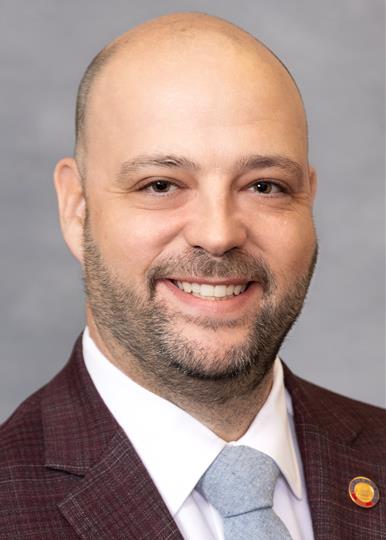
Rep. Bryan Cohn
Sponsored bills
Maddy summaryHB 131 reinstates a 35% tax credit for businesses and homeowners who install solar energy systems in North Carolina. Businesses can claim the credit over five years (with a $2.5 million maximum per installation), while homeowners receive capped credits based on system type (e.g., $1,400 for water heating, $3,500 for space heating). The credit applies to equipment placed in service in the state and expires for new installations after 2017, though projects meeting 2015 construction milestones qualify for extension. This bill renews a previously expired tax incentive program for solar energy adoption.
Maddy summaryHB 129, the "Judge Joe John Nonpartisan Judicial Elections Act," reestablishes nonpartisan elections for all North Carolina judicial offices, including Supreme Court justices, Court of Appeals judges, and superior and district court judges. The bill requires candidates to run without party labels, with primaries held only when more than two candidates file for an office, and winners elected based on highest vote totals (using a random draw only in tie situations). It also restores public financing for judicial campaigns, aiming to reduce partisan influence in judicial races. This bill directly affects judicial candidates, voters, and the election process for all statewide and local judicial positions in North Carolina.
Maddy summaryHB 128 appropriates $2 million annually for fiscal years 2025-2026 and 2026-2027 to create a statewide prostate cancer screening program administered by North Carolina's Department of Health and Human Services. The program provides free or low-cost screenings and follow-up care to uninsured or underinsured men aged 50-70 (40-70 with family history of prostate cancer) who meet income requirements (below 250% of federal poverty level). Eligibility requires no Medicare Part B or Medicaid coverage and specific age/family history criteria as defined in the bill. The program begins July 1, 2025.
Maddy summaryHB 115 exempts properly licensed child care facilities from property tax if they are used exclusively for child care. It applies to facilities operating under North Carolina's child care licensing rules (Chapter 110) and excludes both the building and necessary adjacent land from taxation. Partial exemptions are allowed if only part of a facility serves child care, but facilities on probation or with suspended licenses lose the exemption. The tax exemption takes effect for property taxes due on or after July 1, 2026.
Maddy summaryThis bill proposes repealing a literacy test requirement from the North Carolina Constitution, which would affect all voters by removing a historical barrier to voting. The amendment must be approved by voters in the November 2026 election, with the ballot explicitly stating: "Constitutional amendment to remove the literacy test requirement... The federal Voting Rights Act of 1965 prohibits implementation of this requirement." If approved, the change takes effect upon certification by the State Board of Elections. The bill does not alter current voting procedures, as the literacy test has been prohibited by federal law since 1965.
Maddy summaryHB 102 requires North Carolina property assessors to send clear, plain-language notifications to property owners during revaluations. It mandates that these notices include: (1) a simple explanation of why the revaluation is happening, (2) the projected percentage change in the property's appraised value compared to the previous year, (3) the projected percentage change in the property's tax bill, and (4) a website link, QR code, or phone number for additional information or appeals. This applies to all property owners receiving revaluation notices under state law, including those in municipalities spanning multiple counties. The bill takes effect for notices issued on or after its effective date, aiming to improve transparency in property tax assessments.
Maddy summaryHB 101 requires county and municipal property tax boards to notify property owners in simple language about their right to appeal appraisals that increase by 30% or more compared to prior years. It mandates boards to automatically review such properties and provide written notices within a timeframe allowing owners to act on their appeal rights. The bill directly affects property owners with significant appraisal increases, ensuring they receive clear information about the appeals process. It applies to both county boards of equalization and municipal tax review bodies, aiming to make the system more transparent without changing tax rates or assessment standards.
Maddy summaryHB 90 provides a 3% cost-of-living adjustment (COLA) to retirement allowances for retirees in North Carolina's Teachers', State Employees', Judicial, Legislative, and Local Governmental Retirement Systems. The increase applies to retirees who retired on or before specific dates (ranging from July 1, 2024, to January 1, 2025), with those who retired later receiving a proportional increase based on months served during 2024-2025. The bill appropriates $250 million from the General Fund to fund this adjustment, effective July 1, 2025. It directly affects current retirees in these five systems by increasing their monthly payments.
Maddy summaryHB 68 restores local government authority to initiate down-zoning in Granville and Vance Counties without requiring written consent from all affected property owners. It amends state law to clarify that down-zoning (reducing development density or permitted land uses) can be initiated by local governments, overriding a previous requirement for unanimous owner consent. This change applies specifically to Granville and Vance Counties and their municipalities, and takes effect retroactively to December 11, 2024, making any affected ordinances valid as if they had always been enforceable. The bill directly affects property owners in these counties and local governments' zoning planning powers.