

Maddy summaryHB 860, the Social Media Control in Information Technology Act, requires social media platforms with over 1 million U.S. monthly active users to stop using North Carolina minors' (under 18) personal data for advertising or algorithm-driven content recommendations. It mandates platforms to provide clear, easy-to-use privacy tools allowing users to control data sharing, with special opt-in consent required for minors' data. The bill prohibits "dark patterns" in consent processes and defines strict terms like "personal information" to cover data ranging from location to health details. Violations would be treated as unfair business practices under North Carolina law, with funds appropriated for enforcement. The law directly affects major social media platforms operating in North Carolina, focusing on protecting minors' data privacy rather than addressing broader social media use.
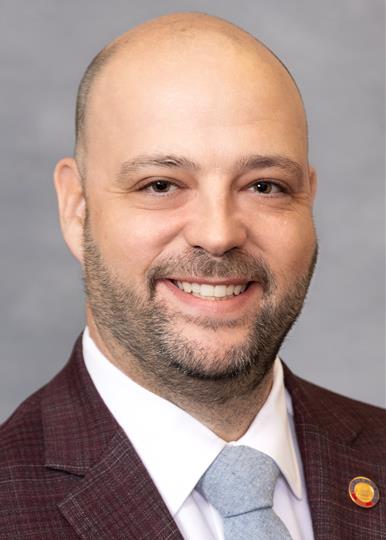
Rep. Bryan Cohn
Sponsored bills
Maddy summaryHB 50 creates two new options for retired state and local law enforcement officers with at least 30 years of service or 55 years old with 5+ years of service. It allows officers retiring before age 62 to choose between two calculation methods for an annual separation allowance: either 0.85% of their most recent base pay for each year of service, or a fixed amount based on pay at 30 years of service. The allowance stops when officers turn 62 or pass away. This directly affects qualifying law enforcement officers who retire under North Carolina's state retirement system.
Maddy summaryHB 577 creates a Towing and Recovery Commission within the North Carolina State Highway Patrol to resolve disputes over fees charged by towing services to law enforcement. It requires towing businesses to submit hourly rates to the commission for approval and establishes new permit requirements, including background checks (no felony convictions in the past 5-10 years), insurance, training, and proof of a compliant storage facility. The bill directly affects towing companies, truckers using the State Highway Patrol rotation system, and law enforcement agencies that contract for towing services. Key provisions include the commission’s authority to set reasonable fees, disqualify noncompliant tow services, and oversee permit applications with specific eligibility criteria.
Maddy summaryHB 569 requires PFAS manufacturers (those who produce PFAS compounds like GenX) to pay public water systems for cleaning up PFAS contamination in drinking water when levels exceed EPA safety limits. It allows the Environmental Quality Secretary to order polluters to cover actual cleanup costs, including technology to reduce PFAS levels, and applies retroactively to expenses since 2017. The bill appropriates $300,000 for implementation and mandates annual reports on fund use, with water systems refunding ratepayers when manufacturers cover costs. This directly affects water systems burdened by PFAS cleanup, PFAS manufacturers deemed responsible, and ratepayers who may see reduced future water rates.
Maddy summaryHouse Bill 841 requires the North Carolina Collaboratory to conduct a comprehensive statewide study on shellfish aquaculture leasing regulations. This study will evaluate existing rules, current bans (moratoriums) on new leases, and best practices from other states. It aims to balance economic development, environmental protection, and public access to coastal waters, considering impacts on fishing, boating, property values, and the environment. The Collaboratory must consult with various stakeholders, including shellfish growers, fishermen, and property owners, and will submit an interim report by December 2025 and a final report with recommendations by May 2026.
Maddy summaryHB 572 authorizes the Department of Military and Veterans Affairs to establish a statewide pilot program providing Electroencephalogram combined Transcranial Magnetic Stimulation (eTMS) treatment. This program is for veterans, first responders, and their immediate family members experiencing conditions such as substance use disorders, mental illness, sleep disorders, traumatic brain injuries, and PTSD. The Department will select a provider to create a network for in-person and off-site care, aiming for statewide access. Participants in the program will also receive neurophysiological monitoring, counseling, wellness programming, and access to a peer-to-peer support network. The selected provider must collect and report treatment outcomes and expenditures to the Department and legislative committees by September 15, 2026.
Maddy summaryHouse Bill 4, also known as "Sam's Law," aims to improve seizure preparedness and response in North Carolina schools. The bill requires public school units, charter schools, and other educational institutions to develop individualized Seizure Action Plans for students diagnosed with seizure disorders, in collaboration with their parents. It mandates annual seizure education programs for all K-12 school personnel and requires principals, school counselors, and teachers to complete an annual self-study on seizure disorders. Furthermore, the bill ensures at least one employee in each school is trained to administer seizure medication and requires the posting of seizure first aid information in visible areas. Various educational boards are tasked with adopting policies to implement these requirements, with $50,000 appropriated to the Department of Public Instruction for development costs.
Maddy summaryHB 297, titled "Breast Cancer Prevention Imaging Parity," aims to ensure equal health insurance coverage for different types of breast cancer imaging. The bill mandates that health benefit plans apply the same cost-sharing requirements (like deductibles and copayments) for diagnostic and supplemental breast examinations, such as MRIs and ultrasounds, as they do for routine screening mammograms. This ensures individuals needing these additional medically necessary tests do not face higher out-of-pocket costs compared to standard screenings. It also maintains existing coverage for cervical cancer screenings and includes provisions for high-deductible health plans.
Maddy summaryHB 444, the Homeowners Association Reform Bill, proposes changes to laws governing both homeowners and unit owner associations, directly affecting these organizations and their members. It stipulates that association declaration amendments only apply to owners whose properties are conveyed after the amendment takes effect. The bill also regulates managing agent contracts, limits an association's ability to enforce parking restrictions on public streets, and caps fees for lender-requested documents during property sales. Additionally, it mandates prelitigation mediation for disputes and requires the Department of Justice to collect and report on related complaints.
Maddy summaryHB 24, titled "Restore Down-Zoning Authority," aims to reinstate the power of local governments to initiate "down-zoning." This means local governments would regain the ability to change zoning classifications for properties to allow for less intensive development or use. The bill achieves this by repealing Section 3K.1 of S.L. 2024-57, which had previously restricted this authority. If enacted, it would apply retroactively to December 11, 2024, ensuring that any local ordinances impacted by the repealed section are restored to their status prior to that date.