

Maddy summaryThis bill creates a matching savings program and a tax deduction to encourage parents to save for their children's education in North Carolina. Under the new Parental Savings Trust Fund matching program, eligible parents with household incomes at or below 250% of the federal poverty guidelines can receive a $100 match for every $50 they contribute to an account for a student aged 14 or younger, with a maximum annual match of $500 and a lifetime limit of $1,500 per student. The state will fund this matching program with $180,000 in recurring money starting in the 2026-2027 fiscal year. Additionally, the bill allows taxpayers to deduct up to $2,000 from their state income taxes for contributions to these education savings accounts, with a $4,000 limit for married couples filing jointly. These provisions are designed to help low-to-moderate-income families build education funds while providing an immediate tax benefit for their contributions.
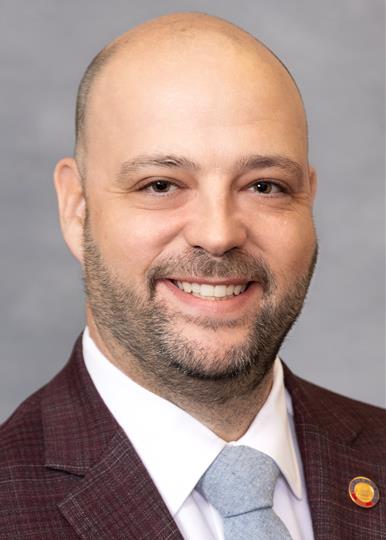
Rep. Bryan Cohn
Sponsored bills
Maddy summaryHB 434, titled "Lower Healthcare Costs," is a procedural bill focused on updating definitions related to health insurance utilization review in North Carolina. It rewrites statutory definitions (e.g., "medical necessity," "clinical peer," "closely related service") within existing insurance regulations but does not introduce new cost-saving mechanisms or policy changes. The bill directly affects insurers, healthcare providers, and covered individuals by standardizing terminology used in prior authorization processes. As a definition-only update, it has no concrete policy impact on healthcare costs or patient access, and the title does not align with its actual scope.
Maddy summaryHB 13 prohibits North Carolina merchants from charging customers more for credit or debit card payments than what the merchant pays to process those transactions. It directly affects retailers and service providers in the state, requiring them to disclose any card fees clearly in advertisements if they impose them. The law mandates that merchants cannot add a markup to processing costs charged by payment networks (like Visa or Mastercard), and violations could result in civil penalties up to $5,000 per offense. The bill takes effect October 1, 2025, aiming to prevent unfair surcharges on card payments.
Maddy summaryHB 118 modifies North Carolina's property tax exemption for disabled veterans, replacing a flat $45,000 exclusion with a percentage-based system tied to the veteran's VA disability rating. It directly affects veterans with a 50% or higher service-connected disability rating (or surviving spouses under specific conditions), allowing them to exclude a portion of their home's appraised value from property taxes - equal to their disability percentage. For example, a veteran with a 70% disability rating would exclude 70% of their home's value from taxes. The bill takes effect for taxes due in 2025 and prohibits combining this relief with other property tax exemptions.
Maddy summaryHB 8 requires all North Carolina state departments, community colleges, and local school systems to prioritize purchasing compostable or recyclable materials for food service and supplies, where economically feasible. It mandates annual reporting on purchases of these materials and recycling collections to the Department of Environmental Quality. The bill also directs UNC's Policy Collaboratory to study food service ware impacts and requires legislative and state park pilot programs to reduce single-use food service ware. These provisions directly affect state agencies and schools responsible for procurement and waste management, aiming to reduce single-use waste through policy changes rather than bans.
Maddy summaryHB 23 transfers 11 acres of state-owned land in Pender County to the Town of Burgaw for $1, with a reversion clause if the land is no longer used for public purposes. It designates the South Fork Passage Trail (a 60-mile hiking and paddling route across Catawba, Lincoln, and Gaston Counties) as part of North Carolina's State Parks System, authorizing the Department of Natural and Cultural Resources to manage it without requiring new appropriations for land acquisition. The bill also codifies the Lake Norman Marine Commission into state law and authorizes the state to support the Gullah Geechee Heritage Trail in Brunswick County. These provisions directly affect local governments (Burgaw, trail jurisdictions), state land management, and recreational planning.
Maddy summaryHB 348 extends the period for carrying forward deferred property taxes on agricultural, horticultural, and forest land from three to six years. It creates local grant programs for counties and cities, using the excess tax funds generated by this change, to provide financial support to qualifying farmers for farm sustainability. The bill also requires cities to obtain county commission approval before annexing land classified under present-use value taxation. These provisions directly affect farmers who qualify for present-use value property taxation and local governments managing tax funds and annexation decisions.
Maddy summaryHB 480 creates a new pathway for doctors, physician assistants, and anesthesiologist assistants to obtain North Carolina medical licenses by transferring licenses from other states ("licensure by endorsement"). To qualify, applicants must have held an active license in another U.S. jurisdiction for at least five years (with two years of practice post-residency for doctors), have a verified full-time job offer in North Carolina, maintain good standing with no recent disciplinary actions, and meet practice hour requirements. The bill increases application fees for endorsement (e.g., $825 for physicians vs. $400 for standard licensure) and requires additional documentation within 180 days to keep the license active. This directly affects out-of-state medical professionals seeking to practice in North Carolina without retaking exams.
Maddy summaryHB 14 allows North Carolina taxpayers who itemize deductions to claim a state income tax deduction for gambling losses, aligning with federal tax treatment. It directly affects individual taxpayers who itemize deductions on their North Carolina state tax returns and have wagering losses exceeding winnings. The bill amends state tax code to explicitly permit deducting gambling losses under Section 165(d) of the federal tax code, subject to federal rules. This change takes effect for taxable years beginning January 1, 2024. The bill does not alter federal tax rules or affect taxpayers using the standard deduction.
Maddy summaryHB 578, the Jason Flatt Act, requires all North Carolina public K-12 schools to implement suicide prevention education and training for school staff. It mandates that licensed educators complete at least one hour of annual suicide prevention training, while staff working with grades 6-12 must receive guidelines for identifying at-risk students and procedures for referrals. Schools must adopt a mental health plan including these elements, with initial staff training of six hours (within six months of hire) and two hours annually thereafter. The law applies to all public schools, charter schools, regional schools, and lab schools starting the 2025-2026 school year.