

Maddy summaryHB 224 renames the "North Carolina Gaming Education Revenue Fund" to the "Indian Gaming Education Revenue Fund" and allocates specific recurring and one-time funds for tribal communities in North Carolina. The bill directs $2 million annually to the North Carolina State Commission of Indian Affairs for operations, $5.25 million annually to seven non-gaming tribes (including the Coharie, Lumbee, and Haliwa-Saponi) for cultural, educational, and economic development, and $400,000 annually to four Urban Indian Organizations for similar purposes. It also provides $100,000 yearly to support the State Advisory Council on Indian Education and $1.1 million nonrecurring funds for specific tribal school projects like the Haliwa-Saponi Tribal School. The bill becomes effective July 1, 2025, with all funds to be used for designated community development purposes.
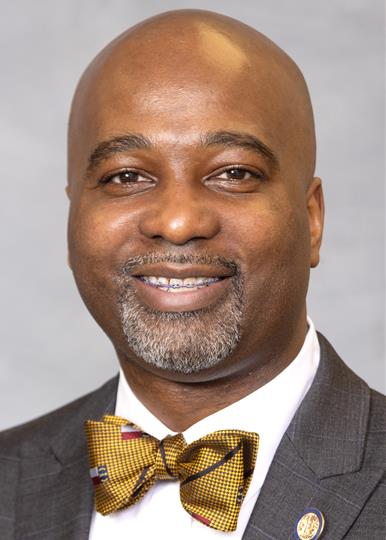
Rep. Zack Hawkins
Sponsored bills
Maddy summaryHB 265 allows Charlotte-Mecklenburg Schools (CMS) to align its academic calendar with the schedule of local community colleges, removing the requirement that CMS follow the standard August 26 opening date and June 11 closing date. The bill directly affects CMS, enabling it to coordinate school terms with community college calendars for better scheduling flexibility. Key provisions include waiving the standard date rules for CMS while requiring compliance with minimum instructional day requirements. This change applies only to CMS and takes effect for the 2025-2026 school year.
Maddy summaryHB 257 allocates $185.2 million in one-time state funds for specific infrastructure and facility projects in Scotland and Hoke counties, along with the cities of Laurinburg, Gibson, and Wagram, and St. Andrews University. The bill directs funding for water and sewer systems, courthouse construction, law enforcement facilities, workforce training centers, social services buildings, fire department improvements, and road repairs. It specifically targets nonrecurring 2025-2026 fiscal year funds for projects like a new sheriff's office in Hoke County, a courthouse/jail in Scotland County, and water system upgrades in Laurinburg. The bill becomes effective July 1, 2025, and does not create new policy but provides state funding for pre-planned local projects.
Maddy summaryHB 263 restores local government authority to change zoning to less dense or fewer permitted uses (down-zoning) in Durham and Person Counties and the Cities of Durham and Roxboro, without requiring written consent from all affected property owners. The bill rewrites state law to allow counties or cities to initiate down-zoning amendments directly, reversing a previous requirement (from S.L. 2024-57) that mandated owner consent. This change applies retroactively to December 11, 2024, meaning zoning ordinances affected by the prior law will revert to their pre-December 11 status. The bill directly affects local governments’ zoning powers and property owners in the specified jurisdictions, without altering other zoning processes.
Maddy summaryHB 259 establishes a $127,500 pilot grant program for North Carolina public schools to support participation in Science Olympiad competitions during the 2025-2026 school year. The program provides funding to cover registration fees, materials, travel, and teacher stipends for schools that did not have a Science Olympiad team in the previous year, prioritizing these applicants. Public school units must apply by August 31, 2025, and funds must supplement - not replace - existing school budgets. The Department of Public Instruction will report participation data and unfunded applications to the legislature by May 1, 2026.
Maddy summaryHB 243 allows Durham City and Durham County to use electronic methods (like their websites) for public hearing notices required under state law, instead of traditional methods like mail or physical postings. It directly affects Durham's local government, enabling them to adopt ordinances for electronic notices while maintaining existing requirements for mail notices to specific groups and property postings. The bill does not change current notice schedules or override state laws mandating certain notice methods, and it applies exclusively to Durham City and County. This is a procedural change to how public notices are delivered, not a policy shift on the underlying issues discussed at hearings.
Maddy summaryHB 241 allocates $15.8 million in one-time state funds for specific projects in Person County and nearby areas. It provides $10 million for Roxboro’s wastewater plant repairs, $800,000 for Person County’s splash pad construction, and $5 million for Piedmont Community College’s health/trades center equipment. The funds are directed to these specific entities via grants from the Office of State Budget and Management for the 2025-2026 fiscal year. The bill becomes effective July 1, 2025, with no policy changes beyond the funding allocations.
Maddy summaryHB 255 allows Granville County Schools and Vance County Schools to set an earlier school start date (as early as the Monday closest to August 19) instead of the standard August 26 date, provided they meet specific emergency closure requirements. To qualify, a county must have experienced at least eight school closure days due to emergencies (like severe weather) in four of the last ten years. The bill maintains existing requirements for instructional days and closing dates, ensuring schools meet minimum educational time standards. This change applies only to these two counties and takes effect for the 2025-2026 school year.
Maddy summaryHB 245 modifies North Carolina's low-income housing tax credit program to prioritize affordable housing development in rural communities and counties with higher poverty rates. It requires the state housing committee to adopt allocation rules that favor projects within 10 miles of amenities (like grocery stores) in towns under 10,000 people, measure distances by straight-line radius (not driving routes), and use poverty levels as a tiebreaker when projects score equally. The bill directs the committee to publish proposed rules for public comment and hold hearings before finalizing annual allocation plans. This policy change redirects existing housing tax credits toward qualifying rural and high-poverty areas without creating new funding. The bill takes effect October 1, 2025, for future allocation plans.
Maddy summaryHB 249 allocates $10,112 to North Carolina State University for a Wake County pilot program to increase diversity in pickleball, specifically targeting underrepresented communities of color. The program requires focus groups with people of color, branded marketing materials, two 4-week sessions at Raleigh recreation centers (Method Road and Chavis) in fall 2025 and spring 2026, and a post-program toolkit for wider community use. It directly affects residents in Wake County by creating accessible pickleball opportunities through public recreation facilities. The bill focuses on concrete steps to address current underrepresentation in the sport, leveraging its low-cost, inclusive nature. Funds are restricted to these specific activities and do not revert.