

Maddy summaryHB 452 makes it a crime to obstruct access to or threaten people at healthcare facilities in North Carolina. It prohibits blocking entrances, delaying care, or threatening patients, staff, or those helping others access services. The bill also restricts protests within 8 feet of people near facility entrances (unless consented to) and increases penalties: first offenses are misdemeanors, repeat offenses within three years become more serious misdemeanors, and third offenses escalate to felonies. This law directly affects individuals engaging in protests or obstruction near healthcare facilities, healthcare providers, and patients seeking care. It takes effect December 1, 2025.
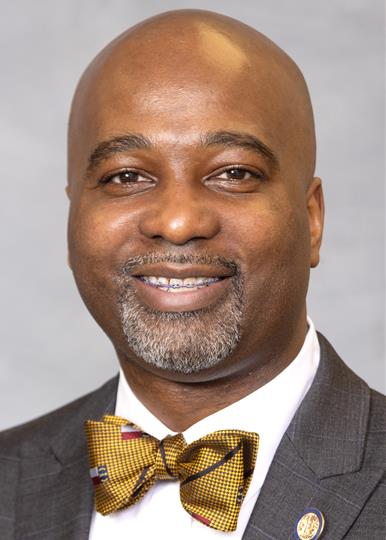
Rep. Zack Hawkins
Sponsored bills
Maddy summaryHB 457 increases state funding for small county school systems in North Carolina by revising their base allotment schedule. It directly affects counties with student enrollments between 0-3,300 students per school administrative unit, raising their annual funding amounts - such as increasing the base allotment from $1,820,000 to $2,548,000 for counties with 0-1,300 students. The bill appropriates $20,961,180 in recurring funds from the General Fund for the 2025-2026 fiscal year to implement these changes. The new funding schedule takes effect on July 1, 2025, providing higher per-student support for eligible small counties.
Maddy summaryHB 445 reinstates education-based salary supplements for teachers, instructional support staff (including school social workers), and requires school districts to publicly post minimum salary schedules for occupational and physical therapists. The bill allocates $8 million in recurring funds for the 2025-2026 fiscal year to fund these supplements, using a 2013 salary policy framework to determine eligibility based on academic degrees. School districts must publish therapist salary schedules online by October 15 each year, differentiating pay by experience in five-year intervals. The law takes effect July 1, 2025, directly affecting educators and therapists in North Carolina public schools.
Maddy summaryHB 453 increases Medicaid reimbursement rates for two specific services in North Carolina. It raises the rate for personal care services (e.g., help with daily tasks) to $7.50 per 15-minute increment for beneficiaries in programs like State Plan Personal Care Services and Community Alternatives programs. It also increases private duty nursing rates to $16.25 per 15 minutes for both children under 21 and adults, using state funds to match federal support. The changes, effective July 1, 2025, will directly affect Medicaid beneficiaries receiving these services through approved programs.
Maddy summaryHB 456, the "No Surprises for Ambulance Services Act," prevents unexpected high costs for ambulance services by requiring health insurance companies to cover both emergency and non-emergency ground ambulance transport without surprise bills. Specifically, it caps out-of-network cost-sharing (like copays or deductibles) for ambulance services at 110% of what would apply for in-network providers, ensuring patients aren’t charged more for using an ambulance outside their insurance network. This directly affects insured individuals who use ambulance services, especially in emergencies or when they cannot choose a network provider. The law also mandates insurers to clearly disclose coverage details for emergency services, including cost-sharing and how to access care.
Maddy summaryHB 463 establishes a supplemental insurance plan for North Carolina first responders diagnosed with specific mental health conditions (like anxiety, depression, or PTSD) directly resulting from their job. It provides three key benefits: up to $5,000 annually for out-of-pocket mental health costs, 75% of salary or $5,000 monthly (max 12 weeks/year) for leave due to treatment, and disability benefits (75% salary or $5,000/month, max 36 months) if unable to work. Eligibility requires a job-related diagnosis, current employment as a defined first responder (including police, firefighters, EMTs, and dispatchers), and exclusion from workers' compensation benefits. The plan aims to support recovery and return to duty while limiting benefits to cover gaps not met by other sources.
Maddy summaryHB 460, the Medical Equipment Right to Repair Act, requires medical device manufacturers to provide hospitals, clinics, and independent repair shops with necessary support documents, tools, and parts to maintain and repair medical imaging (like MRI and X-ray machines) and radiation therapy equipment. The law mandates that manufacturers make these resources available at no cost (except for printing/shipping fees), automatically notify owners of updates, and offer the same training to independent repairers as they provide to their own authorized service teams. It prohibits manufacturers from restricting access to security systems or using agreements to avoid these requirements, while protecting trade secrets and limiting liability for repair-related damage. The bill takes effect July 1, 2025, applying to equipment in use after that date.
Maddy summaryHB 448 creates a temporary sales tax exemption in North Carolina for specific firearm storage equipment designed to prevent unauthorized access. The exemption applies to devices like gun safes, lockboxes, biometric locks, and similar home-use storage, but excludes display cases. It directly affects firearm owners purchasing qualifying storage solutions, eliminating the state sales tax on these items. The exemption is limited to sales between October 1, 2025, and October 1, 2026.
Maddy summaryHB 464 requires every public school in North Carolina - including traditional, charter, regional, and laboratory schools - to have at least one full-time, permanent school nurse starting in the 2025-2026 school year. The bill appropriates $95 million from the state General Fund for the 2025-2026 school year to fund these additional nursing positions, with funds designated to supplement - not replace - existing school nurse funding. It amends multiple statutes to mandate this staffing requirement across all public school units. The law becomes effective July 1, 2025, with implementation beginning for the 2025-2026 school year.
Maddy summaryHB 446 prevents law enforcement from sharing booking photographs (taken during initial arrest) with websites or publications that require payment to remove the photos. It requires those "pay-to-remove" sites to delete such photos within seven business days if the person was not convicted (and provides proof of dismissal, acquittal, or expungement). Sites that fail to comply face civil penalties, including $100 per day for each day the photo remains visible. This directly affects individuals arrested but not convicted and "pay-to-remove" online platforms.