

Maddy summaryHB 766 appropriates $1.87 million to fund expanded Teen Mental Health First Aid (tMHFA) training for North Carolina high school students in grades 9-12 (ages 14-18). The bill directly affects students by providing evidence-based training to help them recognize, understand, and respond to peers' mental health and substance use challenges. Key provisions include funding for the Department of Health and Human Services to scale up tMHFA programs statewide, building on a pilot that trained 1,519 teens and showed a 50% increase in teens' willingness to seek adult support. The training focuses on connecting peers to trusted adults during crises, addressing high rates of unmet mental health needs among teens (64% don’t seek help, per the bill’s rationale).
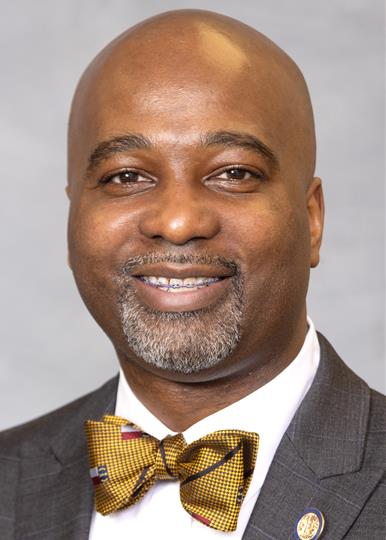
Rep. Zack Hawkins
Sponsored bills
Maddy summaryHB 755 provides a sales tax exemption for qualifying North Carolina nonprofits, including hospitals, federally tax-exempt community organizations, volunteer fire departments, and university-affiliated groups. To qualify, nonprofits must obtain a state sales tax exemption number, with annual limits of $31.7 million for state tax and $13.3 million for local tax. The exemption covers most goods and services purchased for nonprofit activities but excludes electricity, telecommunications, alcohol, and certain other items. Real property contractors must provide documentation to retailers when buying materials for nonprofit projects to ensure proper tax treatment.
Maddy summaryHB 780 appropriates $2 million to expand the All Pro Dad program in North Carolina through Family First, Inc., funding school-based chapters, father-child engagement events, and parenting resources. It also creates the "Responsible Fatherhood NC" program under the Department of Health and Human Services, requiring a nonprofit manager to run a statewide media campaign, provide father-focused resources, and promote existing fatherhood initiatives. The bill directs grants to community organizations addressing fathers' needs - such as employment, child support, and parenting skills - with priority given to areas facing high unemployment, incarceration, or single-parent households. The program directly supports North Carolina fathers and their children, aiming to improve family well-being through increased paternal involvement.
Maddy summaryThis is a House Resolution (HR 769), not a bill, urging Congress to support H.R. 4052, which would create a National Infrastructure Bank. The resolution cites North Carolina's infrastructure needs - like roads, bridges, water systems, and lead pipe replacement - and states the proposed bank would be funded through existing Treasury debt (without new taxes or spending). It calls for Congress to pass the bank legislation to finance infrastructure projects nationwide, including those in North Carolina. The resolution itself does not create the bank but advocates for its adoption.
Maddy summaryHB 679 appropriates $5.4 million in one-time state funds to the Town of Spring Lake for specific public projects. The funding directs $200,000 for restoring the Historic Spring Lake Civic Center, $100,000 to the Spring Lake Fire Department, $5 million for general infrastructure, and $100,000 to support the Manchester Fire Department or other rural fire departments serving the Spring Lake area. The bill becomes effective July 1, 2025, and directly affects Spring Lake town operations and the designated fire departments through these targeted grants.
Maddy summaryHB 676 allocates $1,524,978 in one-time state funds to Haywood County Schools for specific facility improvements. The bill directs $998,538 for a turf field at Tuscola High School, $26,440 for a multipurpose locker room building at C.E. Weatherby Stadium, and $500,000 for stadium upgrades at Bethel Middle School. These funds are designated for the 2025-2026 fiscal year and must be used solely for the specified projects. The bill becomes effective July 1, 2025, and does not change existing school policies or programs.
Maddy summaryHB 687 clarifies North Carolina's public swimming pool regulations by exempting safety-certified floatation or sensory deprivation systems from standard pool requirements. Specifically, it excludes systems certified by the National Sanitation Foundation (NSF) to meet NSF Standard 50, directly affecting operators of such facilities (e.g., floatation tanks in wellness centers). The bill does not create new safety rules but explicitly states these certified systems are not subject to the state's public pool regulations. This change aligns with existing exemptions for therapeutic pools and private family pools under defined conditions. The exemption takes effect July 1, 2025.
Maddy summaryHB 731 appropriates $150,000 in one-time state funds for the Pauli Murray Center for History and Social Justice in Durham. The bill directs this grant specifically to develop the "Pauli Murray Center Green," which will improve physical access to the center and install drainage systems to manage stormwater. This funding, effective July 1, 2025, supports the center's infrastructure without altering broader policies or affecting residents or businesses directly.
Maddy summaryHB 689 allows North Carolina high school graduates who attended NC public or nonpublic schools for four consecutive years before graduation to pay in-state tuition at state colleges and universities, provided they hold a NC driver's license, have a Social Security number, and enroll immediately after high school. It directly affects qualifying NC high school graduates who would otherwise pay out-of-state tuition rates. Key provisions include requiring proof of NC residency through driver's license and school attendance records each semester, with all application information kept confidential. The bill takes effect for the 2025-2026 academic year and does not change residency status for other purposes.
Maddy summaryHB 721 appropriates $500,000 from the General Fund to fund Muddy Sneakers, Inc.'s fifth-grade science programs, which provide hands-on field instruction aligned with state science standards. It also allocates $2.75 million to St. Gerard House to support its autism treatment programs. The funding is designated for the 2025-2026 fiscal year, with the Muddy Sneakers funds being recurring and the St. Gerard House grant nonrecurring. The bill directly affects fifth-grade students in North Carolina public schools and individuals receiving autism services through St. Gerard House.