

Maddy summaryHouse Bill 635 requires certain large group health benefit plans to provide coverage for fertility diagnostic care, treatment, and preservation services. This bill directly affects individuals covered by these plans, aiming to increase their access to fertility-related medical care. Key provisions include mandatory coverage for at least three in vitro fertilization (IVF) cycles per insured, provided procedures follow American Society of Reproductive Medicine guidelines and are performed at licensed facilities. However, the requirements do not apply to plans offered by religious institutions or self-insured group health plans, and explicitly exclude experimental procedures or nonmedical costs for donor gametes or surrogacy.
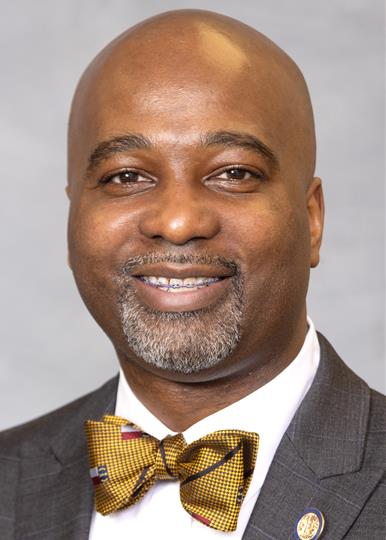
Rep. Zack Hawkins
Sponsored bills
Maddy summaryHB 555, "Medicaid Telehealth Services," aims to ensure that certain telehealth providers can enroll as Medicaid providers in North Carolina. The bill specifies that individual health care providers licensed by the state who offer services exclusively through telemedicine are not required to maintain a physical presence in the state to be eligible for Medicaid enrollment. Similarly, medical provider groups that exclusively offer telemedicine services will not need an in-state service address to be eligible for the state's Medicaid program. This bill directly affects telehealth providers and medical groups by removing location-based requirements for participating in Medicaid.
Maddy summaryHB 634 updates North Carolina laws to enhance parity in health insurance coverage for mental health and addiction recovery. It requires all health benefit plans to provide benefits for mental health conditions that are no less favorable than those for physical illnesses, including applying the same financial limits. A key provision mandates that medical necessity determinations for substance use disorders must rely solely on the most recent American Society of Addiction Medicine criteria. The bill also requires the State Health Plan for Teachers and State Employees to comply with these new utilization review standards and updates terminology from "chemical dependency" to "substance use disorder" in relevant statutes.
Maddy summaryHouse Bill 363 allows regional public transportation authorities to operate buspool services further than ten miles beyond their usual service area. This bill amends G.S. 160A-610(20), removing the previous mileage restriction specifically for buspool services. The change enables these authorities to extend buspool routes into more distant communities, potentially affecting a broader range of commuters.
Maddy summaryHB 69, the Military and Veterans Educational Promise Act, provides two key benefits for military-affiliated individuals and veterans at North Carolina's University of North Carolina (UNC) schools. First, it requires UNC institutions to allow eligible military members (including reservists) and their spouses to defer admission for up to five years (for active duty) or two years (for reserve service) upon enrollment notice. Second, it establishes in-state tuition rates for honorably discharged veterans who served at least 90 days in the military, graduated from a North Carolina high school after 2004, had a North Carolina duty station, or received a Purple Heart. The bill applies to all UNC institutions beginning in the 2025-2026 academic year.
Maddy summaryHouse Bill 213, titled "Post NC Veterans' Benefits," requires employers in North Carolina to display a notice about veterans' benefits. This bill mandates that employers with five or more persons working in a room post this information in a conspicuous place. The Commissioner of Labor will provide a digital or printed form of this notice. The poster must include details on services such as benefits and claims, employment and training, housing assistance, and how to request military records, with the Department of Labor consulting the Department of Military and Veterans Affairs to create it.
Maddy summaryHouse Bill 670 establishes the Career and College Pathways Innovation Challenge Grant Program, providing competitive grants to North Carolina community colleges. These grants support local and regional partnerships that aim to increase postsecondary enrollment and completion for students and adults, align educational offerings with workforce needs, and reduce educational opportunity gaps. The State Board of Community Colleges administers the program, awarding funds for initiatives like work-based learning and financial support beyond tuition. For the 2025-2026 and 2026-2027 fiscal years, $2 million is specifically allocated to community colleges in counties affected by Hurricane Helene. The bill appropriates $5 million in recurring funds for the program, effective July 1, 2025.
Maddy summaryThe "North Carolina Compassionate Care Act" (HB 1011) seeks to legalize the medical use of cannabis for individuals diagnosed with specific debilitating medical conditions. The bill establishes a system where qualified patients, certified by a physician, and their designated caregivers can obtain registry identification cards from the Department of Health and Human Services. It outlines a list of qualifying debilitating conditions, including cancer, epilepsy, and PTSD. This legislation also details the creation of a regulated system for the cultivation, processing, and dispensing of medical cannabis through licensed facilities. Its intent is to protect patients and their doctors from criminal and civil penalties related to the medical use of cannabis.
Maddy summaryHB 424 exempts casual board, card, or tile games (like bridge or mahjong) played in private homes, residences, or community clubs from North Carolina's gambling laws, provided specific conditions are met. It directly affects social groups hosting these games, prohibiting the use of electronic devices, commercial betting, or profit for hosts or players beyond personal winnings. Key provisions require all players to face equal risks of winning or losing, ban slot machines or video games entirely, and prevent hosts from receiving any financial benefit. The law takes effect December 1, 2025, and applies only to non-commercial, private social gatherings.
Maddy summaryHB 671 establishes a four-year pilot program (2025-2026 through 2028-2029) that provides grants to North Carolina public high schools (grades 9-12) to form or support competitive speech and debate teams. Schools can receive up to $10,000 per team annually, covering coach stipends (capped at $2,500 for lead coaches and $1,500 for assistants) and competition expenses like travel and league fees. Participating schools must join the Tarheel Forensic League and National Speech and Debate Association, and the program allows students from schools without teams to join the nearest team (with students covering their own transportation). Funded by $500,000 yearly from the General Fund, the Department of Public Instruction will administer the program and report annually on grant usage and student academic outcomes.