

Maddy summaryHB 857 creates North Carolina's Missing with Disability Alert System, requiring law enforcement to issue rapid statewide alerts for missing persons or children with disabilities (as defined by state law) who face potential harm, neglect, or exploitation. The system mandates that alerts include only essential recovery information while protecting sensitive health details, and requires coordination with broadcasters and highway message signs for public dissemination. All law enforcement agencies and the state missing persons center must develop new guidelines and training procedures to implement the alert system. This policy change directly affects law enforcement, broadcasters, and individuals with disabilities who go missing.
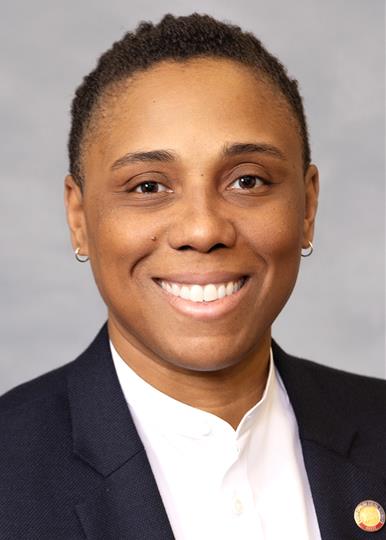
Rep. Vernetta Alston
Sponsored bills
Maddy summaryHB 487 shortens the required separation period for retired assistant district attorneys and assistant public defenders before they can return to state employment. The bill changes North Carolina's retirement rules to allow these professionals to rejoin state work after 30 days instead of the standard six-month waiting period. This adjustment applies specifically to retired assistant district attorneys and public defenders who wish to return to state service. The policy change directly affects these two groups of retired state employees by providing greater flexibility for reemployment.
Maddy summaryHB 823 amends North Carolina law to create two types of specialized districts: "research and production service districts" (for business/development areas) and "urban research service districts" (URSDs). It allows counties to establish these districts to provide services like infrastructure, utilities, and public facilities beyond standard county offerings, directly affecting residents and businesses within the districts. Key mechanisms include requiring advisory committees (with at least 10 members, including a developer representative), setting rules for multi-county district creation, and permitting developers to act as agents for service provision under county approval. The bill focuses on structuring district governance and service delivery without altering tax mechanisms or funding sources.
Maddy summaryHB 335 expands eligibility for emergency judges in North Carolina by allowing retired judges who previously served in both Superior Court and District Court to qualify for emergency judge roles on either court. Currently, retired judges could only serve as emergency judges on the specific court they retired from, but this bill removes that restriction for judges with dual court experience. The change directly affects retired judges who held positions in both court systems before retiring, making them eligible to be assigned to emergency duties in either court. This adjustment streamlines the pool of available judges for temporary court needs without altering compensation or other existing rules.
Maddy summaryHB 807 raises teacher salaries for the 2025-2026 school year with new pay scales based on experience and adds supplements for certified teachers, school nurses, counselors, and specialists. It allocates $89.4 million annually and $109.2 million as a one-time fund to provide weighted, per-child funding for children with disabilities based on the cost of services provided. The bill also mandates free breakfast and lunch for all public school students, funded through state appropriations tied to school food authority evaluations, and includes funding for a one-to-one device refresh in public schools.
Maddy summaryHB 788 ("Fix Our Democracy") proposes amending the North Carolina Constitution to establish a nonpartisan redistricting process for state legislative and U.S. House districts. It would require a constitutional amendment (voting required in 2026) to remove the General Assembly's role in drawing districts, mandating that districts be contiguous, avoid dividing counties where possible, and remain unchanged until the next census. The bill also includes related provisions like online voter registration, automatic registration, banning voter roll purging, and campaign finance transparency changes. This constitutional change would directly affect how electoral districts are created for state legislators and U.S. representatives in North Carolina.
Maddy summaryHB 783 appropriates $100,000 from North Carolina's General Fund for Sidekicks Academy, Inc. to support its Durham Public Schools program. The funds will cover $90,000 for student training gear, safety equipment, tournaments, and staff salaries, plus $10,000 for field trips to Taekwondo tournaments, museums, and college events. The program directly serves marginalized students by combining martial arts training, character development, and community support to create a safe learning environment. This is a funding measure with no policy changes, solely providing financial support to an existing community program.
Maddy summaryHB 786, the "Working Families Act," reduces child care costs for low-income families by lowering parent copayments from 10% to 7% of income (effective 2025), reinstates a refundable state child tax credit with income-based payments (effective 2025), and phases up North Carolina’s minimum wage to $15/hour by 2030 with annual inflation adjustments. It also increases income limits for property tax relief, creates a homebuyers’ assistance program for public servants (like firefighters and EMTs) as first-time buyers, and establishes a paid family leave insurance program funded through an employer grant program. The bill directly affects working families, hourly workers, public-sector employees, and households using subsidized child care or property tax relief. Key mechanisms include phased wage increases, income-tiered tax credits, and targeted housing support, all designed to reduce financial strain on low-to-moderate-income households.
Maddy summaryHB 755 provides a sales tax exemption for qualifying North Carolina nonprofits, including hospitals, federally tax-exempt community organizations, volunteer fire departments, and university-affiliated groups. To qualify, nonprofits must obtain a state sales tax exemption number, with annual limits of $31.7 million for state tax and $13.3 million for local tax. The exemption covers most goods and services purchased for nonprofit activities but excludes electricity, telecommunications, alcohol, and certain other items. Real property contractors must provide documentation to retailers when buying materials for nonprofit projects to ensure proper tax treatment.
Maddy summaryHB 731 appropriates $150,000 in one-time state funds for the Pauli Murray Center for History and Social Justice in Durham. The bill directs this grant specifically to develop the "Pauli Murray Center Green," which will improve physical access to the center and install drainage systems to manage stormwater. This funding, effective July 1, 2025, supports the center's infrastructure without altering broader policies or affecting residents or businesses directly.