

Maddy summaryHB 570, the "Responsible Firefighting Foam Management Act," restricts the use of firefighting foams containing PFAS chemicals for training and testing. It prohibits any person, local government, or state agency from discharging Class B firefighting foam with intentionally added PFAS for training or practice purposes. For testing, these foams are also prohibited unless required by law or an authority, and the testing facility has implemented measures to prevent environmental releases. The bill mandates the use of non-fluorinated alternatives for training and is set to become effective on December 1, 2025.
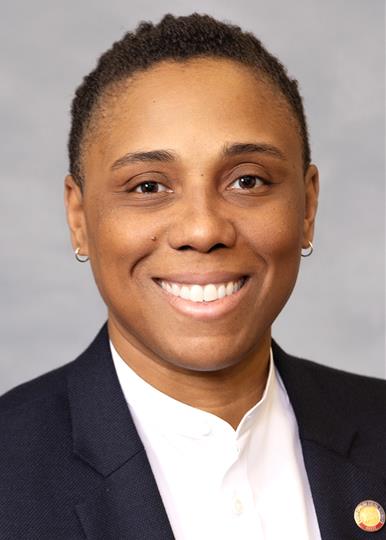
Rep. Vernetta Alston
Sponsored bills
Maddy summaryHB 250 modifies the annual report filing requirements and fees for certain business entities in North Carolina. It directly affects domestic and foreign corporations and Limited Liability Companies (LLCs) where more than 50% of the ownership is held by one or more deployed members of the U.S. Armed Forces. The bill waives the annual report requirement and associated fees for these businesses while the owner is deployed. Instead, qualifying businesses must file a notice of deployment and can submit their annual report after the deployment ends (90 business days for corporations, April 15 of the following year for LLCs).
Maddy summaryHB 462, titled the "Personal Data Privacy/Social Media Safety Act," aims to protect North Carolinians by enacting two main components: the Personal Data Privacy Act and the Social Media Safety Act. The provided text details the "North Carolina Personal Data Privacy Act," which is set to take effect on January 1, 2026. This act establishes definitions for key terms such as "personal data," "biometric data," "precise geolocation data," and "consent," affecting North Carolina residents as "consumers" and entities that process their data as "controllers." It also outlines the framework for consumer rights regarding their personal data.
Maddy summaryHouse Bill 635 requires certain large group health benefit plans to provide coverage for fertility diagnostic care, treatment, and preservation services. This bill directly affects individuals covered by these plans, aiming to increase their access to fertility-related medical care. Key provisions include mandatory coverage for at least three in vitro fertilization (IVF) cycles per insured, provided procedures follow American Society of Reproductive Medicine guidelines and are performed at licensed facilities. However, the requirements do not apply to plans offered by religious institutions or self-insured group health plans, and explicitly exclude experimental procedures or nonmedical costs for donor gametes or surrogacy.
Maddy summaryHB 634 updates North Carolina laws to enhance parity in health insurance coverage for mental health and addiction recovery. It requires all health benefit plans to provide benefits for mental health conditions that are no less favorable than those for physical illnesses, including applying the same financial limits. A key provision mandates that medical necessity determinations for substance use disorders must rely solely on the most recent American Society of Addiction Medicine criteria. The bill also requires the State Health Plan for Teachers and State Employees to comply with these new utilization review standards and updates terminology from "chemical dependency" to "substance use disorder" in relevant statutes.
Maddy summaryHB 927 allocates $31.7 million in state funds to Durham City and County for specific projects in the 2025-2026 fiscal year. It provides $30 million for Durham County to upgrade wastewater infrastructure in Research Triangle Park, $500,000 for city park maintenance, and $500,000 for repairing rural roads in Durham County. The bill also funds court system modernization, including $503,481 for eCourts staffing and $500,000 for a legal support center to improve access to justice. Additionally, it requires the Department of Transportation to study road funding criteria for rural areas to ensure equitable project prioritization. These funds directly support Durham residents through enhanced infrastructure, public services, and court efficiency.
Maddy summaryHB 910 creates a $2 million recurring grant program to increase teacher diversity in North Carolina public schools, primarily benefiting school districts, colleges, and community organizations. The bill funds partnerships that support recruitment, training, and retention of educators of color through specific initiatives like dual enrollment programs, paid clinical experiences, mentorship, and financial aid for aspiring teachers. Grants require evidence-based proposals addressing recruitment or retention gaps and must include long-term sustainability plans. Local school systems and institutions of higher education will administer the program, with annual reporting required to track progress toward diversifying the educator workforce.
Maddy summaryHB 933 increases Medicaid rates to ensure direct care workers for people with intellectual or developmental disabilities earn at least $18 per hour, affecting home/community providers, group homes, and waiver programs like NC Innovations. It adds 1,000 slots to the NC Innovations waiver program (with $36 million in annual state funding) and requires a 10-year plan to address unmet service needs. The bill also removes income and resource limits for Medicaid eligibility under the Health Coverage for Workers with Disabilities program. These changes take effect July 1, 2025, with $183 million in annual state funding supporting the wage increases and $36 million for new waiver slots.
Maddy summaryHB 890 requires North Carolina's Department of Public Instruction to create an Emergency Internet Service Plan (EISP) ensuring public schools can access temporary internet during state emergencies, like natural disasters. The bill establishes a dedicated Emergency Internet Service Fund with $3.9 million in initial funding for equipment and service contracts, which schools cannot be charged to activate. Key provisions include requiring the plan to cover activation conditions, equipment needs, data protection, and third-party partnerships, while ensuring the fund is nonreverting (unused money carries over). This directly affects all public school units by guaranteeing emergency internet access without requiring school-level funding. The plan must be updated annually and reported to the legislature.
Maddy summaryHB 941 expands North Carolina's Teaching Fellows Program to address teacher shortages by providing forgivable loans to students pursuing teaching careers in high-need areas like special education, STEM, elementary education (K-6), and specific secondary subjects. The bill establishes a Trust Fund to cover loan amounts (up to $12,000 annually for up to four years), administrative costs, mentorship, and extracurricular programs like summer initiatives and alumni engagement. It requires selected colleges to meet strict standards, including high graduate effectiveness rates, alignment with "Science of Reading" training for elementary programs, and diverse school practicum opportunities. The program directly affects prospective teachers enrolled at up to 14 approved institutions of higher education who commit to teaching in qualifying licensure areas across North Carolina public schools.