

Maddy summaryHB 722 requires North Carolina courts to first assess a defendant's ability to pay before imposing criminal court costs and fees. It modifies rules for collecting specific costs like failure-to-appear fees ($200), crime lab services ($600 max), and digital forensics fees, requiring judges to determine affordability before assessment. The bill also mandates that courts provide 15 days' notice to government entities (like crime labs or prosecutors) before waiving or reducing fees, ensuring affected parties can object. This directly affects defendants convicted in criminal cases and government entities that collect or rely on these fees.
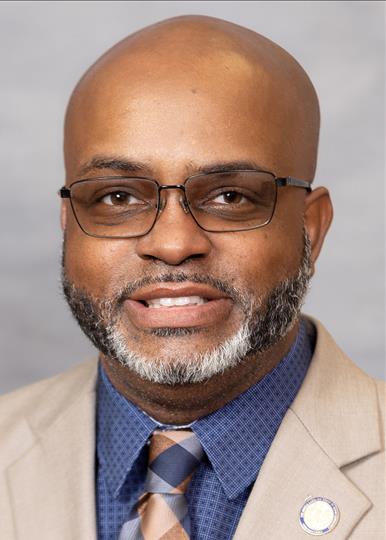
Rep. Rodney Pierce
Sponsored bills
Maddy summaryHB 141, the Joe John Remembrance Act, removes an additional fee for special license plates designated for fire department and rescue squad members in North Carolina. The bill amends state law to formally eliminate the "additional fee" listed for these plates (which was already set to $0 in the current fee schedule), meaning eligible firefighters and rescue personnel will pay only the standard registration fee when obtaining or renewing these special plates. This change applies to plates issued or renewed on or after July 1, 2025. The bill does not create new benefits but codifies an existing fee structure for these specific special plates.
Maddy summaryHB 639 requires all University of North Carolina (UNC) educator preparation programs to give first priority in admissions to applicants who qualify as North Carolina residents for tuition purposes under state law. This directly affects UNC schools offering teacher training programs and prospective in-state students applying to those programs starting in the 2025-2026 academic year. The bill mandates that programs follow the state's standardized residency determination process to verify applicant status. It does not change tuition rates but alters admission priority based solely on residency eligibility.
Maddy summaryHB 646 is a constitutional amendment that would permanently ban all slavery and involuntary servitude in North Carolina, removing the current exception allowing forced labor as punishment for crimes. If approved by voters in the November 2026 election, the amendment would change the state constitution to state that slavery and involuntary servitude are "forever prohibited" without any exceptions. This change would directly affect incarcerated individuals by ending the legal basis for requiring prison labor as punishment. The amendment requires voter approval through a statewide referendum before taking effect.
Maddy summaryHB 633 appropriates $1.678 million annually in recurring funds and additional nonrecurring funds to expand sickle cell disease services in North Carolina. The bill directly supports approximately 7,000 North Carolinians living with sickle cell disease by funding comprehensive medical centers (like Atrium Health, Duke, and UNC Chapel Hill), creating transition coordinators to help patients move from pediatric to adult care, and providing grants to community organizations in underserved areas. Key mechanisms include distributing $1.3 million yearly to medical centers for care coordination, allocating $75,000 annually per center for transition staff, and funding a statewide emergency department toolkit to improve acute care. The bill becomes effective July 1, 2025, with funds designated for the 2025-2027 fiscal biennium.
Maddy summaryHB 628 reenacts North Carolina's state-level child tax credit, which expired, to provide financial support to families with children. It directly affects low- and middle-income North Carolina residents who qualify under federal child tax credit rules, offering up to $250 per child annually based on household income. Key provisions include income-based credit amounts (e.g., $250 for married couples filing jointly with under $40,000 income) that phase out at higher earnings, and the credit is refundable - meaning families may receive cash payments even if they owe no state tax. The bill takes effect for 2025 tax years and mirrors the federal credit structure without creating new policy.
Maddy summaryHB 653 lowers the federal funding threshold that would trigger loss of Medicaid coverage for North Carolina's newly eligible expansion recipients. Currently, coverage would end if federal funding for this group drops below 90% compared to non-expansion recipients; the bill reduces this threshold to a lower percentage. If funding falls below the new threshold, Medicaid coverage for this group must discontinue promptly, with state agencies required to notify lawmakers and CMS. The bill affects only those added to Medicaid through the 2014 expansion, not all Medicaid beneficiaries.
Maddy summaryHB 655 prohibits North Carolina public schools and charter schools from using American Indian mascots. It requires the State Advisory Council to identify schools with such mascots and report this to the State Board of Education, which must then decide within 30 days whether to require a change. Schools must replace the mascots within two years of notification, with superintendents able to grant an additional year for implementation. Failure to comply results in withheld state funds for the superintendent’s salary (for public schools) or per-pupil funding (for charter schools). The law applies starting the 2025-2026 school year.
Maddy summaryHB 300 establishes a program to reimburse owners of retired first responder dogs for veterinary care. It directly affects owners of canines that served with law enforcement, fire departments, or correctional agencies in roles like narcotics detection or search and rescue, after retiring on or after July 1, 2024. The bill requires registration of the dog and owner with the Department of Public Safety, then allows reimbursement of up to $1,500 annually for covered care - including routine check-ups, vaccinations, emergencies, surgeries, and euthanasia. Owners must submit itemized vet bills within 90 days of service.
Maddy summaryHB 426 establishes the Workforce Diploma Program to help North Carolina adults aged 21+ without high school diplomas earn diplomas while gaining job skills. The program requires approved providers to offer courses combining diploma requirements with career training, including employability certifications and industry credentials. Participants receive milestone-based funding up to $7,500 per person, with payments tied to completing half-credits, certifications, or diplomas. The program mandates annual reports tracking participant outcomes like diplomas earned, credits, and workforce credentials. It appropriates $5 million for implementation starting July 2025.