

Maddy summaryHB 677 requires North Carolina movie theaters with more than 10 weekly showings to provide open captioning (on-screen text for dialogue and sounds) for at least one-fourth of showings for movies with four or more showings per week. Theaters must advertise captioned showings in the same way as other showings, keep compliance records for three years, and face $100-$500 penalties per violation for noncompliance. This applies to theaters showing movies with four or more weekly showings, excluding films produced without captioning. The law takes effect October 1, 2025, and focuses on ensuring accessible viewing during peak attendance hours where possible.
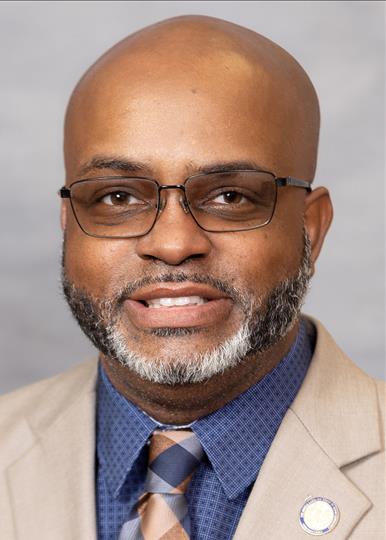
Rep. Rodney Pierce
Sponsored bills
Maddy summaryHB 728, the "Shared Investment in Our Heroes Act," increases North Carolina's property tax exemption for disabled veterans' homes from $45,000 to $75,000 starting in 2025, directly benefiting veterans with 100% service-connected disabilities and their surviving spouses. It allows veterans to prequalify for the exemption before purchasing a home and excludes their primary vehicle from property taxes. Local governments will be reimbursed up to 50% of revenue loss from these changes to offset financial impacts. The bill aims to provide immediate tax relief for disabled veterans while ensuring local fiscal stability through shared state-local funding.
Maddy summaryHB 709 establishes a pilot program to fund additional teacher assistants in North Carolina public schools for kindergarten through third grade. It provides $14.8 million annually (2025-2027) to cover the cost of teacher assistants based on specific ratios: one assistant per K-2 class and one per three third-grade classes. The program will select 16 schools (eight districts, one district school and one charter school per district) to participate, with funds distributed based on average class size and salary costs. The bill aims to directly support early-grade classrooms by increasing adult-to-student ratios, effective July 1, 2025.
Maddy summaryHB 704 establishes the Asian American and Pacific Islander (AAPI) Heritage Commission within North Carolina’s Department of Natural and Cultural Resources. The commission, composed of nine members appointed by the Governor and General Assembly, advises on preserving, promoting, and interpreting AAPI history, arts, and culture through programs, school education, and statewide collaboration. It receives $250,000 annually from 2025-2027 to fund operations, including a director and associate director. The bill directly affects the department and AAPI communities by creating a formal structure to advance cultural preservation and awareness. It becomes effective July 1, 2025.
Maddy summaryHB 706 changes how North Carolina allocates public school capital funds by eliminating the use of the Department of Commerce's economic development tier designations. Instead, it requires funding to be based on either a county's adjusted property value (with specific matching percentages) or HUD-designated poverty areas. The bill affects all public K-12 schools, community colleges, and UNC institutions receiving state education funds, prohibiting agencies from using Commerce's economic tiers for allocation starting in the 2025-2026 school year. It also repeals prior sections allowing tier-based funding and mandates equal per-school allocations for certain cooperative high schools. The law takes effect July 1, 2025, for new grant applications.
Maddy summaryHB 684 establishes North Carolina's first formal environmental justice framework to address disproportionate health and environmental risks faced by BIPOC, low-income, and marginalized communities. The bill defines key terms like "communities of color" (40%+ nonwhite residents or 10% higher than county/state) and "disproportionate impact" to guide state agencies. It requires all state agencies to identify and reduce environmental health disparities by considering environmental justice in decision-making, ensuring equitable distribution of benefits like clean air, green spaces, and renewable energy. The law aims to create consistent standards for addressing pollution burdens and health inequities across North Carolina.
Maddy summaryHB 738 restores specific definitions for wetland protections in North Carolina by repealing prior legislative changes and reinstating the 2010 North Carolina Wetland Assessment Manual definitions. It explicitly defines "isolated wetlands" to include those confirmed by the U.S. Army Corps of Engineers before June 2020 and wetlands classified as basins or bogs under the state's 2010 manual (excluding man-made stormwater features). The bill also clarifies that "wetlands" include waters meeting federal definitions (33 C.F.R. § 328.3 and 40 C.F.R. § 230.3) and the reinstated isolated wetland category. This directly affects developers, landowners, and local governments by determining which projects require wetland permits under state law. The policy change reinstates pre-2020 regulatory boundaries without creating new restrictions.
Maddy summaryHB 739 allocates $61.3 million in nonrecurring state funds for specific projects in Wilson and Nash counties, primarily benefiting Wilson County entities and two towns. The bill directs funds for water infrastructure in Lucama, sewer projects in Stantonsburg, volunteer fire departments, school construction, a new courthouse, sheriff's training, Narcan in schools/libraries, housing authority projects, a transit program, and a new police building in Sharpsburg. It becomes effective July 1, 2025, with all funding designated for immediate, concrete local needs without new policy requirements.
Maddy summaryHB 355 directs North Carolina's Legislative Research Commission (LRC) to study challenges facing rural fire departments, focusing on volunteer recruitment, funding, equipment needs, interdepartmental cooperation, firefighter well-being, and public education. The LRC must examine specific issues like financial incentives for volunteers, equitable resource distribution, mutual aid agreements, and community fire safety programs. It requires regional public hearings and a 90-day comment period before submitting interim and final reports to the 2025 and 2027 General Assemblies. This bill does not change current law but sets up a review process to inform future legislative action.
Maddy summaryHB 710 establishes a three-year pilot program to fund mental health crisis units in North Carolina public schools. It allocates $2 million total (up to $250,000 annually per district) to select up to eight school districts starting in 2025-2026, prioritizing those with high student mental health needs or trauma history. Each participating district must staff units with at least a school nurse, social worker, and licensed counselor to provide crisis intervention during school hours and rotate across schools. The program requires annual reports on participating districts and student mental health impacts, ending June 30, 2028.